You grab a bottle of Ocean Spray Cran-Grape from the fridge because it feels like the responsible choice. It’s fruit juice, after all. It has vitamin C. It’s not soda. But then you glance at the nutrition label and see 28 grams of sugar per serving, and that nagging question appears: is this actually good for me, or am I just drinking fancy soda?
That’s a fair question, and the answer is more complicated than the marketing suggests. This article dissects the specific Cran-Grape blend — not generic cranberry juice — so you know exactly what you’re pouring. You’ll learn the real sugar math, how the grape juice changes the health equation, and whether the benefits justify the calories. You’ll also get a clear comparison to soda and pure juice, plus practical ways to drink it without wrecking your daily nutrition.
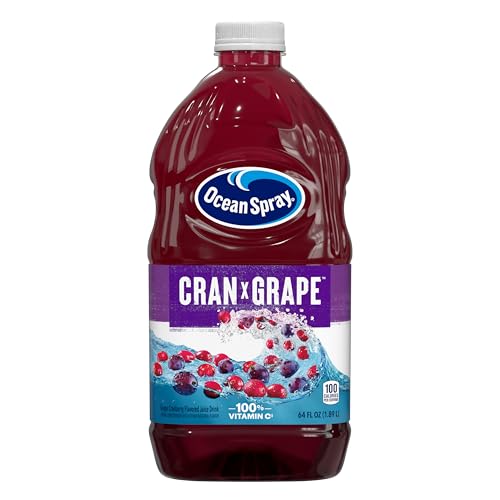
Ocean Spray
Ocean Spray® Cran-Grape® Cranberry Grape Juice Drink,…
- Included - One (1) 64 fl oz bottle of Ocean Spray Cran-Grape Cranberry Grape Juice Drink
- Just Good Stuff - An unapologetically bold mashup of cranberry and grape made from real juice concentrate for an insanely deliciou…
- Uncanny Nutrition - 100% of your recommended daily value of vitamin C per serving with no high fructose corn syrup
For reference, the product we’re talking about is the Ocean Spray Cran-Grape 64 oz bottle. It’s the standard size you’ll find in most grocery stores, and it’s the one this analysis applies to directly.

Nutritional Profile: What’s Actually in the Bottle?
Let’s start with the facts printed on the label. One serving is 8 fluid ounces, and there are eight servings in the 64-ounce bottle. That means the whole bottle contains roughly 1,920 calories and 224 grams of sugar. If you drink the entire bottle in a day — which is easier than you think — you’ve consumed more sugar than you’d get from eating 20 chocolate chip cookies.
Here’s the per-serving breakdown:
- Calories: 140
- Total sugar: 28 grams
- Added sugar: 15 grams
- Vitamin C: 100% of the Daily Value
- Sodium: 20 milligrams
- Potassium: 170 milligrams
The ingredients list tells the real story. The first ingredient is water, followed by cranberry juice from concentrate, grape juice from concentrate, and then sugar. It also contains natural flavors and citric acid. The key detail here is that this is not 100% juice. It’s a juice drink, which means it has added sugar on top of the natural sugars already present in the fruit concentrates.
Compare that to pure unsweetened cranberry juice, which has about 30 calories and 7 grams of sugar per 8-ounce serving. The difference is stark. Cran-Grape is essentially a sweetened fruit blend, not a straight fruit juice.
The Sugar Problem: Comparing Cran Grape to Soda and Pure Juice
Here’s the comparison most people miss. A 12-ounce can of Coca-Cola has 39 grams of sugar. An 8-ounce serving of Cran-Grape has 28 grams. Scale that to the same volume, and a 12-ounce serving of Cran-Grape contains 42 grams of sugar — slightly more than the soda.
That’s a hard pill to swallow for anyone who chose Cran-Grape thinking it was the healthier option. The sugar in Cran-Grape comes from a mix of fruit concentrates and added sugar, but your body processes it the same way as the high-fructose corn syrup in soda. Glucose and fructose don’t care about their origin story.
| Beverage (12 oz) | Calories | Total Sugar | Added Sugar | Vitamin C |
|---|---|---|---|---|
| Cran-Grape | 210 | 42 g | 22.5 g | 100% DV |
| Coca-Cola | 140 | 39 g | 39 g | 0% |
| Pure Cranberry Juice (unsweetened) | 45 | 11 g | 0 g | 15% DV |
| Grape Juice (100%) | 180 | 36 g | 0 g | 0% |
Notice the added sugar column. Soda’s sugar is entirely added. Cran-Grape has about 22.5 grams of added sugar in that 12-ounce portion, which still puts it in the same ballpark as soda. The vitamin C is a nice touch, but it’s added artificially after processing — it doesn’t change the metabolic impact of the sugar load.
The American Heart Association recommends no more than 36 grams of added sugar per day for men and 25 grams for women. A single 12-ounce glass of Cran-Grape blows through that entire budget.
The Grape Factor: How It Changes the Health Equation
Pure cranberry juice gets all the press for urinary tract health, and that reputation is earned. Cranberries contain a specific type of antioxidant called proanthocyanidins (PACs) that interfere with bacteria’s ability to stick to the urinary tract wall. That’s the mechanism behind the UTI prevention claims.
But Cran-Grape is not pure cranberry juice. The grape juice dilutes the cranberry content significantly. Grape juice contains a different class of antioxidants called anthocyanins, which are great for general heart health and inflammation, but they don’t provide the same anti-adhesion effect on bacteria.
Here’s the practical problem: you’d need to drink a substantial amount of cranberry juice to get a clinically meaningful dose of PACs — roughly 8 to 10 ounces of pure, unsweetened cranberry juice daily. Cran-Grape has maybe 25% cranberry juice in the blend, so you’d need to drink three to four times that amount to hit the same PAC level. That’s over 600 calories and 120 grams of sugar. You’d be trading a UTI for a blood sugar spike.
The grape juice also changes the glycemic index. Pure cranberry juice has a relatively low glycemic index of around 52, partly because the tartness makes it hard to drink in large quantities. Grape juice has a higher glycemic index of around 59, and the added sugar in Cran-Grape pushes the total glycemic load even higher. Your blood sugar will rise faster and higher with Cran-Grape than with pure cranberry juice.
So the grape addition makes the drink taste better — no argument there — but it dilutes the cranberry-specific benefits and amplifies the sugar spike.
The Real Health Benefits (And What Marketing Overpromises)
Cran-Grape isn’t worthless. It does deliver 100% of your daily vitamin C in a single serving, which supports immune function and collagen production. That’s a legitimate benefit, especially if you’re not getting enough vitamin C from other sources.
The anthocyanins from the grape juice do have antioxidant properties. These compounds help neutralize free radicals and reduce oxidative stress, which is linked to chronic inflammation and heart disease. Some studies suggest regular consumption of grape juice can improve blood vessel function and lower LDL cholesterol. Those are real effects, but they’re modest — not a reason to treat Cran-Grape as a medical intervention.
What the marketing overpromises is the cranberry halo. The Ocean Spray brand leans heavily on the cranberry heritage, and consumers assume the benefits of pure cranberry juice apply to every product in the line. They don’t. The cranberry content in Cran-Grape is too low to deliver meaningful UTI prevention, and the added sugar likely cancels out any metabolic benefit from the antioxidants.
One honest positive: Cran-Grape contains no high fructose corn syrup. The added sugar is regular cane sugar. Some people find that distinction meaningful, though nutritionally the difference between HFCS and cane sugar is negligible — both are roughly half glucose and half fructose, and your liver processes them identically.
Potential Risks: Blood Sugar, Medications, and Kidney Stones
The most immediate risk is blood sugar management. If you have type 2 diabetes or insulin resistance, a single 8-ounce glass of Cran-Grape will raise your blood glucose substantially. The 28 grams of sugar hit your bloodstream quickly, especially on an empty stomach. Pure cranberry juice is a better choice for diabetics, and even that should be consumed in moderation.
There’s also a medication interaction that most people never think about. Cranberry juice can interfere with warfarin (Coumadin), a common blood thinner. The interaction increases the risk of bleeding because cranberry compounds may affect how the liver metabolizes the drug. Grape juice has its own interactions with certain statins and blood pressure medications. The combination of both juices in Cran-Grape means you’re exposed to both potential interactions simultaneously.
If you take any prescription medication, especially blood thinners or statins, check with your doctor before making Cran-Grape a regular habit. The occasional glass is unlikely to cause problems, but daily consumption could be an issue.
Kidney stones are another concern. Cranberry juice is high in oxalates, which can contribute to calcium oxalate kidney stones in susceptible people. Grape juice is lower in oxalates, but the combination still carries some risk. If you have a history of kidney stones, you should probably avoid regular consumption of any cranberry product.
Finally, there’s the simple issue of portion control. An 8-ounce serving is smaller than most people think. The standard glass you pour at home is typically 12 to 16 ounces, which means you’re likely consuming 1.5 to 2 servings without realizing it. That doubles or triples the calorie and sugar numbers you see on the label.
Cran Grape vs. Other Juices: A Head-to-Head Comparison
How does Cran-Grape stack up against other popular juice options? The table above showed the basic numbers, but let’s talk about the practical differences.
Pure cranberry juice is the healthiest option if you’re drinking cranberry for the UTI benefits. It’s tart and takes getting used to, but it has a fraction of the sugar and no added sweeteners. The trade-off is taste — most people find it too sour to drink straight.
100% grape juice has no added sugar, but the natural sugar content is still high. It’s better than Cran-Grape because you’re getting pure fruit without extra sweeteners, but it’s not a low-sugar beverage by any means.
Vegetable juices like tomato or carrot juice are much lower in sugar and higher in fiber and potassium. They don’t have the antioxidant profile of berry juices, but they’re better for blood sugar control. If you’re choosing based on metabolic impact, vegetable juices win.
Diet or zero-sugar drinks eliminate the sugar problem entirely, but they introduce artificial sweeteners that have their own controversies. For most people, a small amount of real sugar is preferable to artificial sweeteners, but that’s a personal call.
The bottom line: Cran-Grape sits in the middle of the pack. It’s better than soda because it has some vitamins and antioxidants, but it’s worse than pure juices because of the added sugar and diluted cranberry content.
How to Drink It Without Ruining Your Diet
You don’t have to give up Cran-Grape entirely. You just need to be smart about it.
- Measure your serving. Use a measuring cup once to see what 8 ounces actually looks like in your favorite glass. Most people are shocked. That visual memory will help you pour accurately later.
- Dilute it with sparkling water. Mix one part Cran-Grape with one part seltzer. You cut the sugar per glass in half and get a refreshing spritzer with less than 100 calories.
- Treat it as a treat, not a beverage. Think of Cran-Grape like lemonade or a dessert drink. It’s something to have occasionally, not something to drink with every meal.
- Pair it with food. Drinking it with a meal that contains protein and fiber slows the sugar absorption and blunts the blood sugar spike. A handful of almonds or some yogurt alongside helps.
- Use it as a flavoring. A splash of Cran-Grape in plain yogurt, oatmeal, or a smoothie adds flavor without the full sugar load of a full glass.
If you’re trying to lose weight or manage blood sugar, the honest advice is to skip it. There are better ways to get vitamin C and antioxidants. But if you enjoy the taste and can stick to a single measured serving, it’s not going to derail your health on its own.
For those looking to make fresh juice at home with better control over sugar content, a cold press juicer for weight loss might be worth considering. You get the fruit benefits without the added sugar.
The Verdict: Is It Good For You or Just Good Tasting?
Let’s be direct. Ocean Spray Cran-Grape is not good for you in the way that a serving of fruit or vegetables is good for you. It’s a sweetened juice drink with a heavy sugar load and diluted nutritional benefits. The vitamin C is a plus, and the antioxidants are real, but the 28 grams of sugar per serving undercuts most of the positive effects.
That said, it’s not poison either. A single 8-ounce serving occasionally won’t hurt a healthy person. The problem is that very few people stop at 8 ounces, and the convenience of a large bottle makes it easy to consume several servings without thinking.
If your goal is cranberry-specific benefits like UTI prevention, you’re wasting your money on Cran-Grape. Buy pure unsweetened cranberry juice instead. If your goal is just a tasty beverage that’s slightly better than soda, Cran-Grape qualifies — barely.
The honest answer to the question is this: it’s a treat, not a health food. Enjoy it as such, and you’ll be fine. Drink it like water, and you’ll be consuming a surprising amount of sugar with minimal nutritional payoff.
For a more nutritious alternative, consider blueberry juice benefits — blueberries offer higher antioxidant density per gram and lower natural sugar content than grapes.
Frequently Asked Questions
Does Ocean Spray Cran Grape juice count as 100% juice?
No. Cran-Grape is a juice drink, not 100% juice. The label says it’s made from juice concentrate, but it also contains added sugar and natural flavors. Pure 100% juice would not have added sugar listed in the ingredients.
Can Cran Grape juice help prevent urinary tract infections?
Not effectively. The cranberry content in Cran-Grape is too diluted by grape juice to deliver a clinically meaningful dose of proanthocyanidins. You’d need to drink far more than a reasonable serving to get the same benefit as pure unsweetened cranberry juice.
Is Cran Grape juice safe to drink while taking blood thinners?
It can be risky. Cranberry juice is known to interact with warfarin, and grape juice interacts with some statins. If you’re on any prescription medication, especially blood thinners, talk to your doctor before drinking Cran-Grape regularly. Occasional consumption is probably fine, but daily use warrants a conversation.
How much sugar is in a full bottle of Cran Grape juice?
The 64-ounce bottle contains eight servings, each with 28 grams of sugar. That’s 224 grams of sugar total — roughly 56 teaspoons. For context, that’s more sugar than you’d find in five standard-sized candy bars.
Is there a difference between Ocean Spray Cran Grape and regular grape juice?
Yes. Regular 100% grape juice has no added sugar and no cranberry content. Cran-Grape adds cane sugar and includes a small amount of cranberry juice. In terms of sugar content, they’re similar — grape juice has about 36 grams per 12 ounces, while Cran-Grape has 42 grams. The added sugar makes the difference.
If you’re curious about other juice options and their health impacts, you might find our Suja juice review helpful as a comparison point.
What to Remember Next Time You Reach for a Bottle
- Check the serving size — 8 ounces is much smaller than most glasses. Measure it once and remember.
- Treat Cran-Grape as a treat, not a daily beverage. The 28 grams of sugar per serving is closer to soda than to pure fruit juice.
- If you want cranberry’s UTI benefits, buy pure unsweetened cranberry juice. Cran-Grape’s cranberry content is too diluted to matter.
- Watch your medications. Cranberry and grape juice both interact with common prescriptions, so ask your doctor if you drink it regularly.
- Dilute it with sparkling water to cut the sugar per glass in half without losing the flavor.
- Don’t let the vitamin C marketing fool you — that’s added after processing and doesn’t offset the sugar load.
- One glass occasionally is fine. The whole bottle in a day is not. Moderation is the actual answer.


