Why Are Vitamix Blenders So Expensive? We Explain
You’re looking at a new blender. The price tags make you pause. A Vitamix can cost several times more than a standard model from the big-box store. It’s a legitimate question: why are Vitamix blenders so expensive? Is it just branding, or is there substance behind the Vitamix price?
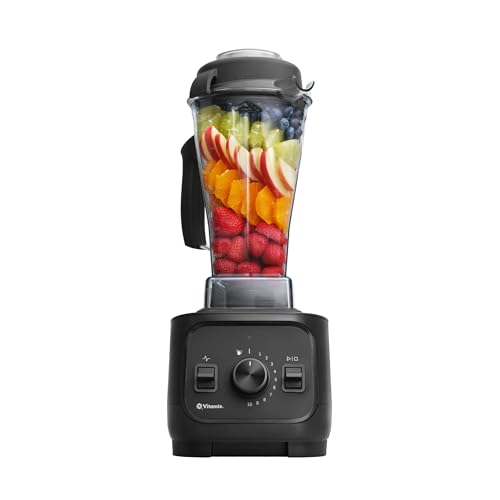
Let’s reframe the question. You’re not just buying a blender. You’re investing in a high-performance blender engineered for a specific outcome: flawless consistency and relentless durability. The cost reflects a shift from a disposable kitchen tool to a permanent countertop appliance. For many home cooks and professionals, the Vitamix Explorian E310 represents the entry point into this tier, offering core performance in a more compact package. You can find it here as a benchmark for what a modern Vitamix offers.
The Premium Blender Question: Cost vs. Investment
When you see a Vitamix cost of $400, $600, or more, your brain compares it to a $80 blender. That’s natural. But you’re comparing different categories of machinery. One is designed for occasional light duty. The other is built like a tank for daily, demanding use. The real comparison isn’t against a cheap blender. It’s against the long-term cost of replacing cheaper blenders every few years.
This is the core of the blender investment argument. It’s about total cost of ownership, not just the sticker shock. Let’s break down where your money actually goes.
Breakdown of Key Cost Factors
The expense is in the detailsthe components and engineering most brands skip to hit a lower price point.
1. Build Quality & Durability: Commercial-Grade DNA
Vitamix doesn’t hide its commercial kitchen heritage. That lineage dictates blender construction. The base housing is a heavy, impact-resistant polymer, not thin, hollow plastic. The containers are made from Eastman Tritan copolyester, a material prized for being BPA-free, stain-resistant, and incredibly tough. This focus on blender components matters.
- Commercial-grade motor: This is the heart. It’s a high-torque, AC motor designed to run cool under heavy loads for extended periods. It’s not a small, high-speed DC motor that strains and overheats.
- Thermal protection system: A critical safety feature. It monitors motor temperature and will shut the unit down before overheating causes permanent damage. Cheaper motors often just burn out.
- Blade assembly: The hardened stainless steel blades are laser-cut and blunt, not sharp. They’re designed to create a vortex, not chop. The drive socket is metal, not plastic, preventing the stripping that dooms many blenders.
2. Motor Power & Performance: It’s About Torque, Not Just Watts
Marketing loves “peak wattage.” Vitamix emphasizes horsepower and torque. Why? A 2+ peak horsepower motor delivers consistent power under loadthink crushing ice, pulverizing nuts, or blending thick nut butterswithout slowing down or bogging. This ensures a perfectly smooth texture every time, something less powerful motors simply can’t achieve. You’re paying for predictable, professional results.
3. Warranty & Longevity: The Confidence Backstop
The standard 7-year warranty isn’t an accident. It’s a direct statement about expected blender durability. The company is betting its product will last. This warranty often covers both parts and labor, which is rare. When you factor in the robust repair service network, you have a product designed to be fixed, not thrown away. This circular economy aspect adds significant blender value.
a high resale value data exists for used Vitamix blenders. A 5-year-old model in good condition still commands a respectable price. Try that with a budget blender.
4. Versatility & Functionality: The One-Machine Kitchen
A Vitamix isn’t just for smoothies. It can hot-soup, grind grains, knead dough, and make nut butters and frozen desserts. This eliminates the need for several single-use appliances. The versatility justifies the cost by consolidating functions. You’re effectively buying a blender, food processor, and grain mill in one.
Comparison to Mid-Range Competitors
This is where the question “what makes Vitamix more expensive than Ninja?” gets answered. Brands like Ninja offer powerful blending at a lower cost. They achieve this through different engineering: often using multiple smaller blades and high-speed motors. The trade-off can be in consistency (more air incorporation, less smooth textures), noise level, and long-term durability of components. They are excellent for many users, but they occupy a different performance and longevity tier.
The comparison with Blendtec is more direct. Asking “Vitamix vs Blendtec which is more expensive” is like comparing Mercedes to BMW. Both are premium, commercial-grade machines. The price difference often comes down to design philosophy (square jar vs. tapered container, pre-programmed cycles vs. manual control), motor specs, and included features. It’s a battle of titans, not a question of one being inherently “better.”
For a deeper dive into specific model comparisons, like the popular Vitamix 510 model, you can see how features stack up within the brand itself.
Long-Term Value & Cost-Per-Use
This is the most compelling math for justifying a premium blender. Let’s say you spend $500 on a Vitamix. If you use it 4 times a week for 7 years (its warranty period), that’s over 1,450 uses.
Your cost-per-use drops to about 34 cents. Now, consider a $100 blender you replace every 2 years due to failure or declining performance. Over the same 7 years, you might buy 3.5 blenders, spending $350 for potentially worse performance and more frustration. The cost-per-use might be similar, but the experience and reliability are worlds apart.
We should also talk about energy efficiency metrics. A powerful motor that completes tasks quickly (e.g., making nut butter in 60 seconds vs. 5 minutes of struggling) can use less total energy. Efficiency isn’t just about wattage; it’s about work accomplished per unit of energy.
| Consideration | Budget Blender | Vitamix / Premium Blender |
|---|---|---|
| Initial Cost | Low | High |
| Expected Lifespan | 2-4 years | 10+ years |
| Performance Under Load | Often bogs down | Consistent, powerful |
| Texture Quality | Can be grainy, uneven | Consistently smooth |
| Versatility | Limited (often just blending) | High (soups, flours, etc.) |
| Total Cost of Ownership | Potentially higher over time | Higher upfront, lower long-term |
For unbiased performance data, consulting an authority guide like Consumer Reports is always a smart move before any major appliance purchase.
Who Should Buy a Vitamix?
So, are Vitamix blenders worth the high price? The answer is a definitive “it depends.”
You should seriously consider a Vitamix if:
- You blend daily or multiple times a week.
- Texture is kingyou want perfectly smooth sauces, soups, and nut milks.
- You value versatility and want to replace several appliances.
- You hate the idea of disposable appliances and want a tool that lasts decades.
- You’re into whole-food cooking, making flours, nut butters, or baby food.
You might be okay with a less expensive option if:
- You only make the occasional smoothie or milkshake.
- A slightly grainy texture doesn’t bother you.
- Your kitchen space or budget is extremely limited.
The question “how long does a Vitamix blender last” is often answered with anecdotes of 15-20 year old models still running strong. That longevity is engineered. It’s the result of the commercial-grade motor, robust blender construction, and that confidence-inspiring 7-year warranty.
It’s not an impulse buy. It’s a calculated decision for your kitchen’s future. You’re not just paying for a blender. You’re investing in a decade of reliable, high-performance cooking. For those who use it, the blender worth it calculation almost always tips in Vitamix’s favor. To explore how even their commercial-oriented models differ, check out this look at the Vita-Prep series.
Think about what you actually need from your kitchen tools. If you want a partner that performs day in and day out, the cost starts to make perfect sense.