Discover the Healing Powers of Coconut Water for Ulcerative Colitis
On this page 8 sections
- Coconut Water and Ulcerative Colitis: What the Evidence Shows
- What Coconut Water Replaces, and What It Doesn’t
- How Much Coconut Water Fits a UC Diet
- Who Should Skip Coconut Water With UC
- Side Effects and When Coconut Water Backfires
- Better and Safer Alternatives During a UC Flare
- What to Do Next
- Questions People Ask
Ulcerative colitis already makes you think twice about every sip. Diarrhea drains fluids and electrolytes, and the wrong drink can trigger cramping or urgency. Coconut water looks like a gentle fix, but it is not a cure and not always a safe one.
The half-true belief is that coconut water is a perfect natural sports drink. It does offer more potassium than most sports drinks, but it has far less sodium, which is the electrolyte you lose most in a UC flare. That missing piece changes how you should use it.
Coconut Water and Ulcerative Colitis: What the Evidence Shows
Yes, coconut water can help most people with ulcerative colitis in small amounts—about 4 to 8 oz a day. It replaces potassium and magnesium lost through diarrhea, and a 4 oz serving is low FODMAP and usually well tolerated. It is not a treatment for a flare, and it is not for everyone: skip it during severe diarrhea, if you have kidney disease, or if you are on a potassium-restricted diet.
The reason coconut water gets attention for colitis is its electrolyte profile. An 8 oz glass has roughly 470 mg of potassium and 60 mg of magnesium. Diarrhea drains both, and low potassium can leave you feeling weak, crampy, or lightheaded. The drink is also slightly hypotonic, meaning it is a little more dilute than your blood, so it empties from the stomach and absorbs quickly. That can be a real advantage when your gut is irritated and you just need fluid to stay in.
This drink suits people in remission or a mild flare who need a potassium boost and handle small amounts of sugar without bloating. Be stricter if you have active severe diarrhea, fructose malabsorption, chronic kidney disease, or a potassium limit from your care team. In those cases, even 4 oz can be too much. If you are looking for a gentle way to add nutrients during remission, a low-fiber chicken smoothie can be another option, but coconut water is the simpler place to start.
What Coconut Water Replaces, and What It Doesn’t
Coconut water is a good daily hydration drink for ulcerative colitis, but it is not a substitute for oral rehydration salts during heavy diarrhea. It replaces potassium and magnesium well, yet it contains very little sodium—and sodium is the electrolyte you lose most when diarrhea is severe.
| Per 8 oz | Coconut water | Sports drink | Oral rehydration solution |
|---|---|---|---|
| Sodium | about 30 mg | about 110 mg | about 250 mg |
| Potassium | about 470 mg | about 30–45 mg | about 200 mg |
| Sugar | about 9 g | about 14 g | about 6–9 g |
| Magnesium | about 60 mg | 0–2 mg | 0 mg |
Look at the sodium row. Diarrhea from a UC flare is mostly water and sodium. Drinking a low-sodium fluid like coconut water replaces the water but not the sodium, and over several days that mismatch can leave you more depleted. Sports drinks have more sodium, but still not enough for heavy losses. An oral rehydration solution is formulated to match what diarrhea actually removes, and that is the right tool when you are running to the bathroom many times a day.
Coconut water’s real strength is daily maintenance. The 470 mg of potassium per 8 oz is far more than a typical sports drink, and the 60 mg of magnesium may help with the muscle cramping that often comes with a flare. If you are in remission or having only mild symptoms, a small glass each day can help keep those levels topped up. The sugar content—about 9 g per 8 oz—is lower than many sports drinks, which makes coconut water easier on the gut when you are not losing large amounts of fluid.
So how do you decide between coconut water and a sports drink? For an everyday, low-intensity need—mild diarrhea, a hot day, or just staying hydrated with a potassium boost—coconut water is the better choice. For a true flare with heavy losses, is celery juice good for ulcerative colitis? No, and neither is coconut water on its own; you need the sodium and glucose balance of an oral rehydration solution. Keep a few packets in the cupboard for those days so you are not tempted to rely on the wrong drink.
How Much Coconut Water Fits a UC Diet
For most adults with ulcerative colitis, a safe daily amount is 8 oz (about 250 ml), and you’ll do best starting with half that. Begin with 4 oz, wait an hour, and only pour the rest if your gut stays quiet—no cramping, gas, or urgency.
That 8 oz serving also happens to be the low FODMAP threshold for coconut water. Monash University lists 250 ml as low FODMAP, but larger servings move into moderate territory because of the natural sugars. If you’re sensitive to fructose or sorbitol, even 8 oz may feel like too much; in that case, stop at 4 oz or skip it.
Coconut water can cause osmotic diarrhea when you drink it too fast. The fructose and sorbitol pull water into the bowel, and a 16 oz bottle chugged in a minute is a common trigger. Sip slowly over 30 to 60 minutes so your gut has time to absorb it.
If you use a coconut water powder, mix it weaker than the label says at first—half a scoop in 8 oz of water. You can always add more powder later once you know how your gut responds.

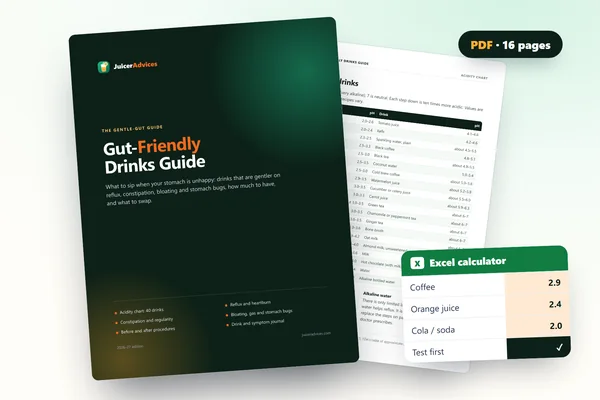 Gut-Friendly Drinks GuideDrinks that are gentler on reflux, constipation and a sensitive stomach: what to sip, how much, and what to swap.Acidity chart for 40 common drinksDrinks for reflux, constipation, bloating and stomach bugsDrink and symptom tracker (Excel)
Who Should Skip Coconut Water With UC
Coconut water is not for everyone with ulcerative colitis. Skip it entirely if you have kidney disease or reduced kidney function, because the potassium can build up to dangerous levels when your kidneys filter less.
The same caution applies if you take a potassium-sparing diuretic like spironolactone or amiloride, or an ACE inhibitor or ARB for blood pressure. These medicines already raise potassium, and adding coconut water on top can push it too high.
People with fructose malabsorption or IBS with diarrhea often find coconut water worsens bloating and loose stools. The natural sugars are the problem, and the effect is dose-dependent—more than 8 oz is riskier.
During an active severe flare with high stool output, coconut water’s low sodium means it won’t replace what you’re losing. Use an oral rehydration solution instead, which has the right balance of sodium and glucose.
Check the label if you have a sulfite sensitivity. Some packaged coconut waters contain sulfites as preservatives, which can trigger reactions in sensitive people.
Side Effects and When Coconut Water Backfires
Most side effects from coconut water come down to how much you drink and how fast. Keep it to 4–8 oz, and you’ll likely notice nothing. Drink 16 oz or more in one sitting, and bloating, cramps or diarrhea become common—especially during a flare.
- Bloating and gas: more likely above 8 oz, particularly if you have fructose malabsorption or are sensitive to FODMAPs.
- Diarrhea: can happen at 12 oz or more at once, because the natural sugar and sorbitol pull water into the gut.
- Stomach cramps: often triggered by drinking it ice-cold or too quickly when your colon is already inflamed.
- High potassium (hyperkalemia): rare with normal kidneys, but possible with kidney disease or certain blood pressure medicines. Warning signs include weakness, palpitations or an irregular heartbeat.
- Allergic reaction: rare, but possible if you have a tree nut or coconut allergy.
Better and Safer Alternatives During a UC Flare
During a flare, the best drink is whatever keeps you hydrated without making diarrhea worse. For mild dehydration, dilute coconut water by half with plain water, or mix an electrolyte powder weaker than the label suggests.
Coffee is best avoided during an active flare because caffeine can speed up the gut and worsen urgency. If you rely on it, see does coffee worsen ulcerative colitis symptoms for a fuller picture.
What to Do Next
Start with a small glass of plain coconut water, not a flavored one. Four ounces, about half a cup, at room temperature, sipped slowly. Note any bloating, gas, or urgency over the next hour.