How To Make A Pulp Smoothie: Zero-Waste Recipes
On this page 8 sections
- Why Pulp is a Nutritional Powerhouse (Not Waste)
- The Golden Ratio: Pulp-to-Liquid for Every Pulp Type
- 5 Zero-Waste Pulp Smoothie Recipes (With Flavor Balancers)
- Batch Prep: Freezing Pulp and Building Smoothie Packs
- Texture Troubleshooting: Fixing Gritty, Watery, or Separating Smoothies
- The Real Cost Savings of a Pulp Smoothie Habit
- FAQs: Pulp Storage, Sugar Content, and Diets
- Final Thoughts: Make Zero-Waste Taste Better
You just finished juicing a batch of carrots, apples, and ginger. The juice is gone in thirty seconds, and you’re staring at a bowl of wet, orange mush. Most people toss it. That mush holds most of the fiber, a decent chunk of the vitamins, and all of the texture that keeps you full past 10 a.m.
This guide walks you through the practical side of turning that pulp into smoothies that taste better and cost less than your usual blended breakfast. You’ll get exact ratios for dry and wet pulp, flavor pairings that hide bitter notes, a freezing method that prevents ice crystals, and a quick troubleshooting chart for texture problems. No vague advice. Just numbers, steps, and recipes that work.
If you don’t own a blender yet, the Check price on Amazon handles pulp well. Its 700-watt motor crushes frozen pulp cubes and fibrous bits without leaving chunks, and the 16-ounce cups mean you blend and drink from the same container. That matters when you’re testing ratios and tweaking consistency every morning.

Why Pulp is a Nutritional Powerhouse (Not Waste)
Juice extraction removes the liquid and leaves behind the insoluble fiber, most of the antioxidants, and a surprising amount of the vitamins. Carrot pulp, for example, keeps beta-carotene and calcium. Apple pulp holds quercetin, a flavonoid linked to reduced inflammation. Celery pulp still contains potassium and folate.
The fiber is the real prize. A single cup of vegetable pulp delivers 4 to 6 grams of fiber, depending on the source. That’s roughly 20 percent of your daily target. Fiber slows sugar absorption, which keeps blood sugar steady instead of spiking and crashing. It also feeds gut bacteria, supporting digestion and regularity.
Fiber also makes smoothies actually filling. A juice-only breakfast leaves you hungry by 9:30. A pulp smoothie with the same produce keeps you satisfied through lunch. That satiety is why zero-waste smoothies beat juice for weight management, even though they’re thicker and less refreshing.
One caveat: pulp tastes earthier than fresh fruit. You won’t mistake it for a mango lassi. But with the right liquid base and sweetener, you’ll stop noticing the difference within a week.
The Golden Ratio: Pulp-to-Liquid for Every Pulp Type
Most recipes say “add pulp to taste.” That’s useless. The correct ratio depends entirely on how dry or wet your pulp is, because that determines how much liquid it will absorb and how gritty the final drink feels.
Start with this baseline: one part pulp to two parts liquid by volume. A half-cup of pulp gets one cup of milk, coconut water, or juice. Then adjust based on pulp texture and your blender’s power.
Dry Pulp (Carrot, Beet) vs. Wet Pulp (Celery, Cucumber)
Dry pulp comes from hard, fibrous roots. Carrot and beet pulp feels like damp sand. It absorbs liquid aggressively and turns chalky if you under-blend. For dry pulp, use a 1:2.5 ratio. Half a cup of carrot pulp needs 1.25 cups of liquid. You also need a high-speed blender or a longer blend time, because the particles are dense.
Wet pulp from celery, cucumber, or zucchini holds more water. It blends into a smoother base with less effort. Use a 1:1.5 ratio. Half a cup of celery pulp needs just three-quarters of a cup of liquid. Wet pulp also freezes into softer cubes, which makes it easier to blend straight from the freezer.
Leafy green pulp, like spinach or kale, sits in between. It’s fibrous but not dense. Use a 1:2 ratio and add a tablespoon of chia seeds to help bind the mixture and improve mouthfeel.
If you’re unsure which category your pulp falls into, squeeze a handful. If liquid drips out, it’s wet. If it holds its shape like a patty, it’s dry.
5 Zero-Waste Pulp Smoothie Recipes (With Flavor Balancers)
Bitter pulp needs a partner. Sweet fruit, healthy fats, and spices mask unpleasant notes without adding refined sugar. Each recipe below includes a specific balancer, not just a generic “add honey.”
The Green Fiber Booster (Spinach & Apple Pulp)
Use leftover pulp from juicing spinach, kale, and green apples. This pulp tastes grassy and slightly bitter.
- 1 cup spinach-apple pulp (wet category)
- 1.5 cups unsweetened almond milk
- 1 frozen banana (the sweetness masks the grassiness)
- 1 tablespoon almond butter (adds creaminess and fat)
- 1/2 teaspoon cinnamon
Blend on high for 60 seconds. The banana is non-negotiable; it’s the only thing that fully hides the leafy bitterness. The almond butter rounds out the texture so it feels like a milkshake, not a lawn clippings drink.
The Tropical Gut Healer (Pineapple & Ginger Pulp)
Pineapple and ginger pulp comes from a bright, zingy juice. It’s naturally sweet but has a spicy kick that can overwhelm.
- 1 cup pineapple-ginger pulp (wet category)
- 1 cup coconut water (electrolytes and a light base)
- 1/2 cup frozen mango chunks
- 1 tablespoon lime juice
- 1/4 teaspoon turmeric (anti-inflammatory, pairs with ginger)
The lime juice brightens everything and cuts the ginger heat. Coconut water keeps the drink thin enough to sip through a straw. This is the most refreshing recipe in this list, and it’s the one I make after a heavy meal.
The Chocolate Lover’s Fiber Fix (Cacao & Date Pulp)
This one uses pulp from juicing dates, cacao nibs, and maybe a beet. It’s the dessert smoothie that doesn’t spike blood sugar.
- 1 cup date-cacao pulp (dry category)
- 1.5 cups oat milk (creamier than almond)
- 1 tablespoon unsweetened cocoa powder (reinforces the chocolate flavor)
- 1/2 avocado (healthy fat for texture)
- 1 teaspoon vanilla extract
Dates are already sweet, so skip added sugar. The avocado makes it thick enough to eat with a spoon. If the pulp came from a beet, the earthy flavor actually works with chocolate; it tastes like a fancy vegan brownie.
The Berry Antioxidant Refresher (Mixed Berry Pulp)
Berry pulp is seedy and slightly tart. It needs a creamy base and a touch of sweetness.
- 1 cup mixed berry pulp (wet category)
- 1 cup plain Greek yogurt (protein and tang)
- 1/2 cup milk of choice
- 1 tablespoon maple syrup or agave
- 1/2 teaspoon lemon zest
The yogurt’s tang complements the berries, while the lemon zest lifts the flavor. This one separates if you let it sit, so drink it within 15 minutes or add a teaspoon of psyllium husk to stabilize.
The Carrot Cake Smoothie (Carrot Pulp)
Carrot pulp is the most common leftover. It’s sweet but dry, so this recipe leans into those carrot cake flavors.
- 1 cup carrot pulp (dry category)
- 1.5 cups milk of choice
- 1/2 frozen banana
- 1 tablespoon raisins
- 1/2 teaspoon pumpkin pie spice
- 1 tablespoon walnuts
Blend for a full 90 seconds to break down the carrot fibers. The raisins add concentrated sweetness without liquid sugar. This tastes like a healthier version of a bakery muffin, and it’s the recipe that converted my skeptical spouse.
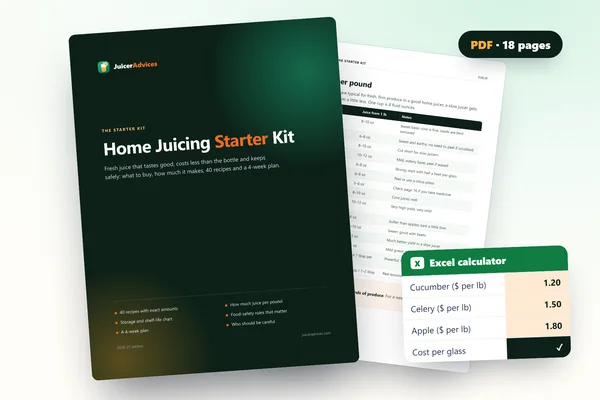 Home Juicing Starter KitMake fresh juice that tastes good, costs less and keeps safely: 40 recipes with exact amounts, a yield chart and a 4-week plan.40 juice, smoothie and shot recipesYield, storage and food-safety chartsCost, yield and shopping-list calculator (Excel)
Batch Prep: Freezing Pulp and Building Smoothie Packs
Pulp spoils fast. Fresh pulp lasts 3 to 4 days in an airtight container in the fridge, but it starts losing color and flavor by day two. Freezing extends that to three months.
Here’s the method that prevents ice crystals and clumping:
- Portion pulp into ice cube trays immediately after juicing. Press it down firmly to remove air pockets.
- Freeze for 4 hours, then pop the cubes into a labeled freezer bag. Write the pulp type and date on the bag.
- When blending, add the frozen cubes directly to the blender with your liquid. Do not thaw first; thawing makes the pulp mushy and watery.
For smoothie packs, combine one pulp cube with your other dry ingredients (chia seeds, cocoa powder, spices) in a small freezer bag. In the morning, dump the bag into the blender, add liquid, and blend. This cuts prep time to under two minutes.
One thing I learned the hard way: freeze different pulp types separately. A mixed cube of celery and pineapple sounds fine, but it limits your recipe options later. Keep carrot cubes in one bag and spinach cubes in another.
Texture Troubleshooting: Fixing Gritty, Watery, or Separating Smoothies
Texture problems happen to everyone. Here’s how to fix each one without starting over.
| Problem | Cause | Quick Fix |
|---|---|---|
| Gritty or sandy | Dry pulp under-blended or too much pulp | Blend 30 more seconds. Add 1/4 cup liquid and 1 tablespoon nut butter. The fat coats the particles. |
| Too thick to drink | Too much pulp or frozen banana | Add liquid 2 tablespoons at a time until it flows. Don’t dump in a full cup; you’ll overshoot. |
| Too watery | Wet pulp with too much liquid | Add 1/2 frozen banana, 1/4 avocado, or 2 tablespoons Greek yogurt. Blend 15 seconds. |
| Separates while sitting | Fiber settling out of suspension | Add 1 teaspoon chia seeds or psyllium husk before blending. Drink within 15 minutes. |
| Foamy on top | Too much air from over-blending | Blend on low for the last 10 seconds. Or let it rest for 2 minutes and stir. |
The most common mistake is adding too much pulp. Start with the ratios above, then adjust. A smoothie with 1.5 cups of pulp and 1 cup of liquid will always be a paste, no matter how long you blend.
The Real Cost Savings of a Pulp Smoothie Habit
Juicing is expensive if you waste half the produce. Let’s do the math with realistic numbers.
A 5-pound bag of carrots costs about $3.50. Juicing it yields roughly 3 cups of pulp. If you throw that pulp away, you’re discarding about $1.40 worth of carrots per batch. Over a month of juicing three times a week, that’s nearly $17 in wasted produce.
Now add apples. A 3-pound bag costs about $4.50 and yields 2.5 cups of pulp. Tossing that costs another $1.20 per batch. Combined with carrots, you’re throwing away $2.60 per juicing session. At three sessions per week, that’s $31.20 a month.
Using that pulp in smoothies replaces other ingredients. A pulp smoothie costs roughly $1.50 per serving, compared to $3.50 for a store-bought smoothie or $2.50 for a standard homemade one with fresh fruit. If you drink five pulp smoothies per week, you save $5 to $10 weekly, or $20 to $40 monthly, just by substituting pulp for fresh fruit.
That math assumes you’d otherwise buy smoothies. If you’d make them at home anyway, the savings are smaller but still real: you’re getting two drinks from one produce purchase. The environmental angle matters too. The average household throws away about 30 percent of the food it buys. Using pulp cuts that waste meaningfully without changing your shopping list.
FAQs: Pulp Storage, Sugar Content, and Diets
How long can I keep pulp in the fridge before it goes bad?
Fresh pulp keeps 3 to 4 days in a sealed container. Press a piece of paper towel against the surface to absorb excess moisture, and replace it daily. If you see dark spots or smell fermentation, toss it. Frozen pulp lasts up to 3 months but loses some vitamin C over time.
Does pulp smoothie spike blood sugar?
Less than juice, and less than a smoothie made with only fruit. The fiber in pulp slows glucose absorption. To keep blood sugar stable, pair pulp with a fat or protein source like Greek yogurt, nut butter, or chia seeds. Avoid adding fruit juice as your liquid base; use water, milk, or unsweetened plant milk instead.
Can I use pulp on a vegan or gluten-free diet?
Yes, both. Pulp is plant-based and naturally gluten-free. Just check your liquid base and add-ins. Oat milk is often cross-contaminated with gluten, so choose certified gluten-free oat milk or use almond or coconut milk. For vegan smoothies, swap Greek yogurt for a plant-based yogurt or silken tofu.
What’s the best way to sweeten a pulp smoothie without sugar?
Frozen banana is the most reliable choice; it adds creaminess and natural sweetness. Medjool dates work well for dry pulp, and they blend into a caramel-like paste. For berry pulp, a splash of maple syrup or agave does the job. Stevia or monk fruit drops work if you want zero calories, but they can leave a metallic aftertaste with bitter pulp.
Can I blend pulp without a high-speed blender?
Yes, but you’ll need more liquid and a longer blend time. A standard 700-watt blender like the Ninja Fit handles wet pulp easily. Dry pulp like carrot or beet needs extra liquid and a 90-second blend cycle. If the blender struggles, add an extra quarter-cup of liquid and blend in two 45-second bursts with a shake in between.
Final Thoughts: Make Zero-Waste Taste Better
You don’t need to become a zero-waste perfectionist. You just need to stop throwing away the most filling part of your juice.
- Match the ratio to the pulp: 1:2.5 for dry pulp, 1:1.5 for wet pulp, 1:2 for leafy greens.
- Mask bitter flavors with frozen banana, dates, or citrus juice, not just honey.
- Freeze pulp in ice cube trays by type, then blend from frozen without thawing.
- Fix gritty texture with 30 extra seconds of blending and a spoonful of nut butter.
- Save $20 to $40 monthly by substituting pulp for fresh fruit in your smoothies.
- Add a protein or fat source to keep blood sugar steady and stay full longer.
- Start with one recipe you like, then experiment with ratios from there.
The first pulp smoothie might taste a little different than what you’re used to. Give it a week. Once you dial in the ratio and find your flavor pairings, you’ll wonder why you ever tossed that carrot pulp in the trash. For more ideas on using your blender, check out this guide on smoothie bowl recipes or these tips for thick milkshake texture.