Best Single Serving Smoothie Blender: Top Picks for Quick and Easy Blends
On this page 9 sections
- Single Serving Blender Specs at a Glance
- Five Single Serving Smoothie Blenders Worth Your Counter Space
- How to Choose a Single Serving Smoothie Blender
- Match the Cup Size to Your Smoothie Habit
- Wattage: What 300W, 700W, and 1000W Actually Do
- Cleanup Time: The Real Daily Cost
- What About Protein Powder and Seeds?
- Who Should Buy Which Single Serving Blender
- Frequently Asked Questions
Single Serving Blender Specs at a Glance
| Rank | Model | Best for | Power | Cup size | Controls | Price |
|---|---|---|---|---|---|---|
| 1 | Ninja Fit Compact Personal BlenderBest Overall | Most people who want a reliable daily smoothie without a big footprint or a learning curve. | 700 watts | Two 16 oz to-go cups | Push-to-blend | Check price |
| 2 | Ninja Nutri-Blender Pro with Auto-iQBest for Presets | Anyone who wants a larger cup and one-touch programs that do the pulsing for you. | 1100 peak watts | Two 24 oz to-go cups | 2 Auto-iQ presets | Check price |
| 3 | KOIOS Smoothie Blender KitchenBest for Multiple Cups | Households or meal preppers who want different cup sizes and a full accessory set. | 900 watts | Two 23 oz and one 17 oz | Twist to blend | Check price |
| 4 | TOPZEE Personal Smoothie BlenderMost Powerful | Ice-heavy drinks and anyone who wants maximum wattage in a compact single-serve blender. | 1000 watts (1200 max) | 24 oz to-go cup | Twist-on start/stop | Check price |
| 5 | Hamilton Beach Portable BlenderBest for Travel | Commuting or small smoothies where a 14 oz cup fits a car cupholder and a light bag. | 300 watts peak | 14 oz travel jar | One-touch button | Check price |
A single serving smoothie blender earns its counter space by doing one job well: blending one drink, fast, in the cup you take with you. The right pick depends on how much you blend at once, how often you use frozen fruit, and how much cleaning you are willing to do.
The number that matters most is cup size. A 14 oz cup makes a small snack smoothie; a 24 oz cup holds a full breakfast. Wattage tells you how easily it handles ice and frozen berries, but cup size decides whether the blender fits your routine.
Five Single Serving Smoothie Blenders Worth Your Counter Space

Ninja Fit Compact Personal Blender
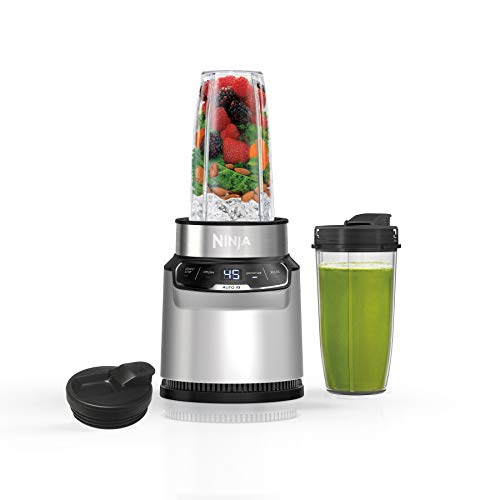
Ninja Nutri-Blender Pro with Auto-iQ

KOIOS Smoothie Blender Kitchen

TOPZEE Personal Smoothie Blender

Hamilton Beach Portable Blender
How to Choose a Single Serving Smoothie Blender
A single serving smoothie blender is a compact machine that blends directly in the cup you drink from. The right choice for you comes down to four things: cup size, wattage, controls, and cleanup.
| What to check | What it decides |
|---|---|
| Cup size | 14 oz for a snack, 16 oz for a standard smoothie, 24 oz for a full meal |
| Wattage | 300W struggles with hard ice, 700W handles most frozen fruit, 900W+ makes snow |
| Controls | Twist-on is one motion but no pulse; push-to-blend gives control; Auto-iQ presets are set-and-forget |
| Cleanup | Dishwasher-safe cups save time; blade assemblies need hand washing on some models |
Cup size is the first filter. A 14 oz cup suits a light snack, 16 oz is the standard single serve blender size for most smoothie recipes, and 24 oz gives room for a full meal replacement with greens, protein, and frozen fruit.
Wattage predicts what the machine can crush. A 300W motor will break down soft fruit but bogs on hard ice. At 700W, the Ninja Fit handles frozen berries and ice cubes without stalling. The 900W KOIOS and 1100W Ninja Nutri-Blender Pro turn ice into a fine, snow-like texture.
Controls change how you use the blender. Twist-on cups start when you press down; they’re one motion but give you no pulse. Push-to-blend buttons let you stop and check the texture. Auto-iQ presets on the Nutri-Blender Pro run a timed cycle and stop on their own.
Cleanup matters more with a single shake blender than with a full-size one, because you’ll use it daily. Cups and lids that go in the dishwasher save real time. Blade assemblies on some models need hand washing, which adds a minute to every smoothie.
Noise is real. Higher wattage is louder, and no model here is quiet. If you blend at 6 a.m. while others sleep, a 700W unit is more neighborly than a 1100W one.
If you want to compare a single serve blender against full-size options, see the best blender for making smoothies guide. For travel cups that blend on the go, check the best portable blender for smoothies roundup.
 Home Juicing Starter KitMake fresh juice that tastes good, costs less and keeps safely: 40 recipes with exact amounts, a yield chart and a 4-week plan.40 juice, smoothie and shot recipesYield, storage and food-safety chartsCost, yield and shopping-list calculator (Excel)
Match the Cup Size to Your Smoothie Habit
The right cup size depends on what you put in it. Most people need a 16 oz cup for a standard single serve blender smoothie; a 24 oz cup is the upgrade for meal replacements.
A 14 oz cup, like the one on the Hamilton Beach Portable Blender, makes a snack or a light breakfast. It holds about 12 oz of liquid plus a few ice cubes, and it fits most car cup holders.
The 16 oz cups on the Ninja Fit are the standard single serving for most smoothie recipes. One cup of liquid, a handful of frozen fruit, and a scoop of protein powder fill it to the max line without overflowing.
A 23 to 24 oz cup, found on the KOIOS, Topzee, and Ninja Nutri-Blender Pro, makes a full meal or a large post-workout shake. You can add spinach, a banana, yogurt, oats, and still have room to blend.
If you often add protein powder, greens, and frozen fruit, a 16 oz cup fills up fast. A 24 oz cup gives headroom so ingredients don’t jam against the lid.
Two cups included means you can prep one for tomorrow while blending today. The Ninja Fit and Nutri-Blender Pro each come with two cups, so one can live in the fridge overnight.
For a single shake blender used mostly for protein shakes with milk and powder, a 16 oz cup is enough. If your shakes include frozen banana, oats, or nut butter, step up to 24 oz.
If you’re leaning toward a Ninja, the best Ninja blender for smoothies guide compares the full lineup.
Wattage: What 300W, 700W, and 1000W Actually Do
A single shake blender’s wattage tells you how much frozen fruit, ice, and fibrous greens it can crush before the motor bogs down. Peak wattage is the number on the box; continuous wattage is lower, because the motor can’t sustain that output for a full blend.
Around 300 peak watts, like the Hamilton Beach portable blender, handles soft fruit, yogurt, and protein powder smoothly. Frozen berries and ice cubes make it work hard, and you’ll often get a chunky result unless you let everything thaw first.
At 700 watts, the Ninja Fit is the sweet spot for a daily smoothie. Frozen strawberries, mango chunks, and a few small ice cubes break down in 30 to 45 seconds. It won’t make snow from a full cup of ice, but it handles what most people actually put in a single serving.
The 900W KOIOS and 1000W Topzee pulverize ice and fibrous greens quickly. The Ninja Nutri-Blender Pro’s 1100 peak watts is the strongest here, and the difference shows with kale, celery, or a mostly-ice drink. Higher wattage also means more noise and often a bigger base, so it matters only if you blend ice-heavy drinks regularly.
If your smoothies are mostly banana, berries, and milk, 700 watts is plenty. Save the 1000W machines for daily kale, celery, and ice. All wattage claims are peak, not continuous; real-world blending power is lower.
Cleanup Time: The Real Daily Cost
A single serve blender that’s a hassle to clean gets used twice, then abandoned. The Ninja Fit, KOIOS, Hamilton Beach, and Ninja Nutri-Blender Pro all have dishwasher-safe cups and lids, so cleanup is rinse and load.
The Topzee cup is dishwasher safe, but its blade assembly is hand-wash only. Exposed blades need care when you scrub, and smoothie residue hides in the crevices around the gasket. Twist-on blade assemblies have more nooks than one-piece cups, so they take an extra minute.
Rinse the cup immediately after blending, before the smoothie dries. A 10-second rinse now saves a 5-minute soak later. For most people, the daily cost of cleanup is the deciding factor between two otherwise similar machines.
What About Protein Powder and Seeds?
Protein powder mixes fine in any of these blenders, including a protein powder smoothie in the Vitamix single serve container, as long as you load it in the right order. Put liquid in first, then powder, then soft ingredients, and frozen fruit last. That keeps powder from clumping under the blades and gives the frozen pieces something to tumble against.
For flax and chia, 1 tablespoon of each per 16 oz smoothie is a common starting point. More than that and chia’s soluble fiber turns the drink gelatinous within minutes. Flax is more forgiving, but both benefit from a little extra blend time. Pre-grinding flax or chia in a coffee grinder gives the smoothest texture, since these machines are not dry-grinding mills.
All five blenders here can mix protein powder into a smoothie. None are designed for dry grinding, so add seeds with liquid already in the cup. If a recipe calls for whole flaxseeds, expect some to pass through unbroken unless you pre-grind them.
Who Should Buy Which Single Serving Blender
Choosing a single serve blender comes down to cup size, wattage, and how much you want to spend on convenience features. Here is the ownership breakdown for each model in this guide.
| Blender | Best for | Skip it if |
|---|---|---|
| Ninja Fit Compact Personal Blender | Most people who want a compact, reliable daily smoothie blender | You want a 24 oz cup or preset programs |
| Ninja Nutri-Blender Pro | Anyone who wants Auto-iQ presets and a 24 oz cup | You only make 12–16 oz smoothies and want a smaller footprint |
| KOIOS Smoothie Blender | Budget-conscious buyers who want two large cups and a recipe book | You want the smallest possible machine |
| TOPZEE Personal Smoothie Blender | Those who want the most wattage per dollar and a simple twist-on design | You need preset programs or a travel lid |
| Hamilton Beach Portable Blender | Minimalists, travelers, and people who blend soft ingredients only | You regularly blend frozen fruit or ice |
The Ninja Fit is the default choice: 700 watts handles frozen fruit and ice, two 16 oz cups cover a single shake, and the parts go in the dishwasher. The Nutri-Blender Pro adds Auto-iQ programs and larger 24 oz cups for bigger appetites or two-person smoothies.
If price matters more than presets, the KOIOS gives you 900 watts and two 22 oz cups for less, plus a recipe book. The TOPZEE is the raw power pick: 1000 watts in a twist-on design, though it lacks the recipe guidance and travel extras. The Hamilton Beach is for soft-ingredient users and travelers who value a 14 oz cup that fits a car cup holder over frozen-fruit crushing power.