The Ninja Nutri-Blender Pro with Auto-iQ is the best blender for making vegetable smoothies for most people. Its 1100-watt motor and extractor blades break down fibrous greens and whole vegetables into a smooth drink in about a minute, and the two 24-oz cups make it easy to blend and go.
What to remember
The Ninja Nutri-Blender Pro’s 1100-watt motor and extractor blades give the smoothest vegetable results in a single-serve cup.
For a budget pick that still handles leafy greens, the KOIOS 900W blender with three cups is a strong value.
If you want a glass jar and a separate vegetable chopper, the Hamilton Beach Power Elite is the only model here that offers both.
All five blenders are dishwasher-safe on the top rack, which cuts cleanup time to about a minute.
Add liquid first, then soft vegetables, then leafy greens, and blend for at least 45 seconds for the smoothest texture.
Vegetable smoothies are different from fruit smoothies. Kale stems, celery strings, carrot chunks, and beet fiber need more torque and sharper blades than a banana and some berries. A blender that sails through frozen fruit can leave you with a gritty, chewy drink when you add a handful of spinach and half a cucumber.
The five blenders below all handle vegetables, but they do it in different ways. Some are single-serve and portable. One has a glass jar and a food chopper. The right pick depends on how much you blend at once, how often you drink vegetable smoothies, and how much counter space you have.
The Best Blenders for Vegetable Smoothies, Ranked
#1Best Overall
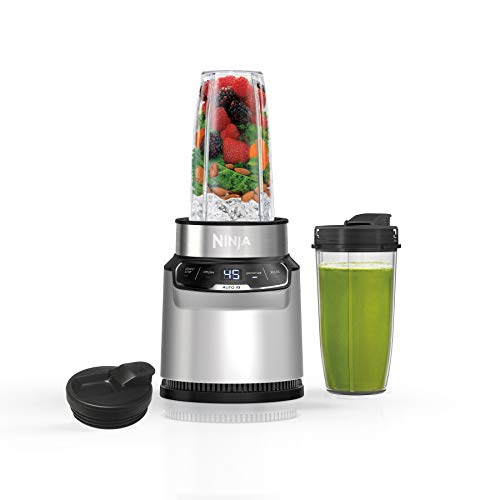
Ninja Nutri-Blender Pro with Auto-iQ
Best for Anyone who wants one-touch smoothies with serious power for fibrous greens
The 1100-peak-watt motor and Pro Extractor Blades break down whole vegetables, including tough stems and leafy greens, into a smooth drink in about a minute. Two Auto-iQ programs handle the pulsing and pausing for you, so there’s no guesswork. The 24-oz cups let you blend and go, and everything is dishwasher safe.
Motor power 1100 peak wattsCup capacity (2) 24-oz cupsDishwasher safe YesSpecial feature Auto-iQ presets
Why it made the cut
1100-watt motor powers through fibrous veggies
Auto-iQ one-touch presets for smoothies and crushed ice
Two 24-oz to-go cups with spout lids
Dishwasher safe parts
Good to know
Larger than some personal blenders
Only two preset programs
Skip it if Skip it if you want a smaller, lighter blender for occasional single servings.
Best for Small kitchens or anyone who wants a simple push-to-blend personal blender
The 700-watt base is compact enough to live on a crowded counter, and the push-to-blend control is as simple as it gets. It still extracts nutrients from whole fruits and vegetables, and the 16-oz cups are easy to take along. All parts are BPA-free and top-rack dishwasher safe.
Motor power 700 wattsCup capacity (2) 16-oz cupsDishwasher safe YesSpecial feature Pulse technology
Why it made the cut
Compact, space-saving design
Simple push-to-blend operation
Two 16-oz to-go cups with spout lids
BPA-free and dishwasher safe
Good to know
Smaller cups than many competitors
No preset programs
Skip it if Skip it if you routinely blend more than 16 oz at a time or want hands-free presets.
Best for Households that want multiple cup sizes and a full accessory set for one price
The 900-watt motor spins at 23,000 RPM to crush ice and tough leafy greens quickly. You get two 23-oz travel cups and a 17-oz cup, plus lids and sealing rings, so several people can blend and go. The twist-lock operation is fast, and all cups and lids are dishwasher safe.
Motor power 900 wattsCup capacity (2) 23-oz, (1) 17-ozDishwasher safe YesSpecial feature Twist-lock operation
Why it made the cut
900-watt motor with 23,000 RPM
Three cups in two sizes
Leak-proof drinking lids
Dishwasher safe parts
Good to know
No preset programs
Twist-lock requires a firm grip
Skip it if Skip it if you want one-touch presets or a simpler two-cup set.
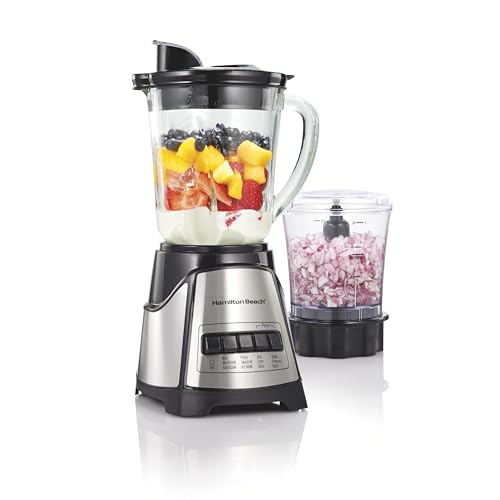
Best for Anyone who wants a glass jar and a food chopper in one machine
The 40-oz glass jar resists stains and odors, and the patented Wave~Action System pulls ingredients into the blades for smoother results. A 700-watt motor handles ice and tough vegetables, and the included 3-cup food chopper adds versatility. The pour spout is designed to prevent drips.
Motor power 700 wattsCup capacity 40-oz glass jarDishwasher safe YesSpecial feature Wave~Action System
Why it made the cut
40-oz glass jar with mess-free pour spout
Includes 3-cup food chopper
Wave~Action System for smoother blends
Dishwasher safe jar and blades
Good to know
Larger footprint than personal blenders
No to-go cups
Skip it if Skip it if you want to blend directly in a travel cup or need a compact machine.
Best for Quick single servings and anyone who wants a fast, no-frills blend
The 900-watt motor reaches 25,000 RPM, so fibrous vegetables break down in seconds. You get one 24-oz cup and two 17-oz cups with to-go lids, all BPA-free. The simple press-down operation is quick, and the cups and lids are dishwasher safe.
Motor power 900 wattsCup capacity (1) 24-oz, (2) 17-ozDishwasher safe YesSpecial feature 25,000 RPM
Why it made the cut
900-watt motor with 25,000 RPM
Three cups with to-go lids
BPA-free parts
Dishwasher safe cups and lids
Good to know
No preset programs
Requires holding the cup down to blend
Skip it if Skip it if you want hands-free blending or a larger main cup.
The best blender for making vegetable smoothies needs at least 700 watts to break down leafy greens, and 900 to 1100 watts if you’ll be adding carrots or kale stems. Power matters more than brand name when you’re blending fibrous vegetables, because a weak motor leaves gritty bits at the bottom of the cup.
Look for extractor blades with multiple prongs rather than a single flat blade. The Ninja Nutri-Blender Pro’s stacked blade assembly pulls vegetables down into the blades, so a whole celery stalk or a chunk of beet gets chopped evenly instead of spinning on top.
Cup size shapes your serving. A 16 oz cup makes a small drink; 24 oz leaves room for a full vegetable smoothie with liquid. Plastic cups are lighter and less likely to break, but glass resists odors from garlic or onion if you blend savory drinks. All five picks here have cups and lids that are top-rack dishwasher safe, which saves time every morning.
Pulse first
A pulse button or a preset that starts with short bursts chops tough vegetables before the full blend. That’s the difference between a smooth drink and one with flecks of kale.
Spec
What to look for
Why it matters for vegetables
Motor power
700W minimum; 900–1100W for stems and carrots
Breaks down fiber so the drink is smooth, not gritty
Blade design
Extractor blades with multiple prongs
Pulls vegetables down and chops evenly
Cup size
16 oz for a small serving; 24 oz for a full smoothie
Leaves room for vegetables plus liquid
Cleanup
Dishwasher-safe cup and blade
Saves time, and you’ll blend more often
The three specs that separate a good vegetable blender from a mediocre one.
From JuicerAdvices · our own guideChoosing or using a juicer? Page 3 compares the types; page 15 fixes the common problems.Home Juicing Starter KitMake fresh juice that tastes good, costs less and keeps safely: 40 recipes with exact amounts, a yield chart and a 4-week plan.40 juice, smoothie and shot recipesYield, storage and food-safety chartsCost, yield and shopping-list calculator (Excel)$14.99$9.99Get it for $9.99See what's inside and watch the 2-minute video →18-page printable PDF + Excel calculator · instant download · 30-day refund
Why a Personal Blender Often Beats a Full-Size Jar for Vegetables
A personal blender is usually the better vegetable blender machine for one smoothie a day, because the blades sit close to the food and blend a small volume more efficiently. In a big jar, a single serving of spinach and cucumber spreads out and needs more scraping; in a 24 oz cup, everything gets pulled into the blade within about a minute.
Cleanup is faster too. You rinse the cup and blade under the tap or put them in the dishwasher, instead of washing a large jar, lid, and gasket. That matters when you’re blending beets or kale every morning.
Personal blender
Blends one serving faster and smoother
Cup doubles as a travel mug
Easier to clean: rinse the cup and blade
Full-size jar blender
Smaller capacity; not ideal for two or more servings
Less useful for chopping vegetables separately
Usually a bit louder for the same power
Myth
You need a big, expensive jar blender to make a good vegetable smoothie.
Fact
A 900 to 1100 watt personal blender with extractor blades handles leafy greens and carrots just as well for one serving, and it’s easier to clean.
Choose a jar blender like the Hamilton Beach Power Elite if you make two or more servings at once or want to chop vegetables separately for cooking. For one daily vegetable smoothie, a personal blender is the faster, easier choice. If you’re also weighing a portable option, see the best portable blender for smoothies.
How to Get the Smoothest Vegetable Smoothie
The smoothest vegetable smoothie starts with liquid in the cup first, then soft vegetables, leafy greens, and frozen ingredients on top. This layering keeps the blades free to pull everything down, so you get a silky drink instead of a chunky one.
You can make fresh vegetable juice recipes in a blender by blending whole vegetables with water and straining the pulp. For a juice-like texture, pour the blended mixture through a fine-mesh sieve and press with a spoon.
1
Add liquid first
Pour water, unsweetened almond milk, or coconut water to the minimum fill line on your cup. Liquid at the bottom helps the blades move freely and prevents dry clumps.
2
Layer soft vegetables
Add cucumber, zucchini, or avocado next. These release water as they blend and create a smooth base.
3
Add leafy greens
Pack in spinach, kale, or romaine. Tear larger leaves so they blend evenly.
4
Top with frozen ingredients
Frozen berries, mango, or ice go in last. Their weight pushes the greens down toward the blades.
5
Pulse first for hard vegetables
If you’re using carrots, beets, or celery, pulse three or four times to break them into small pieces before running the full cycle.
6
Blend for 45 to 60 seconds
Run the smoothie cycle or blend on high for at least 45 seconds. Fibrous greens need that time to break down completely. Shorter blends often leave grit.
Strain for a juice-like texture
Pour the blended mixture through a fine-mesh sieve and press gently with a spoon. You’ll get a smooth, pulp-free drink without needing a juicer.
The Ninja Nutri-Blender Pro’s 1100-watt motor and extractor blades handle kale stems and carrot chunks well, but the layering method still matters. Even the best blender for vegetable smoothies blends more evenly when you load it in the right order.
Do High-Speed Blenders Destroy Vegetable Nutrients?
No, high-speed blending does not destroy most vegetable nutrients, and it can make some easier to absorb. Blending breaks open plant cell walls, which helps your body access beta-carotene from carrots and lycopene from tomatoes.
The main concern is heat, not speed. A 60-second blend stays cool, but blending for more than two minutes can warm the drink enough to reduce heat-sensitive vitamin C. Low heat blenders that preserve vegetable nutrients are simply those with a short, efficient blend cycle.
Myth
Blending destroys the fiber and vitamins in vegetables
Fact
Blending keeps the fiber, unlike juicing, and most vitamins survive a quick blend. Vitamin C drops a little with air and heat, so drink your smoothie within 20 minutes for the best retention.
No blender preserves 100% of nutrients, but a quick blend in a high-powered machine is a good trade-off for convenience. The vegetables you actually drink are far more nutritious than the ones left in the fridge.
Blend time matters
A 45- to 60-second blend keeps the drink cool and minimizes nutrient loss. If you blend longer, add a few ice cubes to help control the temperature.
Vegetable Smoothie Blender vs. Juicer: Which Do You Need?
A blender is the better tool for most vegetable drinks, because it keeps all the fiber from the vegetables in your cup. A juicer strains out most of that fiber and leaves you with a thinner liquid that digests faster. If you want a drink with pulp and fiber, a blender wins.
That fiber does real work. It makes a smoothie more filling, and it slows down how quickly the natural sugars from vegetables and fruit enter your bloodstream. For anyone watching blood sugar or trying to stay full until lunch, a vegetable smoothie from a blender is the steadier choice.
Blender for vegetable smoothies
Keeps all the fiber and pulp
One cup to clean, often dishwasher-safe
Blends whole vegetables, stems and all
Juicer for vegetable juice
Removes most of the fiber
More parts to wash and reassemble
Costs more for a good leafy-green model
Juicers do have one edge: they extract more liquid from leafy greens like spinach and kale, so you get a more concentrated drink. But that comes with a higher price tag and a longer cleanup. For everyday vegetable blender juice recipes, a personal blender like the Ninja Nutri-Blender Pro handles greens, carrots and celery in about a minute.
Choose a blender if you want
A thicker drink with fiber and pulp
One appliance for smoothies, dips and sauces
Less time spent cleaning after breakfast
In short
A blender keeps the fiber and makes a filling, slower-digesting drink. A juicer removes fiber and costs more, but it pulls more liquid from leafy greens.
Your Vegetable Smoothie Checklist
Run through these five steps before you press blend, and your vegetable smoothie will come out smoother and better balanced.
Pre-blend checklist
Wash all vegetables, especially leafy greens, to remove grit
Cut carrots, beets and celery into 1-inch pieces so they blend evenly
Pour in enough liquid to cover the blades; check the minimum fill line on the cup
Start with a pulse, then blend for at least 45 seconds
Taste and adjust: a squeeze of lemon or a small piece of fruit balances bitter greens
Washing greens matters more than you might think. A handful of spinach can hide sand that turns a smoothie gritty, so rinse it under running water and give it a gentle shake dry.
Cutting tough vegetables into 1-inch chunks helps the blades catch them instead of bouncing them around the cup. And starting with a pulse breaks up the biggest pieces before the motor runs continuously.
In short
Wash, cut, add liquid, pulse, then blend for 45 seconds. Taste and adjust with lemon or fruit before you pour.
Questions People Ask
Can I put raw vegetables in a blender?
Yes, most raw vegetables blend fine if you cut them into 1-inch pieces and add enough liquid. Hard roots like carrots and beets may need a 900-watt motor or a little extra blending time to break down completely.
What is the best blender for leafy greens like kale and spinach?
A personal blender with at least 900 watts and extractor blades handles leafy greens best, because the small cup keeps the leaves close to the blades. The Ninja Nutri-Blender Pro with Auto-iQ is a strong pick, and adding liquid first helps the greens circulate instead of sticking to the sides.
How long should I blend a vegetable smoothie?
Blend for 45 to 60 seconds with a high-powered blender, or up to 90 seconds if you added carrots or kale stems. Stop when you no longer see flecks of green or bits of vegetable on the sides of the cup.
Do I need a high-speed blender for carrots and beets?
You need at least 900 watts for raw carrots and beets, and 1100 watts makes the job faster and smoother. A lower-wattage blender can still work if you grate the vegetables first or add extra liquid.
Can a personal blender handle frozen vegetables?
Yes, most personal blenders with 900 watts or more can crush a handful of frozen vegetables, especially if you add liquid first and blend in short pulses. Avoid filling the cup more than two-thirds full with frozen pieces to keep the blades moving.
Is a blender or a juicer better for vegetable drinks?
A blender is better for most people because it keeps all the fiber from the vegetables in your drink, which helps you feel full and supports digestion. A juicer removes the fiber and concentrates the natural sugars, so it’s a different drink, not a smoother version of the same one.
How do I clean a blender after making a vegetable smoothie?
Rinse the cup right after pouring, then fill it halfway with warm water and a drop of dish soap and run the blender for 20 to 30 seconds. Rinse again and let it air dry, and never put your hand near the blades while the base is plugged in.
Before you go · a welcome giftGet the Home Juicing Starter Kit for $4.99Make fresh juice that tastes good, costs less and keeps safely: 40 recipes with exact amounts, a yield chart and a 4-week plan. Normally $14.99; your welcome price saves $10.00. We'll email your link right now.or skip the email and buy it now for $4.99 →One email with your link now. We never share your address.



 Home Juicing Starter KitMake fresh juice that tastes good, costs less and keeps safely: 40 recipes with exact amounts, a yield chart and a 4-week plan.40 juice, smoothie and shot recipesYield, storage and food-safety chartsCost, yield and shopping-list calculator (Excel)