Why Your Homemade Smoothies Taste Bland (And How to Fix It)
On this page 7 sections
- The Real Reason Your Smoothie Tastes Like Nothing (It’s Not Just the Fruit)
- The Flavor Pyramid: Build Every Smoothie on These 5 Layers
- The Temperature Trap: Why Cold Kills Flavor (And How to Fix It)
- The 3 Most Common Mistakes That Sabotage Your Blend
- The Emergency Fix: How to Save a Bland Smoothie in 10 Seconds
- The Ultimate Troubleshooting Table (Symptom → Cause → Fix)
- The Bottom Line: Taste as You Go, Not After
You bought the expensive fruit. You followed a recipe you found online. You hit blend, poured the glass, took a sip — and got nothing. Just cold, vaguely sweet water with a gritty texture. It’s frustrating, especially when you see photos of thick, vibrant smoothies everywhere on social media.
Here’s the truth: a bland smoothie is rarely the fault of the fruit. It’s almost always a structural problem — missing layers, wrong proportions, or a temperature issue that dulls your taste buds before you even swallow. This guide walks you through a simple diagnostic system called the Flavor Pyramid, plus the exact fixes for the most common blending mistakes. You’ll leave with a repeatable method, not just a list of tips.
If your current blender struggles to crush ice or leaves chunks behind, that’s part of the problem too. A tool like the Check price on Amazon handles frozen ingredients with a 700-watt motor, which gives you a consistent puree instead of a chunky mess. It’s a solid baseline for testing the flavor principles below.

The Real Reason Your Smoothie Tastes Like Nothing (It’s Not Just the Fruit)
Cold temperatures suppress sweetness. That’s not a guess; it’s physiology. When something is ice-cold, your taste receptors for sugar and salt become less sensitive. You perceive less flavor, so the drink feels flat.
Most people compensate by adding more fruit. That makes the smoothie sweeter, but it also adds more water and fiber, which dilutes the other flavors. You end up with a giant glass of sweet nothing.
The second culprit is flavor fatigue. Throw in berries, mango, spinach, protein powder, peanut butter, and yogurt, and you have a competition. When too many strong flavors hit your palate at once, your brain averages them out. The result is a uniform, indistinct taste. Nobody wins.
So the fix isn’t adding more. It’s adding the right things in the right order. That’s where the Flavor Pyramid comes in.
The Flavor Pyramid: Build Every Smoothie on These 5 Layers
Think of a smoothie like a sauce. A good sauce has sweetness, salt, acid, and fat. A smoothie needs the same balance, plus an aromatic finish. Here’s the breakdown.
Layer 1: The Base (Sweetness)
Your base is the dominant sweetness. Ripe bananas are the gold standard. A banana with brown spots on the peel is significantly sweeter than a yellow one — the starches convert to sugar as it ripens. Use one frozen banana per 12-16 ounces of liquid.
Don’t have a ripe banana? Use dates. Two or three Medjool dates add a caramel-like sweetness and a bit of body. Soak them in warm water for 10 minutes if they’re hard. Honey or maple syrup works, but add it last — you might not need it once the other layers are in.
Layer 2: The Body (Creaminess)
Body is about mouthfeel. A watery smoothie tastes thin, and thin drinks taste bland because flavor doesn’t linger on your tongue. You need something that coats.
Greek yogurt, a quarter of an avocado, or a scoop of almond butter all do the job. Each adds richness. The fat in these ingredients also carries fat-soluble flavor compounds, which makes the overall taste more pronounced. If you’re dairy-free, a quarter cup of canned coconut milk (the full-fat kind) works wonders.
Layer 3: The Lift (Acidity)
This is the layer most people skip. A squeeze of lemon or lime juice — just a teaspoon or two — brightens everything. Acid balances sweetness and cuts through the heaviness of the fat.
Think about lemonade. Without the lemon, it’s just sugar water. Your smoothie is no different. If you’re using kale or spinach, the acid also helps mask that grassy, bitter note that raw greens bring.
Layer 4: The Depth (Salt & Spice)
A tiny pinch of salt — like a quarter teaspoon — reduces bitterness and amplifies sweetness. It doesn’t make the smoothie salty. It makes the fruit taste more like itself. This is the same reason salted caramel works.
Ground cinnamon or a dash of nutmeg adds warmth and complexity. Cinnamon pairs especially well with banana, apple, and oats. For a chocolate smoothie, a pinch of cayenne or espresso powder adds depth that makes the cocoa taste richer.
Layer 5: The Finish (Aromatics)
Aromatics hit your nose, and your sense of smell drives most of what you perceive as flavor. Vanilla extract is the easiest win. A half-teaspoon rounds out rough edges and makes the smoothie taste more “complete.”
Citrus zest works too. A quarter teaspoon of orange or lemon zest adds a fragrant note that juice alone can’t provide. Just be careful — a little goes a long way.
The Temperature Trap: Why Cold Kills Flavor (And How to Fix It)
Earlier we mentioned cold dulls sweetness. Here’s the practical fix: don’t blend everything straight from the freezer.
Use frozen fruit for texture, but balance it with room-temperature liquid. If you use almond milk straight from the fridge, your entire base is cold. Instead, use room-temperature water or milk, or let your refrigerated liquid sit out for 15 minutes before blending. The final drink will still be cold because of the frozen fruit, but it won’t be numbingly frigid.
Another trick: add a splash of warm (not hot) liquid to the blender before you add the frozen ingredients. This helps the blades move freely and slightly warms the mixture as it blends. You get a smooth texture with better flavor perception.
If your smoothie still tastes flat after blending, let it sit for two minutes. The temperature equalizes, and flavors often emerge as it approaches room temperature. It’s a small change, but it makes a real difference.
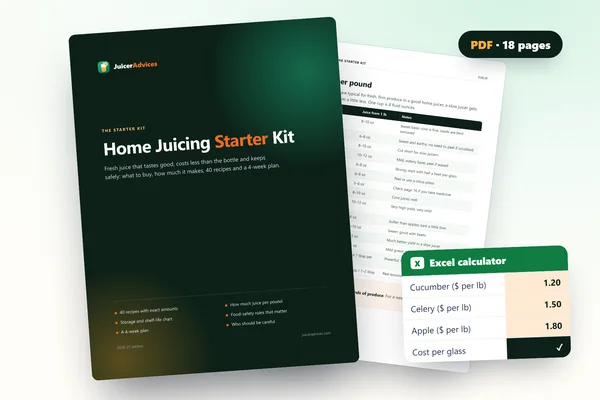 Home Juicing Starter KitMake fresh juice that tastes good, costs less and keeps safely: 40 recipes with exact amounts, a yield chart and a 4-week plan.40 juice, smoothie and shot recipesYield, storage and food-safety chartsCost, yield and shopping-list calculator (Excel)
The 3 Most Common Mistakes That Sabotage Your Blend
Even with the right ingredients, technique matters. Here are the three errors I see most often.
Mistake 1: The Wrong Liquid-to-Solid Ratio
Too much liquid makes a thin, watery drink. Too little makes a thick paste that won’t blend. The sweet spot is roughly 1 cup of liquid per 2 cups of frozen fruit and vegetables.
Start with less liquid. You can always add more, but you can’t take it out. If you’re using fresh (not frozen) fruit, cut the liquid down to 3/4 cup because fresh fruit releases water as it blends.
Mistake 2: Blending Order (It Matters More Than You Think)
If you dump everything in at once, the blades hit the heavy frozen fruit first and the liquid sits on top. That leads to uneven blending and a chunky bottom.
Put liquids in first, then powders (protein powder, chia seeds, flax seeds), then soft ingredients (yogurt, spinach), then frozen fruit on top. This order lets the blades pull everything down into the vortex. It also prevents powders from clumping on the sides. If you’re working with tough greens, check out this guide on blending leafy greens for specific tips.
Mistake 3: Over-Blending (Yes, That’s a Thing)
Run the blender too long and you incorporate excess air. That creates a frothy, foamy texture that dilutes flavor and changes mouthfeel. You also generate heat, which melts the ice and makes the smoothie watery.
Blend in short pulses. Use 10-15 second bursts, then stop and check the consistency. The smoothie should be uniform and thick. If it’s moving like a milkshake, you’re done. If it’s sloshing like juice, add more frozen fruit.
The Emergency Fix: How to Save a Bland Smoothie in 10 Seconds
You already blended it, and it tastes like nothing. Don’t dump it. Fix it.
First, add a pinch of salt. Blend for 2 seconds. Taste again. This single step fixes about 60% of bland smoothies because salt amplifies everything else.
Still flat? Add a teaspoon of lemon juice. The acid will lift the sweetness. Still missing something? Add a quarter teaspoon of vanilla extract and a few ice cubes, then blend for 5 seconds.
If the smoothie is too thick and pasty, add a splash of cold water or milk. If it’s too thin, add a handful of frozen berries or a quarter of a frozen banana. Blend in short pulses only.
One more option: stir in a spoonful of almond butter or a few dates. These add body and sweetness without changing the flavor profile dramatically. It’s not a perfect fix, but it saves the drink.
The Ultimate Troubleshooting Table (Symptom → Cause → Fix)
| Symptom | Most Likely Cause | Instant Fix |
|---|---|---|
| Watery, thin texture | Too much liquid, or over-blending melted the ice | Add frozen fruit (berries or banana) and blend for 5 seconds |
| Gritty or chalky mouthfeel | Protein powder or seeds not fully pulverized | Blend longer, or pre-grind seeds with a seed preparation guide |
| Grassy or bitter taste | Too much raw kale or spinach | Add lemon juice and a pinch of salt; reduce greens next time |
| Flat, no sweetness | Fruit not ripe, or drink too cold | Add a few drops of vanilla extract or a pinch of salt |
| Foamy and frothy | Over-blending incorporated too much air | Let it sit for 1 minute, then stir gently with a spoon |
| Tastes like nothing at all | Too many competing flavors averaging out | Add acid (lemon) and salt; next time, cut back to 3 main ingredients |
The Bottom Line: Taste as You Go, Not After
The biggest shift is treating your smoothie like a recipe, not a formula. You wouldn’t bake a cake without tasting the batter, and you shouldn’t blend a smoothie without checking the balance.
- Build your drink using the Flavor Pyramid: base, body, lift, depth, finish.
- Use ripe bananas or dates for reliable sweetness — they beat honey every time.
- Add a pinch of salt to every smoothie. It’s the single highest-impact fix.
- Keep the liquid-to-solid ratio near 1:2, and always start with less liquid.
- Blend in short pulses. Stop when the smoothie is thick and uniform, not foamy.
- If it tastes bland after blending, add salt first, then acid, then vanilla.
- Don’t overload with flavors. Three or four main ingredients beat eight.
Your blender matters, but not as much as your palate. A solid blender guide helps you pick the right tool, but the flavor system above works with any machine. Taste, adjust, and repeat. That’s the whole secret.