How Many Smoothies Per Day Is Too Much? Expert Advice
On this page 7 sections
The most common mistake is treating every smoothie as a health drink. A large fruit-only smoothie can pack 60 to 80 grams of sugar and 400 to 600 calories, yet it may leave you hungry an hour later. That is the cost of guessing instead of measuring.
Smoothies can be a useful way to get more produce, but the daily limit depends on what is in the blender and what else you eat. The sections below give you a clear upper limit, the signs that you have crossed it, and a simple way to build a smoothie that works for your day.
How Many Smoothies a Day Is Too Much
For most healthy adults, 1 to 2 smoothies per day is a safe amount, as long as each one stays around 8 to 12 oz (240 to 360 ml) and is built mostly from vegetables, some fruit, and a source of protein or fat. Drinking more than that can push daily calories and sugar past healthy limits, because blending concentrates fruit sugars and makes them easy to consume quickly.
The problem is rarely the smoothie itself. It’s that smoothies are liquid calories that don’t fill you up the way whole fruit does. You can drink two bananas, a cup of berries, and a splash of juice in under a minute, but eating that same amount of fruit would take longer and leave you fuller. That’s why the British Heart Foundation suggests keeping smoothie portions to about 150 ml (5 oz) if you’re watching sugar, though a larger vegetable-based smoothie with protein and fat can fit into a healthy day.
| Drink | Sugar per serving | Servings | Total |
|---|---|---|---|
| Small fruit smoothie (8 oz) | 20 g | 1 | 20 g |
| Large café smoothie (16 oz) | 40 g | 1 | 40 g |
| Total | 60 g | ||
| Daily added sugar limit for most women (25 g) | 240% | ||
So the real question is what’s in the glass and what else you eat that day. A green smoothie with spinach, half a banana, plain yogurt, and a spoon of nut butter is very different from a fruit-only blend with honey and juice. The first can be a meal; the second is closer to a sweet drink.
If you’re using smoothies to gain weight, the math changes. A daily smoothie with oats, nut butter, and full-fat milk can add 400 to 600 calories. That’s a useful tool for someone who struggles to eat enough, but it’s too much for someone trying to maintain or lose weight. See how many smoothies a day to gain weight fast for that specific goal.
What Counts as One Smoothie
One smoothie is about 8 to 12 oz (240 to 360 ml) when made at home. A store-bought or café smoothie is often 16 to 24 oz, which counts as two servings. The difference matters because sugar and calories scale with size, not with how healthy the ingredients sound.
A fruit-only smoothie is higher in sugar and lower in protein and fiber than one built around vegetables. Adding honey, agave, fruit juice, or sweetened yogurt increases sugar without adding fullness. The simplest rule: one serving of fruit (about 1 cup) per smoothie, plus vegetables, protein, and a healthy fat.
| Smoothie type | Typical size | Sugar | Protein | Fiber |
|---|---|---|---|---|
| Small fruit smoothie | 8 oz | 20 g | 1 g | 2 g |
| Large fruit smoothie | 16 oz | 40 g | 2 g | 4 g |
| Green vegetable smoothie | 12 oz | 10 g | 5 g | 6 g |
| Protein smoothie | 12 oz | 15 g | 20 g | 5 g |
If you’re choosing between store-bought options, the best smoothie is one with vegetables listed early in the ingredients, no added sugar, and at least a few grams of protein and fiber. A green smoothie with spinach, avocado, and unsweetened almond milk beats a mango-passion blend with juice concentrate.
For a deeper look at how much juice is safe to drink daily, including how whole fruit compares, see how much juice is safe to drink daily.
Signs You Are Drinking Too Many Smoothies
Too much fruit or smoothies too often usually shows up as one of six body signals: hunger returning within an hour, unexpected weight changes, blood sugar swings, bloating, diarrhea, or tooth sensitivity. Notice two or more, and the fix is usually to cut back to one smoothie a day, shrink the serving to 8 oz, or rebuild it around vegetables and protein.
Liquid calories are less satiating than the same foods eaten whole. Chewing takes time and triggers fullness hormones; drinking a blended mix does not. A 400-calorie smoothie can leave you hungry long before a 400-calorie meal would, especially when the drink is mostly fruit and juice.
Rapid sugar absorption explains the crashes. Blending breaks down fiber and releases fruit sugars quickly, so blood glucose spikes and then falls. The rebound can feel like shakiness, irritability, or needing another snack by mid-morning.
Digestive trouble often follows excess fiber or high-FODMAP ingredients. A large smoothie with chia seeds, kale, dates, and mango can deliver more fiber than your gut is used to, causing gas, bloating, or loose stools. Acidic fruits like pineapple and citrus can also trigger reflux in sensitive people.
Tooth sensitivity is a quieter sign. Sipping an acidic smoothie over an hour bathes enamel in acid, and added sugars feed cavity-causing bacteria. If your teeth feel sensitive to cold or sweet foods after a few weeks of daily smoothies, the drink may be playing a part.
These signs usually appear when smoothies replace balanced meals but lack enough protein, fat, or chewable food, or when they are added to everything else you already eat. The smoothie itself is rarely the whole story; the pattern is.
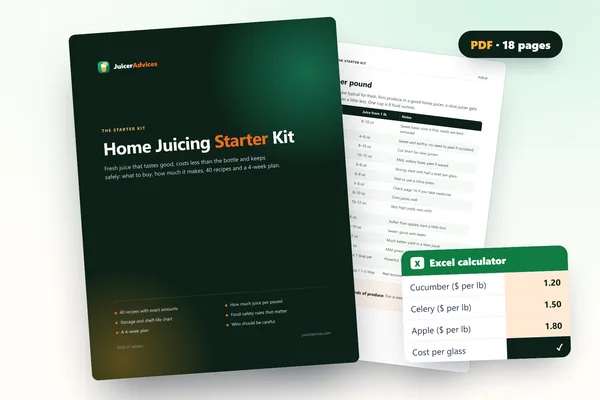 Home Juicing Starter KitMake fresh juice that tastes good, costs less and keeps safely: 40 recipes with exact amounts, a yield chart and a 4-week plan.40 juice, smoothie and shot recipesYield, storage and food-safety chartsCost, yield and shopping-list calculator (Excel)
Who Should Limit Smoothies Further
Benefits of drinking smoothies everyday are real for many people: more vegetables, more fiber, convenient protein. But several groups do better with a lower limit or a different recipe, because the ingredients that make a smoothie healthy for one person can work against another.
For smoothies and diabetes or prediabetes, stick to one small smoothie a day, about 8 oz, built on leafy greens, cucumber, unsweetened protein powder or Greek yogurt, and a small portion of low-sugar fruit like berries. Skip added honey, agave, dates, and fruit juice. Pairing the smoothie with a meal that includes fat and protein slows the sugar spike, and testing blood glucose two hours after can show how your body responds.
With kidney disease, the concern shifts to potassium and phosphorus. Bananas, oranges, avocados, coconut water, and dairy all add potassium or phosphorus, which damaged kidneys clear more slowly. A renal dietitian can give you a personal limit, but many people with chronic kidney disease are told to keep potassium under 2,000 to 3,000 mg a day and to watch phosphorus from dairy and protein powders.
On warfarin or another vitamin K-sensitive blood thinner, the rule is consistency, not avoidance. Vitamin K helps the blood clot, so a sudden jump in the kale or spinach in your smoothie can shift how the medicine works. Keep your leafy greens steady from day to day, and talk to your prescriber or pharmacist before you change your smoothie habit.
For IBS or a sensitive gut, high-FODMAP fruits and large fiber loads are common triggers. Mango, apple, pear, watermelon, and honey are high in FODMAPs, and a 16 oz smoothie with chia and flax can overwhelm a sensitive colon. Start with a 4 to 6 oz portion, use low-FODMAP fruits like banana or blueberries, and add new ingredients one at a time.
Children need smaller portions and a different role for smoothies. For a child under about 8, 4 to 6 oz is a snack, not a meal. Keep it low in added sugar, and serve it in a cup, not a pouch or bottle, so it does not replace chewing practice or lead to constant sipping.
Anyone trying to lose weight should make the smoothie replace a meal, not accompany it. A 300-calorie smoothie added to breakfast and lunch adds 300 calories the body did not ask for. Swap it for the meal you are most likely to skip, and keep protein and fiber high enough to hold you to the next meal.
- Diabetes or prediabetes: one 8 oz smoothie a day, mostly vegetables, no added sugar
- Kidney disease: ask a renal dietitian about potassium and phosphorus limits before adding bananas, oranges, avocado, or dairy
- Warfarin users: keep kale and spinach amounts consistent from day to day
- IBS or sensitive digestion: start with 4 to 6 oz and low-FODMAP fruits
- Young children: 4 to 6 oz as a snack, not a meal
- Weight loss: replace a meal, don’t add to one
How to Make a Smoothie That Fits Your Day
Build your smoothie around a 40-30-20-10 ratio: 40% leafy greens, 30% low-sugar fruit, 20% protein, and 10% healthy fat. That balance keeps calories and sugar in check while making the drink satisfying enough to count as a meal.
Drink it slowly over 15 to 20 minutes instead of gulping it down. Sipping gives your stomach time to signal fullness, which helps prevent the hunger rebound that comes after a too-quick smoothie.
Timing matters for what the smoothie replaces. A smoothie with protein and fat can stand in for breakfast or lunch. Without those, it’s a snack, not a meal, and you’ll likely be hungry again within an hour.
After a workout, a smoothie with 20 to 30 g of protein and some carbohydrate helps repair muscle and restore glycogen. Blend it within about 30 to 60 minutes of finishing your session.
If you take medication, check with your pharmacist before making smoothies a daily habit. High-fiber ingredients can slow absorption of some drugs, and leafy greens are rich in vitamin K, which interacts with warfarin.
A blender that can pulverize frozen fruit and fibrous greens makes the difference between a smoothie you enjoy and one you choke down. Look for a model with at least 600 watts and sharp blades that create a vortex.
Safer Alternatives When You Want More
If one smoothie doesn’t feel like enough, stretch it with water or unsweetened almond milk. Adding 4 to 6 oz of liquid increases the volume without adding meaningful calories or sugar, so you can sip longer and feel fuller.
Whole fruit beats blended fruit for fullness because chewing triggers satiety signals that drinking bypasses. An apple with a handful of almonds offers the same fiber and healthy fat as many smoothies, with fewer calories and more crunch.
- A small apple or pear with 1 oz of nuts or a cheese stick
- Vegetable sticks with 2 to 3 tbsp of hummus
- A small protein shake made with water or unsweetened milk
- A cup of plain yogurt with a half-cup of berries
Smoothies are a handy way to use up wilting spinach or overripe bananas, but they shouldn’t be your only source of produce. Aim for at least half your fruits and vegetables in whole form each day so you keep chewing, which helps regulate appetite.
If you’re wondering how much juice fits into a healthy day, see how much juice is safe to drink daily. And if protein shakes are your go-to, the limits differ; check how many Atkins protein shakes per day for guidance.