How Does a Syphon Coffee Maker Work and Is It Right for You?
On this page 7 sections
- What Is a Syphon Coffee Maker and How Does It Work?
- What to Expect in Caffeine, Acidity, and Flavor
- How Syphon Coffee Compares to Other Brewing Methods
- Who Should Be Careful With Syphon Coffee?
- How to Use and Care for a Syphon Coffee Maker
- What to Do Next to Enjoy Syphon Coffee Safely
- Frequently Asked Questions
Say you enjoy brewing coffee with precise control and want a visually appealing method that delivers a clean taste. A syphon coffee maker uses a unique vacuum and vapor pressure process to brew coffee, often yielding a smooth cup with vibrant aroma.
Understanding how it works and what to expect in caffeine and acidity can help you decide if it’s right for your routine.
What Is a Syphon Coffee Maker and How Does It Work?
A syphon coffee maker is a brewing device that uses vapor pressure and vacuum to make coffee, creating a clean and flavorful cup. It consists of two glass chambers stacked vertically, connected by a tube, and a heat source beneath the lower chamber.
The system includes an upper brewing chamber, where you place ground coffee, and a lower chamber for water. When heat is applied, the water in the lower chamber heats up, increasing vapor pressure and forcing hot water to rise through the tube into the upper chamber to mix with the coffee grounds.
Once the brewing time is reached and the heat source is removed, the brewed coffee is pulled back down into the lower chamber by the vacuum created as the vapor condenses. This process extracts coffee flavors while leaving most grounds behind.
Materials typically include heat-resistant borosilicate glass for the chambers and stainless steel or brass for the stand, filter, and fasteners. The filter, often cloth or metal mesh, sits between chambers to separate grounds from liquid.
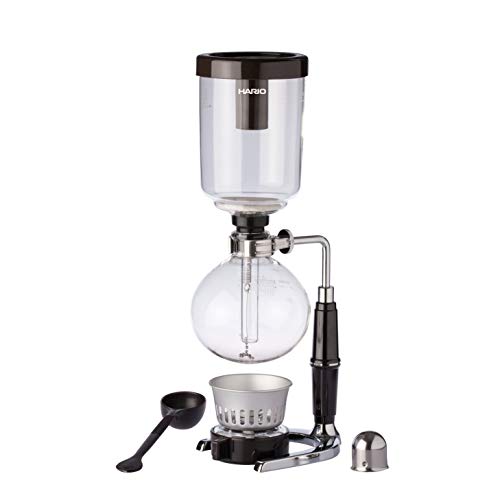
Brewing steps usually involve filling the lower chamber with water, attaching the upper chamber with coffee grounds, lighting the burner below, and watching the water rise to brew. After a few minutes, removing the heat lets the coffee filter down, ready to serve.
| Part | Function |
|---|---|
| Lower Chamber | Holds water and generates vapor pressure |
| Upper Chamber | Holds coffee grounds and brews coffee |
| Tube | Connects chambers, allows water and coffee flow |
| Filter | Separates grounds from brewed coffee |
| Heat Source | Heats water to start brewing |
| Stand and Fasteners | Support structure and secure chambers |
What to Expect in Caffeine, Acidity, and Flavor
Syphon coffee typically contains about 80 to 120 mg of caffeine per 8 oz cup, similar to drip coffee but less than espresso. Its moderate caffeine level suits most coffee drinkers.
| Drink | Caffeine per serving | Servings | Total |
|---|---|---|---|
| 8 oz Syphon Coffee | 100 mg | 1 | 100 mg |
| 8 oz Drip Coffee | 95 mg | 1 | 95 mg |
| 1 shot Espresso | 63 mg | 1 | 63 mg |
| Total | 258 mg | ||
| Daily limit for most healthy adults (400 mg) | 65% | ||
Acidity in syphon coffee is usually milder than drip coffee but higher than espresso. The vacuum process extracts flavors cleanly without over-extracting acids, making it a balanced choice for those sensitive to acidity.
Flavor-wise, syphon coffee is known for clarity and brightness. The brewing method highlights nuanced floral, fruity, or chocolate notes depending on the beans, providing a crisp but full-bodied cup.
If you have acid reflux or sensitive digestion, you might want to limit syphon coffee to one small cup (about 6 oz) per day or choose lower-acid beans. Those watching caffeine should track intake, as syphon brews vary by bean and grind size.
Coffee syphon kitchens often appreciate the theatrical brewing process and the flavor clarity, but these factors don’t change how caffeine or acid affect your body.
How Syphon Coffee Compares to Other Brewing Methods
Syphon coffee makers stand out as one of the best stove top coffee makers for those who appreciate a visually engaging, hands-on brew. Compared to drip machines, syphon brewing takes longer—about 6 to 8 minutes versus 4 to 6 minutes for drip—but offers a cleaner cup with more clarity in flavor. Unlike French press coffee, which steeps grounds directly in hot water producing a heavier, more robust brew with some sediment, syphon coffee uses a vacuum process that filters out oils and fine particles for a lighter mouthfeel.
Espresso machines, in contrast, use pressure to extract coffee quickly, resulting in a concentrated, bold flavor with higher caffeine per ounce. Syphon coffee delivers moderate strength, somewhere between drip and espresso, with a delicate balance of aroma and acidity.
| Brewing Method | Taste and Strength | Brewing Time | Cleaning and Maintenance |
|---|---|---|---|
| Syphon | Clean, bright, moderate strength | 6–8 minutes, hands-on | Requires disassembly and careful cleaning of glass components |
| Drip | Mild to medium strength, consistent | 4–6 minutes, mostly automatic | Easy cleanup, removable filters |
| French Press | Robust, full-bodied, some sediment | 4–5 minutes, manual | Requires cleaning plunger and carafe |
| Espresso | Strong, concentrated, rich crema | 30 seconds to 1 minute, machine-dependent | Machine needs regular descaling and cleaning |
Cleaning a syphon involves washing two glass chambers and the filter, which some find fiddly compared to the simplicity of a drip or French press. If you prefer low-maintenance or quick coffee, another method may serve you better. However, if you enjoy the ritual and flavor nuances, syphon coffee is a top choice among coffee pot makers.
For a practical example, say you use a syphon for your morning cup. The process takes about 7 minutes and results in a clean, aromatic brew you won’t find with drip or French press. The extra time and care in cleaning pay off in taste and experience.
Explore our guide to the best stove top coffee maker and best coffee pot maker to compare models suited for your kitchen and lifestyle.
 Caffeine & Sugar Drink GuideKnow exactly how much caffeine, sugar and sodium is in 150+ popular drinks, and set daily limits that fit you.Caffeine and sugar in 150+ drinksDaily limits, smart swaps and a cut-back planDaily caffeine and sugar calculator (Excel)
Who Should Be Careful With Syphon Coffee?
Syphon coffee is generally safe but calls for caution if you have acid reflux or gastritis. Its moderate acidity can irritate sensitive stomach linings, potentially worsening symptoms. If you notice heartburn or discomfort after drinking, limiting intake or switching to a low-acid brew may help.
People sensitive to caffeine should monitor how much syphon coffee they drink. The caffeine content ranges from about 80 to 120 mg per 8 oz cup, roughly the same as drip coffee. Consuming multiple cups a day might trigger jitteriness, insomnia, or a racing heart in sensitive individuals.
When caffeine needs to be limited, aim for no more than about 200 mg per day from all sources. That often means sticking to one 8 oz cup of syphon coffee or choosing decaf or herbal teas instead.
Lower-acid coffee options or brews with reduced caffeine may be better alternatives. Cold brew coffee, for example, tends to have lower acidity and smoother taste. Herbal teas or chicory coffee substitutes offer caffeine-free choices that are gentle on the stomach.
How to Use and Care for a Syphon Coffee Maker
Using a syphon coffee maker involves a clear sequence of steps to get the best brew and keep the device in good shape.
Cleaning your syphon coffee maker after each use preserves its glass and filter integrity. Rinse both chambers with warm water and avoid abrasive cleaners.
Filters should be soaked and gently brushed to remove coffee oils and grounds. Stainless steel parts dry quickly and resist corrosion.
Store the coffee maker disassembled if possible, in a padded or stable place away from heavy items to prevent glass damage.
What to Do Next to Enjoy Syphon Coffee Safely
Start by checking your usual caffeine tolerance before adding syphon coffee to your routine. An 8 oz cup is a good beginning portion to see how your body reacts.
Follow the brewing instructions carefully; precise heat and timing help avoid over-extraction, which can increase bitterness and acidity.
If you notice symptoms related to caffeine or acid, consider smaller servings or lower-acid beans. Drinking slower can also help reduce discomfort.
Selecting a quality syphon coffee maker designed for easy cleaning and consistent temperature control makes a difference in the cup and your experience.