How to Juice Lemons Faster & Get More Juice
On this page 6 sections
You need fresh lemon juice for a recipe, but squeezing those stubborn fruits feels like a workout. You end up with tired hands, minimal liquid, and maybe a seed or two in your bowl. Sound familiar? There’s a better way. With a few simple techniques and the right tools, you can extract lemon juice faster and get significantly more from each fruit. It’s all about preparation, pressure, and process.
This guide breaks down the science and strategy behind juicing lemons efficiently. We’ll cover everything from choosing your tool to storing the liquid gold. You’ll learn how to get more juice with less effort, whether you’re making lemonade, dressing a salad, or baking a dessert. Let’s transform that frustrating chore into a quick, satisfying kitchen task.

Essential Tools for Efficient Juicing
The right equipment makes all the difference in juicing efficiency. Your choice depends on volume, effort, and how much pulp you want. Here are the main categories.
Manual Juicers: Simple and Effective
For most home cooks, a manual tool is perfect. They’re affordable, easy to clean, and highly effective.
- Citrus Press or Manual Citrus Press: This is the classic hinged lemon squeezer. You place a halved lemon inside, squeeze the handles, and the juice runs out the bottom while seeds and pulp are trapped. It applies perfect vertical pressure. Brands like OXO and Zyliss make excellent, ergonomic models.
- Citrus Reamer: A citrus reamer is a simple, cone-shaped tool you twist into the lemon half by hand over a bowl. It offers great control and is fantastic for small jobs. The Chef’n FreshForce Citrus Reamer, for example, has a clever design that amplifies your twisting force.
- Hand Juicer: This is a broad category that often includes basic presses and reamers. The key is a tool designed specifically for citrus that you operate by hand, not electricity.
For a fantastic budget-friendly option that combines simplicity with effectiveness, many home cooks swear by the Check price on Amazon lime squeezer. Its durable design makes quick work of small citrus without taking up much drawer space.
Electric Juicers: Power for Volume
If you’re juicing bags of lemons for large batches, an electric citrus juicer saves time and arm fatigue. These machines typically have a spinning reamer that automatically extracts juice when you press the fruit down. They’re fast but take up more counter space. For specific machine guidance, our guide on how to juice a lemon in a Breville juicer walks you through the process with a popular electric model.
Optimal Lemon Preparation Techniques
What you do before you cut and squeeze is arguably more important than the squeeze itself. Proper preparation breaks down the internal structure of the lemon, making the juice flow freely.
Start with Room Temperature Lemons
This is the golden rule. Cold lemons straight from the fridge are tight and reluctant to give up their juice. Allowing them to reach room temperature for an hour or so before juicing makes the cell walls more pliable. The juice inside is also less viscous, so it flows out more easily. You’ll see a noticeable difference in yield.
Apply Pressure: Roll Firmly
You’ve probably heard the tip to roll a lemon before juicing. It works, and here’s why: rolling the lemon on your counter while applying firm pressure with the palm of your hand ruptures the juice vesicles (the tiny sacs filled with liquid) inside the fruit. Think of it as a pre-juice. Before you cut, place the lemon on a hard surface and roll firmly back and forth several times until you feel it soften slightly. This simple step is a game-changer for how to get the most juice out of a lemon.
The Microwave Method (A Quick Alternative)
Forgot to take your lemons out of the fridge? The microwave can help. Microwave lemon halves for 10-15 seconds on high power. The brief burst of heat warms the fruit internally, mimicking the effect of room temperature. Be careful not to overdo it, as you don’t want to cook the lemon or lose precious vitamin C. The question does rolling a lemon get more juice has a clear answer, but when in a pinch, the microwave is a valid shortcut.
Step-by-Step Juicing Methods
Now, let’s put it all together. Follow this process for maximum output, whether you’re using a tool or just your hands.
Method 1: Using a Manual Citrus Press
- Prepare your lemon (room temp, rolled).
- Cut the lemon in half crosswise, not lengthwise. Cutting across the segments exposes more juice vesicles.
- Place one half, cut-side down, into the press. Ensure the “navel” of the lemon is centered.
- Apply steady, firm pressure on the handles until no more juice drips out.
- For a second pass, rotate the lemon half 90 degrees and squeeze again to get every last drop.
Method 2: Using a Citrus Reamer
- Prepare and cut your lemon as described above.
- Hold a half over your bowl or measuring cup, cut side facing you.
- Insert the reamer and twist it back and forth vigorously, applying downward pressure.
- Use a spoon to scrape the inside of the peel to release any remaining juice.
This hands-on method gives you great control and is part of the best way to juice lemons without a juicer if you don’t own a press.
Method 3: The Fork Method (No Tools)
In a true pinch, you can use a fork. After cutting the lemon, stab the flesh with the tines of a fork and twist while squeezing the peel with your other hand. It’s less efficient but gets the job done. The principle is the same: rupture the cells to release the liquid.
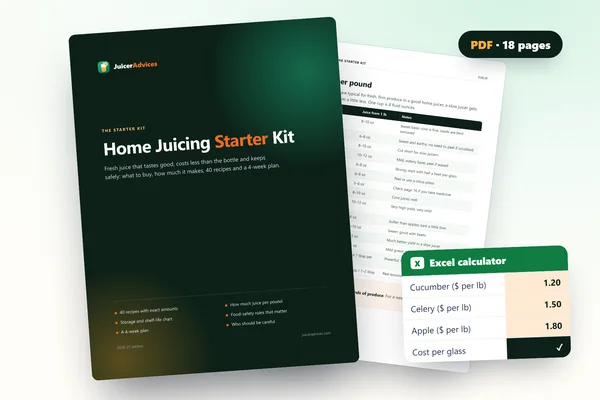 Home Juicing Starter KitMake fresh juice that tastes good, costs less and keeps safely: 40 recipes with exact amounts, a yield chart and a 4-week plan.40 juice, smoothie and shot recipesYield, storage and food-safety chartsCost, yield and shopping-list calculator (Excel)
Maximizing Your Juice Yield
Efficiency isn’t just about the first squeeze. These pro tips ensure you leave nothing behind.
- Strain as You Go: Use a fine mesh sieve or a dedicated pulp strainer over your container. This catches seeds and larger pulp immediately, giving you clean juice ready for use or storage.
- Apply Vertical Pressure: Whether using a press or your hands, the most effective force is straight down. Angled or sideways squeezing is less efficient.
- Warm Your Tool: If using a metal press or reamer, run it under warm water for a moment. A warm tool helps keep the juice fluid as it’s extracted.
- Scrape the “Pulp Blanket”: After the initial juice is out, use a small spoon to scrape the remaining pulpy membrane inside the peel. You’ll be surprised how much extra liquid you can collect.
The debate of electric vs manual lemon juicer often comes down to yield. A good manual press can rival an electric model because it allows you to apply a second, rotated squeeze, which many electric spinners don’t facilitate. For other fruits, the mechanics change. If you’re exploring beyond citrus, learn about how to juice pears with the Pure Juicer for insights on handling soft fruits.
Storing Fresh Lemon Juice
You’ve efficiently juiced a whole bag of lemons. Now what? Proper storage preserves flavor and nutrients.
Refrigeration: Fresh lemon juice can be stored in an airtight glass jar or bottle in the refrigerator for 3-4 days. To minimize oxidation (which degrades vitamin C), fill the container as full as possible to reduce air exposure. A squeeze of air out of a plastic bottle before sealing also helps.
Freezing for Long-Term Storage: For longer storage, freeze the juice. Ice cube trays are perfect. Once frozen, pop the cubes into a freezer bag. Each cube is roughly one tablespoon, making it easy to thaw exactly what you need for recipes. This method excellently preserves the acid content and flavor.
It’s worth noting that the impact of juicing method on nutrient retention like vitamin C is real. Excessive heat (like prolonged microwaving) and exposure to air and light degrade nutrients. Using efficient, quick methods at room temperature and storing juice properly in dark, airtight containers helps maintain its health benefits. For a broader look at nutritious options, consider reading about the healthiest types of juice you can make to put your fresh lemon juice to good use.
Putting It All Into Practice
Juicing lemons doesn’t have to be a struggle. It’s a simple equation: Preparation + Proper Tool + Good Technique = Maximum Yield. Always start with a room temperature lemon. Always roll firmly on the counter first. Choose a tool that fits your needsa sturdy manual press for everyday use, or an electric model for big batches. Apply steady, vertical pressure and don’t forget to strain and scrape.
By understanding the scientific principle of cell rupture through rolling and warming, you’re not just following a tip; you’re applying kitchen science. This approach ensures you get every last drop of that bright, tart juice for your sauces, drinks, and desserts. Next time a recipe calls for lemon juice, you’ll be ready. Efficiently.