You know the feeling. It’s 2:30 PM, your eyes feel heavy, and the keyboard seems to blur. You reach for a coffee, hoping for that familiar jolt. Sometimes it works. Sometimes you just feel jittery and still tired. Most people treat caffeine as a simple pick-me-up, but the reality is far more interesting and a bit more complicated.
This article is a user manual for caffeine. You’ll learn exactly how it works in your brain, why the same cup affects different people differently, and how to time it so you get the alertness you want without the crash, the tolerance, or the ruined sleep. By the end, you’ll know why your second coffee often does nothing, and what to do about it.
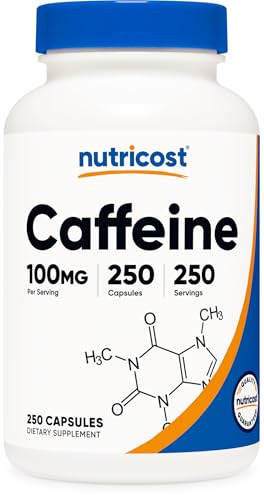
Nutricost
Nutricost Caffeine Pills 100mg Per Serving, 250…
- Energize Your Day: Nutricost Caffeine Capsules deliver a boost of energy to help you stay focused and alert throughout the day.
- No Sugar or Unhealthy Additives: Enjoy the benefits of caffeine without the unwanted sugar or other unhealthy additives commonly f…
- Convenient and Effective Capsule Formulation: Each bottle contains 250 capsules, making it easy to take your desired caffeine dose…
If you’re looking for a simple, no-sugar way to get a consistent dose, a product like Nutricost Caffeine Pills offers 100 mg per capsule with no additives. It’s a clean, measurable alternative to guessing how much caffeine is in your mug.

The Stimulant Defined: What Caffeine Actually Is
Caffeine is the most widely consumed psychoactive substance on Earth. It’s a bitter alkaloid found in coffee beans, tea leaves, cacao pods, and kola nuts. In its pure form, it’s a white powder. It belongs to a class of compounds called xanthines, and it works as a central nervous system stimulant.
But here’s what most people get wrong: caffeine doesn’t give you energy. It doesn’t create any new energy in your body. It works by blocking a natural chemical that makes you feel tired. Think of it as putting a temporary mute button on your brain’s fatigue signal, not as adding fuel to the tank.
That distinction matters. It explains why caffeine works better when you’re already rested, and why it can’t save you from serious sleep deprivation. The effects are real, but they have limits.
The Molecular Mechanism: How Caffeine Hijacks Your Brain
Blocking Adenosine: The ‘Brake’ You Disengage
Your brain runs on a chemical called adenosine. Throughout the day, adenosine builds up as a byproduct of brain activity. It binds to receptors and makes you feel drowsy. The more adenosine, the stronger the signal. That’s your homeostatic sleep drive doing its job.
Caffeine looks almost identical to adenosine at the molecular level. It slips into those same receptors, but it doesn’t activate them. It just sits there, blocking the real adenosine from docking. The result: your brain never gets the ‘time to sleep’ message, and you feel alert.
This is a classic competitive antagonist mechanism. The catch is that adenosine keeps accumulating while caffeine occupies the receptors. When the caffeine wears off, you get hit with a wave of all that pent-up adenosine. That’s the crash.
The Dopamine and Glutamate Ripple Effect
Adenosine blockade does more than keep you awake. It also influences other neurotransmitter systems. Caffeine indirectly increases dopamine signaling in the prefrontal cortex, which is why it improves focus and mood. It also boosts glutamate, the primary excitatory neurotransmitter, which accelerates neural firing.
The dopamine effect is real but modest compared to actual stimulant drugs. It’s enough to make you feel slightly rewarded and motivated, but it’s not a recreational high. That’s why caffeine is legal, safe, and tolerated by almost everyone, yet still has a subtle addictive pull.
One study from the National Institutes of Health noted that caffeine’s effects on psychomotor performance and alertness are tightly linked to this adenosine–dopamine interaction. The neurochemistry is elegant, but the practical takeaway is simple: caffeine makes your brain more excitable, less sleepy, and slightly more reward-oriented.
The Timeline of a Caffeine High: From Peak to Crash
Absorption and Peak Plasma Levels
After you swallow caffeine, it’s absorbed mostly in the small intestine. Peak plasma levels hit about 30 to 60 minutes after ingestion. That’s when you feel the strongest effect. Some people feel it sooner, especially on an empty stomach. Others, especially after a heavy meal, might not feel it for closer to 90 minutes.
The subjective buzz usually fades after two to three hours, but the drug is still active in your system. This is where most people misjudge their timing. They drink a coffee at 4 PM, feel fine at 5 PM, and then wonder why they’re staring at the ceiling at 11 PM.
The Half-Life and Why It Varies
Caffeine’s half-life is about five hours in the average adult. That means if you drink 200 mg at 3 PM, you’ll still have 100 mg in your system at 8 PM, and 50 mg at 1 AM. That’s enough to disrupt sleep architecture, even if you fall asleep without trouble.
But the half-life isn’t fixed. It ranges from 2.5 hours to 10 hours depending on genetics, smoking status, pregnancy, and certain medications. Smokers clear caffeine about 50% faster. Oral contraceptives can double the half-life. So can pregnancy, especially in the third trimester.
This variability explains why your friend can drink espresso after dinner and sleep like a baby, while you’re sensitive to a morning cup. It’s not willpower; it’s liver enzymes.
The Hidden Variable: Your Genetics (CYP1A2)
The primary enzyme that breaks down caffeine is called CYP1A2. It’s produced by the CYP1A2 gene. Some people are ‘fast metabolizers’ — they clear caffeine quickly and feel a short, sharp boost. Others are ‘slow metabolizers’ — caffeine lingers, making them more prone to anxiety, jitters, and sleep disruption.
You can find out your status with a genetic test, but you can also guess from your history. If you’ve always been sensitive to caffeine, you’re likely a slow metabolizer. If you can drink coffee at 8 PM and still sleep at 10 PM, you’re probably fast.
This genetic difference also affects health outcomes. Some research suggests slow metabolizers who drink multiple cups a day have a higher risk of hypertension and heart palpitations. Fast metabolizers don’t see that risk. This is one reason blanket advice like ‘drink three cups for longevity’ is misleading. Your personal response is written in your DNA.
The Dark Side: Sleep Disruption and the ‘Caffeine Debt’
Most people know caffeine keeps you awake, but they don’t realize it changes the quality of your sleep even when you do fall asleep. Caffeine reduces total sleep time, increases the time it takes to fall asleep, and, most importantly, suppresses slow-wave sleep and REM sleep.
REM sleep is when you dream and consolidate memories. Caffeine reduces REM pressure, meaning you spend less time in that restorative stage. Even if you sleep for eight hours, your sleep architecture is shallower and less refreshing after afternoon caffeine.
There’s also the concept of ‘caffeine debt.’ If you use caffeine to push through the afternoon, you’re borrowing alertness from the next night’s sleep. The adenosine that was blocked doesn’t disappear. It accumulates. You end up more tired the next day, which leads to more caffeine, which leads to worse sleep. It’s a vicious cycle that many people never recognize.
One practical rule: stop caffeine at least 8 to 10 hours before bedtime. For a 10 PM bedtime, that means no caffeine after 12 or 2 PM. Yes, that’s stricter than most people want to hear. But it’s the only way to protect your sleep architecture.
Caffeine Tolerance and the ‘Second Cup’ Fallacy
Here’s a scenario: you drink your morning coffee and feel great. Two hours later, you’re tired again, so you pour a second cup. But the second cup doesn’t do much. You feel a little more awake, but not like the first cup. Why?
The answer is receptor saturation. Caffeine works by blocking adenosine receptors. Once most of your receptors are occupied, adding more caffeine has nowhere to go. You’ve hit a ceiling. The second cup just maintains the blockade, not increases it.
This is why regular coffee drinkers often say they ‘need’ coffee just to feel normal. It’s not that the coffee gives them a boost; it’s that it reverses withdrawal. If you drink caffeine daily, your brain upregulates adenosine receptors to compensate. When you miss your dose, you feel tired, headachey, and foggy. The coffee doesn’t make you superhuman; it just brings you back to baseline.
True tolerance develops within one to two weeks of daily use. The psychomotor boost diminishes, and you need more to get the same effect. But the sleep disruption doesn’t diminish. You get used to the wakefulness, but your sleep quality still suffers.
So what do you do if you’re stuck in this cycle? Caffeine cycling. The idea is to take a break or taper down so your receptors reset. A common protocol is to reduce your dose by 25% each week, or to take a two-week break entirely. During the break, expect withdrawal headaches for two to three days. After that, your sensitivity returns. When you reintroduce caffeine, a single cup will feel like it used to.
This is the performance hack that most people miss. Strategic breaks, not constant dosing, keep caffeine effective.
Strategic Use: Timing, Dosing, and the ‘Caffeine Nap’
Now that you know the mechanics, here’s how to use caffeine like a tool.
Dose: The effective dose for alertness is 40 to 200 mg. Most people do well with 100 to 150 mg. More than 400 mg per day (about four cups) increases anxiety, heart rate, and jitters without adding benefit. Start low and adjust based on your sensitivity.
Timing: The best time for your first coffee is about 60 to 90 minutes after waking. That’s when your cortisol levels naturally peak, and adding caffeine too early can blunt the cortisol response. Waiting a bit helps you avoid the afternoon crash and may reduce tolerance.
Avoid caffeine after early afternoon, as discussed. If you’re a slow metabolizer, push your cutoff even earlier.
The caffeine nap: This sounds contradictory, but it works. Drink a coffee, then immediately take a 20-minute nap. Here’s why: the nap clears adenosine from your brain while the caffeine is being absorbed. When you wake up, the caffeine has plenty of free receptors to bind to, and you get a double boost — one from the nap, one from the caffeine. Studies show this combination improves alertness more than either alone.
The key is to keep the nap under 20 minutes. Longer naps put you into deep sleep, and you’ll wake up groggy. Set an alarm.
Hydration: Caffeine is a mild diuretic, but it’s not as dehydrating as people think. Still, if you’re drinking multiple cups, balance with water. Dehydration itself causes fatigue, which can mask the caffeine benefit.
The Verdict: How Powerful Is It, Really?
So how powerful is coffee as a stimulant? The honest answer: it’s a reliable, low-grade performance enhancer, not a miracle drug. It improves alertness, reaction time, and cognitive performance, especially when you’re sleep-deprived. But it can’t replace sleep, it loses its edge with daily use, and it can quietly wreck your sleep quality if you time it poorly.
For most people, the best approach is to treat caffeine as a precision tool. Use it on days you need it, not every day. Keep your dose under 200 mg. Stop it by early afternoon. And take periodic breaks to keep your sensitivity high. That’s how you get the most out of it without the downsides.
If you want a clean, consistent dose without the sugar or additives in sodas and energy drinks, Nutricost Caffeine Pills give you 100 mg per capsule, which makes it easy to control your intake. It’s a straightforward way to apply the principles in this article.
For more on how caffeine varies by drink, check out caffeine in tea or a coffee maker review if you’re brewing your own.
Common Questions About Caffeine, Answered
Does caffeine work better in the morning or afternoon?
Morning, relative to your circadian rhythm, is when you’re naturally more alert. Caffeine adds a small boost, but the biggest effect is felt when you’re already somewhat tired, like mid-afternoon. That’s also when it’s most likely to disrupt your sleep later. So the ‘best’ time depends on your goal: peak performance vs. protecting sleep.
Can caffeine cause anxiety or panic attacks?
Yes, especially in slow metabolizers or at high doses. Caffeine increases heart rate, blood pressure, and cortisol. In sensitive people, 200 mg or less can trigger anxiety, restlessness, and even panic symptoms. If you’re prone to anxiety, stick to low doses (under 100 mg) and avoid caffeine after noon.
How long does it take to build a tolerance?
Within one to two weeks of daily use, your brain adapts. You’ll need more to feel the same effect, and you’ll experience withdrawal if you stop. This is why cycling is recommended. A two-week break can reset your sensitivity.
Is caffeine safe for people with heart conditions?
It depends. Moderate caffeine (under 400 mg/day) is generally safe for healthy adults. But if you have hypertension, arrhythmias, or a history of heart disease, talk to your doctor. Caffeine raises blood pressure acutely and can provoke palpitations in sensitive individuals. Your genetics (CYP1A2) matter here too.
Does caffeine affect women differently than men?
Yes. Women metabolize caffeine faster during the follicular phase of the menstrual cycle and slower during the luteal phase. Oral contraceptives and hormone replacement therapy can double the half-life, making caffeine last much longer. Pregnant women clear caffeine very slowly, which is why guidelines recommend limiting intake during pregnancy.
What to Remember About Caffeine
- Caffeine blocks adenosine receptors; it doesn’t create energy.
- Peak effect hits 30–60 minutes after intake; half-life is about 5 hours.
- Your CYP1A2 gene determines if you’re a fast or slow metabolizer.
- The second coffee often does nothing due to receptor saturation.
- Daily use builds tolerance; take a 2-week break every few months.
- Stop caffeine 8–10 hours before bed to protect REM sleep.
- A 20-minute nap right after coffee gives a double boost.


