How Juice Companies Make Cheap Juice: The Process
On this page 5 sections
You grab that gallon of juice for a few bucks. It tastes sweet, it says “100% juice,” and it lasts for weeks. But have you ever stopped to wonder how juice companies make cheap juice? The price tag hides a complex industrial process designed for maximum shelf life and minimum cost. The trade-offs affect everything from flavor to nutritional value.
If you want real fruit flavor without the industrial process, consider making your own. For a quick, quality boost, many home juicers use a product like the Check price on Amazon. Its a shortcut that still gives you control over what you’re drinking.

The Core Cost-Cutting Strategy: From Concentrate
This is the biggest lever juice companies pull. The term from concentrate is your first clue. Heres how it works at scale.
Fresh juice is about 90% water. Shipping that water globally is expensive. So, companies remove it. They evaporate the water from freshly pressed juice, creating a thick syrup or powder called juice concentrate. This concentrate is shipped in massive, cost-effective tankers from suppliers like Citrosuco or Cutrale. At the bottling plant, water is added back. This is “reconstitution.”
The savings are enormous. Shipping costs plummet. Storage is easier. But the high heat used in evaporation strips away volatile flavor compounds and nutrients. Thats where artificial flavors and “flavor packs” come in. Theyre added to make the reconstituted juice taste like, well, juice again. This is standard for most store brand juice and many national brands.
Why Shelf Life Dictates Everything
For cheap juice to be profitable, it must sit on a shelf for months. Enter high-temperature short-time (HTST) pasteurization. The juice is flash-heated to kill microbes. Its effective. Its also destructive. Heat degrades vitamins and enzymes, flattening the taste. The goal isn’t freshness; it’s stability. This process, combined with aseptic packaging technology from companies like Tetra Pak, creates that incredibly long shelf life you see.
Ingredient Sourcing: The Bulk & Blend Approach
Cheap juice starts with cheap fruit. Companies buy bulk commodity crops. Think of the lowest-grade oranges, apples, or grapes traded on futures markets. Price per ton is the priority, not flavor profile or nutritional density.
To stretch these ingredients further, fillers are common. In “juice drinks” or “cocktails,” you’ll find:
- Added sugar: Often in the form of cheap corn syrup or crystalline fructose. It boosts sweetness lost in processing and is highly addictive.
- Apple or white grape juice: Cheap, sweet bases used to bulk up more expensive juices like pomegranate or blueberry.
- Citric acid and malic acid: Added to mimic the tartness of real fruit.
- Colors and stabilizers: To ensure every bottle looks identical.
This is the bulk purchasing and blending model. Consistency over quality, every single time.
High-Speed Automation & Packaging
Walk through a modern juice plant. You won’t see many people. Youll see robotic arms, miles of stainless steel piping, and blindingly fast filling lines. This is how juice is mass produced. Human labor is a cost. Machines filling 500 bottles per minute are an investment. The entire juice manufacturing process is engineered for zero waste and maximum output.
Packaging is part of the cost equation, too. That lightweight plastic jug or paper carton is incredibly cheap to produce and ship. Its designed to protect the product from light and oxygen, further extending shelf life after the intense pasteurization. The packaging cost is a fraction of the price you pay.
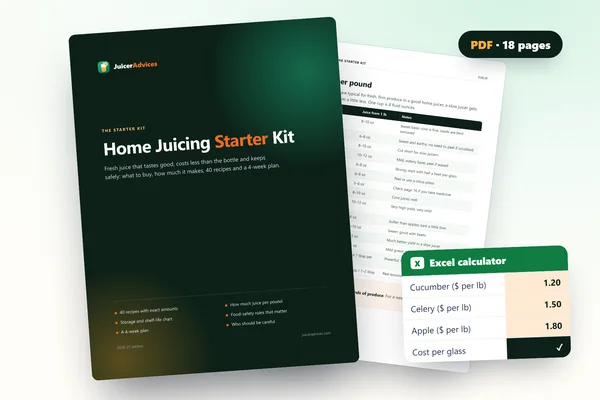 Home Juicing Starter KitMake fresh juice that tastes good, costs less and keeps safely: 40 recipes with exact amounts, a yield chart and a 4-week plan.40 juice, smoothie and shot recipesYield, storage and food-safety chartsCost, yield and shopping-list calculator (Excel)
The Nutritional & Health Trade-Offs
So, is cheap juice bad for you? Let’s be direct. You are trading nutrition for convenience and price.
The intense processing required for cheap juice destroys heat-sensitive vitamins like Vitamin C and B vitamins. The fiber from the whole fruit is completely absent. What often remains is a sugary, acidic liquid. Even “100% juice” from concentrate can act like soda in your body, spiking blood sugar. The FDA and USDA regulate labeling, but they don’t regulate the nutritional degradation from these industrial methods.
Compare that to a small-batch, cold-pressed juice. Its never heated. It retains more nutrients and enzymes. It has a shorter shelf life because its actually fresh. This is a core part of what’s the difference between cheap and expensive juice.
| Factor | Typical Cheap Juice | Premium Fresh Juice |
| Processing | From concentrate, HTST pasteurized | Not from concentrate, cold-pressed or HPP |
| Additives | Flavor packs, added sugars common | None (100% juice) |
| Shelf Life | Months | Days to a week |
| Nutritional Integrity | Lower; heat-degraded | Higher; preserved |
| Price Point | Low ($2-$4/gallon) | High ($5-$10/bottle) |
How to Spot & Choose Better Quality Juice
You don’t have to be fooled by the label. Become a savvy shopper. Heres your action plan.
- Read the Ingredient List, Not Just the Front. If it says “from concentrate,” you know the process. “Not from concentrate” (NFC) is better. For the healthiest options, look for reputable brands or guidelines on the healthiest juice choices.
- Beware of Sneaky Sugar. Even 100% juice has natural sugar. But avoid anything with “added sugars,” cane syrup, or corn syrup in the ingredients.
- Consider the Shelf Life. If it lasts for months unopened, its heavily processed. Opt for juices that require refrigeration and have a short expiry date.
- Embrace Cloudy Over Clear. In apple juice, for example, a clear appearance often means more filtering and processing, removing beneficial compounds.
- Make Your Own. This is the ultimate control. You decide the ingredients and the process. Start simple. Learn how many oranges make a gallon of juice to understand real fruit yield. If you enjoy vegetable juices, you can master how to make V8 juice taste good at home without the preservatives.
Now you know the secrets behind the low price. Cheap juice is a feat of food engineering, not a triumph of nutrition. You vote with your wallet every time you shop. Choose based on what you valuerock-bottom price, or something closer to the real fruit. The power is on your side.