Grab that glass of apple juice. Notice the cloudy swirls or the layer of sediment at the bottom. That’s your first clue. Apple juice is not what it appears to be at a casual glance. Get ready for a direct, no-fluff breakdown—because you need to know right now whether what you’re drinking is a heterogeneous mixture, a homogeneous mixture, or something else entirely.
Nature Blessed
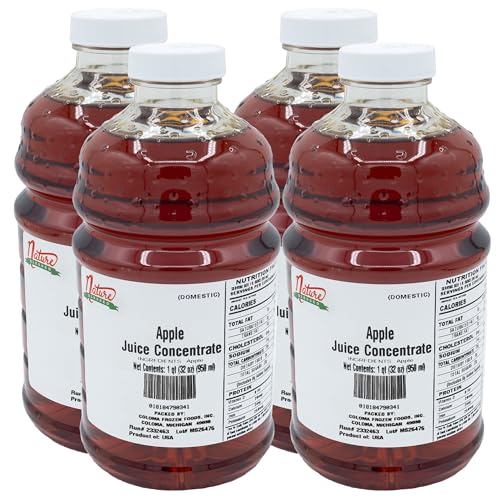
Nature Blessed 100% Pure Domestic Apple Fruit…
- PRODUCT: 100% Pure Domestic Apple Fruit Juice Concentrate (grown and processed in the USA), 4 quarts (4/32 fl ounces bottle), All…
- CONCENTRATED JUICE PRODUCT: 68 +/- 2 brix, suggested dilution rate is 1:6.86, 1 quart makes about 7.75+ quarts ( 1.75+ gallons) of…
- AVAILABILITY: Availability for 100% Pure Apple Fruit Juice Concentrate: 1 quart (1/32 fl oz bottle), SAVE SOME$ 2 quarts (2/32 fl…
Before you continue, if you’re serious about visual demonstrations, grab a tool that shows particle separation instantly. The Mixture No 05 kit makes suspension and settling visible in seconds—perfect for hands-on learners.

What Is a Heterogeneous Mixture? The Fast Definition You Need
A heterogeneous mixture is any combination of substances where the individual components remain visually distinct or settle out over time. You can see the different parts. The composition is not uniform. By contrast, a homogeneous mixture looks the same throughout—every sip, every drop has an identical makeup.
Key traits of a heterogeneous mixture:
- Particles are large enough to see or feel.
- Components separate when left standing.
- Light scatters unevenly (it looks cloudy or opaque).
- You can mechanically separate the parts—filtering, decanting, or centrifuging.
Common homogeneous mixture examples include salt water, vinegar, and clear sports drinks. They never settle. But once you add pulp, insoluble particles, or undissolved solids, you’ve crossed the line into heterogeneous territory.
Is Apple Juice Heterogeneous or Homogeneous? Here’s the Definitive Answer
Here’s the blunt truth: apple juice is a heterogeneous mixture—in almost every real-world scenario. While textbooks might call pure, filtered juice a homogeneous solution, the apple juice you buy or press at home contains suspended particles, microscopic fruit fibers, and pectin that refuse to fully dissolve. That means heterogeneity rules.
Let’s break down the apple juice composition that forces this classification:
- Water – 88% or more, acting as the solvent.
- Dissolved sugars – Fructose, glucose, and sucrose form a true solution (homogeneous).
- Pectin – A natural polysaccharide that acts as a stabilizer in cloudy juice but also contributes to particle suspension.
- Insoluble solids – Tiny bits of apple flesh, cellulose, and cell wall fragments.
- Colloidal particles – Particles small enough to stay suspended temporarily but large enough to scatter light and eventually settle.
The moment you see any turbidity, that’s a colloidal mixture at work. In food science, colloidal dispersions are a subset of heterogeneous mixtures. The particles range from 1 to 1000 nanometers, straddling the line between dissolved and visible. And apple juice—especially the unfiltered kind—is loaded with them.
The Solution vs. Suspension Battle
To understand why apple juice isn’t a pure homogeneous solution, look at the solution vs suspension split. A solution has particles smaller than 1 nanometer. You can’t see them, they never settle, and they pass through filter paper. A suspension has particles larger than 1000 nanometers; they settle rapidly and are clearly visible. Apple juice lands in the colloidal middle ground, but it behaves like a suspension over time. That sedimentation you see after it sits? That’s a suspension signature.
If you’re untangling the broader classification of juice itself, read our comparison of whether apple juice is a pure substance or mixture. That background solidifies why even clarified juice remains a mixture—just a more uniform one.
Cloudy vs. Clear Apple Juice: The Key Difference That Changes Everything
The single biggest factor deciding heterogeneity is filtration. Your juice is either cloudy or clarified—and that distinction flips the mixture classification in practical terms.
| Characteristic | Cloudy Apple Juice (Unfiltered) | Clear Apple Juice (Filtered/Clarified) |
|---|---|---|
| Appearance | Opaque, turbid, light-brown | Transparent, amber, crystal-clear |
| Particle size present | 0.5–1000 µm; colloidal and suspension particles | Less than 1 µm; mostly dissolved solids |
| Sedimentation on standing | Yes—visible pulp and sediment within hours | Minimal to none; any trace sediment is extremely fine |
| Filtration difficulty | Passes through coarse filters, leaves residue on fine filters | Passes through fine filters with little residue |
| Mouthfeel | Thicker, pulpy, more body | Thin, watery, smooth |
| Typical products | Fresh-pressed, Martinelli’s unfiltered, Tree Top fresh press | Mott’s original, many shelf-stable supermarket brands |
Cloudy juice is undeniably a heterogeneous mixture. The cloudy apple juice pulp consists of fiber and cell fragments that never fully dissolve. Even after pasteurization, pectin molecules, proteins, and polyphenols aggregate into particles that scatter light—the Tyndall effect confirms a colloid. Clear juice, however, veers much closer to homogeneous. Manufacturers use enzymes (pectinases) and diatomaceous earth filtration to remove nearly all suspended solids. But technically, even clarified juice can still contain trace colloidal material, making the “100% homogeneous” label shaky under strict chemistry definitions.
What the USDA and FDA Say About Apple Juice Standards
The USDA grades apple juice based on clarity, color, and absence of defects. Grade A juice requires freedom from visible sediment and turbidity. However, FDA labeling regulations don’t require “apple juice” to be clear—only that it’s the liquid expressed from apples. That means unclarified, heterogeneous juice can legally be labeled as apple juice. This regulatory nuance is why you’ll find everything from crystal-clear Mott’s to pulp-heavy Tree Top on the same shelf.
What Happens If You Let Apple Juice Sit? The Sediment Test
This is the fastest, most reliable proof you need. Leave a glass of apple juice on the counter for 30 minutes. Then look at the bottom.
Observe what happens:
- Particles drift downward. Tiny apple solids and pectin aggregates sink.
- A distinct layer forms. The bottom becomes darker, grittier, or visibly sludgy.
- The upper portion clears up. Without homogenization, the liquid above the sediment appears more transparent.
This process is called sedimentation in juice. It’s a classic hallmark of a heterogeneous mixture. If apple juice were a true homogeneous solution, zero settling would occur—ever. But it does. Even commercial juices that appear clear can develop a haze or fine deposit after weeks on the shelf, proving that not all particles were truly dissolved.
Apple juice separation accelerates when you forget to shake the bottle. That’s why labels often say “shake well before serving.” They’re acknowledging the mixture’s inherent instability. A homogeneous solution wouldn’t need that instruction.
How to Determine Mixture Heterogeneity at Home—Your DIY Lab Protocol
Stop relying on definitions. Run these three tests yourself in under 10 minutes and get a definitive answer. Each test targets a different property of mixtures.
1. The Filtration Test (Separates by Particle Size)
Pour 100 ml of apple juice through a standard coffee filter or cheesecloth. Let it drain completely.
- Heterogeneous result: Visible residue left on the filter—pulp, fibers, cloudy gel-like material.
- Homogeneous result: No residue or only a faint stain; liquid passes through unchanged.
Unfiltered juice will leave a substantial layer of solids. This residue is exactly what makes it a mechanical mixture, not a true solution.
2. The Laser Light Test (Tyndall Effect for Colloids)
Dim the lights. Shine a laser pointer or narrow-beam flashlight through the glass of juice from the side.
- Cloudy juice: You’ll see a visible beam of light inside the liquid. The light scatters because particles are present. This confirms a colloidal heterogeneous system.
- Clear juice that’s truly homogeneous: The beam passes through invisibly, or only a faint glow appears at the entry point.
This test separates true solutions from colloids instantly. Apple juice that shows a bright beam is a colloidal mixture, a subcategory of heterogeneous mixture.
3. The Overnight Settling Test (Time-Based Separation)
Fill a clear glass ¾ full. Cover to prevent evaporation. Place it on a level surface where it won’t be disturbed. Inspect it the next morning.
- Any sediment, layering, or gradient from top to bottom? That’s a heterogeneous mixture.
- Perfectly uniform from surface to bottom? Homogeneous (or extremely stable colloid).
To see this in a controlled, vivid demonstration, many science educators use the Mixture No 05 system, which creates stark contrast layers in a transparent column. It’s the same principle: heavier particles migrate down, proving non-uniform composition.
Why “Is Juice a Mixture?” Is the Wrong Question
Asking “is juice a mixture?” gets you a half-answer. The more precise question is: What type of mixture is it? All juices are mixtures because they contain multiple chemical compounds—water, sugars, acids, flavor volatiles—combined physically, not chemically bonded. The real distinction lies in whether the mixture is homogeneous, colloidal, or heterogeneous.
- Homogeneous mixture: All components are dissolved; identical throughout (e.g., white grape juice that’s been fined and filtered aggressively).
- Colloidal mixture: Particles are dispersed but don’t settle quickly; scatters light (e.g., commercial cloudy apple juice with pectin stabilization).
- Heterogeneous mixture: Distinct, visible particles that settle or can be filtered out (e.g., fresh-pressed apple juice right off the press).
Apple juice slides between the second and third categories depending on processing. But unless it has undergone aggressive enzyme clarification and ultrafine filtration, classify it as a heterogeneous mixture and move on.
Pectin: The Hidden Stabilizer That Fools Your Eyes
Pectin acts as a natural emulsifier and suspending agent in unfiltered apple juice. It creates a weak gel network that slows particle settling but does not prevent it entirely. This is why freshly pressed juice can look uniform for hours, then suddenly develop a compact sediment layer. The pectin network collapses as it degrades or gets diluted. That’s still heterogeneity—just delayed.
The FDA’s standard of identity for juice doesn’t require complete removal of pectin, so manufacturers can market both clarified and unclarified versions as “apple juice.” The distinction only matters when you apply chemistry rules.
Examples of Heterogeneous Mixtures in Food—Apple Juice Fits the Pattern
To lock this in, compare apple juice to other common heterogeneous mixtures in food. These all share the same telltale signs of non-uniform composition:
- Orange juice with pulp
- Vegetable soup
- Trail mix
- Chunky salsa
- Salad dressing with herbs
- Cereal in milk
Now compare to homogeneous mixture examples in food:
- White vinegar
- Soy sauce
- Clear honey (filtered)
- Maple syrup
- Clear fruit-flavored beverages
Apple juice, cloudy by nature, lands firmly in the first list. For a deeper dive into how pulp-free versions complicate the picture, check our dedicated article on apple juice without pulp as a mixture or pure substance. It explains the borderline cases where filtration almost tricks you into thinking it’s homogeneous.
So, Why Is Apple Juice a Heterogeneous Mixture? Your Takeaway Checklist
Combine all evidence, and the answer becomes obvious:
- It contains insoluble particles visible under a microscope and often to the naked eye.
- Sedimentation occurs naturally over time—heterogeneous mixtures separate.
- The Tyndall effect is positive; light scatters through the liquid.
- Filtration leaves a tangible residue.
- Commercial labels warn you to shake before drinking, acknowledging non-uniformity.
- Even clarified juices can develop haze over time, indicating incomplete dissolution.
These facts aren’t up for debate. They’re observable, repeatable, and testable today.
Drink that apple juice knowing exactly what it is: a delicious, nutrient-packed heterogeneous mixture that refreshes you while proving basic chemistry with every sip. Want more clarity on your juice’s true nature? According to the Mayo Clinic’s expert answer on juicing, consuming the whole fruit—or at least the unfiltered juice—retains far more fiber and beneficial plant compounds. That pulp you’re filtering away? That’s the proof of heterogeneity right there. Don’t discard it. Use it.
Related pick: Check today's price on Amazon


