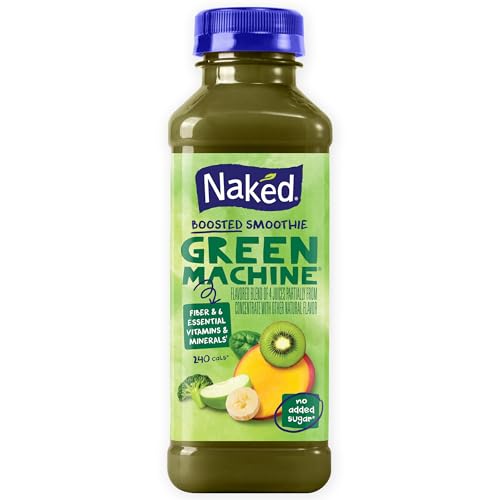
Green smoothies have become the unofficial drink of diet culture. You see them on every Instagram feed and wellness blog. But do they actually help you lose weight, or is it just clever marketing?
The honest answer: yes, they can help — but not for the reasons most people think. And they can also backfire if you make common mistakes. Let’s walk through the real mechanics, the awkward questions, and how to build a green smoothie that actually works for your goals.
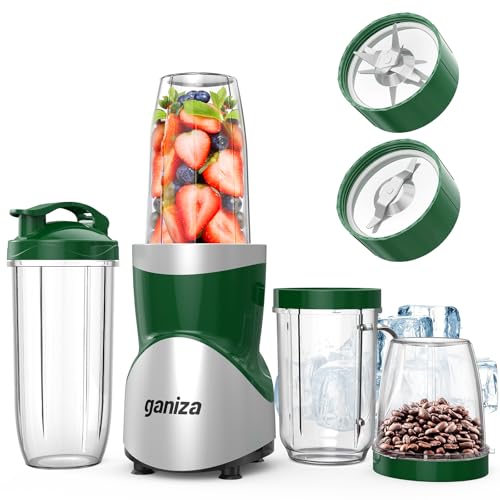
Ganiza
Ganiza Smoothie Blender, 900W Blenders Shakes and…
- 【Powerful Smoothie Blender】Peak Power 900W Smoothie Blender for Shakes with upgraded full copper turbocharged motor pulse technolo…
- 【Multi-Function Blenders】Your personal blender comes with a stainless steel 6-blades, make it easy to blend various hardness of in…
- 【Safety First】Your safety is our top priority, Blender for smoothies only works when the blender cup is properly locked into the b…

What Makes a Green Smoothie Different from a Regular Smoothie?
The green part matters. Leafy greens like spinach, kale, and celery add volume and fiber without many calories. A cup of spinach has about 7 calories and a gram of fiber. That means you can drink a large, satisfying smoothie without blowing your calorie budget.
Regular fruit smoothies often pack 400–600 calories in a single glass. Green smoothies, when built correctly, usually land between 150 and 300 calories. That difference alone can tip the scale.
But here’s the catch: the green color doesn’t automatically make a smoothie healthy. A green smoothie loaded with banana, mango, honey, and yogurt can easily exceed 500 calories. The color is not magic — the ingredients are.
The Calorie Math Nobody Wants to Talk About
Weight loss comes down to a calorie deficit. You need to burn more energy than you take in. A green smoothie helps because it makes that deficit easier to maintain.
Think about it. A 250-calorie green smoothie can replace a 600-calorie breakfast sandwich. That’s a 350-calorie reduction without feeling hungry. Over a week, that adds up to nearly half a pound of fat loss — just from one swap.
But the opposite is also true. If you add a green smoothie on top of your regular meals, you’re adding calories, not subtracting them. The smoothie won’t help you lose weight if you’re not in a deficit. It’s simple math, but it’s easy to forget when the drink feels healthy.
Fiber: The Real Hero in Green Smoothies
Fiber does more than keep you regular. It slows digestion, stabilizes blood sugar, and keeps you full for hours. Green smoothies are one of the easiest ways to get more fiber into your day.
Most people only eat about 15 grams of fiber daily. The recommended amount is 25–38 grams. A green smoothie with a handful of spinach, half an avocado, and a tablespoon of chia seeds can deliver 10–12 grams in one glass.
That fiber also feeds your gut bacteria. A healthy gut microbiome is linked to better weight regulation and less inflammation. It’s not a direct fat-burning effect, but it supports your body’s ability to manage weight over time.
One word of caution: if you’re not used to high-fiber drinks, start small. A sudden jump can cause bloating and gas. Give your digestive system a week to adjust.
Protein: The Missing Piece in Most Green Smoothies
Fiber keeps you full, but protein keeps you full longer. Most green smoothie recipes are heavy on fruit and light on protein. That’s a mistake.
Protein takes more energy to digest than carbs or fat. It also reduces hunger hormones and increases satiety hormones. A smoothie with 15–20 grams of protein will keep you satisfied until lunch. A smoothie with 5 grams of protein will leave you raiding the pantry by 10 a.m.
Add a scoop of protein powder, Greek yogurt, cottage cheese, or silken tofu. You can also blend in nut butter, hemp seeds, or chia seeds. These ingredients boost protein without ruining the taste.
If you’re not a fan of protein powder, try a handful of almonds or a spoonful of peanut butter. The healthy fats also slow digestion and add richness.
Liquid Calories: The Sneaky Saboteur
Here’s an awkward question: does it matter if you use water, milk, or juice as your base? Yes, it absolutely does.
Juice is the worst choice. A cup of orange juice has about 110 calories and almost no fiber. You’re essentially adding sugar water to your smoothie. Use water, unsweetened almond milk, or plain cow’s milk instead.
Even coconut water has calories — about 45 per cup. That’s not terrible, but it adds up if you’re drinking a large smoothie daily. Water is the most calorie-efficient base and lets the fruit flavor shine.
Another sneaky source of liquid calories is adding too much fruit. A single banana has 105 calories. Two bananas add 210 calories to your smoothie. Stick to one serving of fruit per smoothie — about a cup of berries or half a banana.
Whole Fruits vs. Juiced Fruits: Does It Matter?
Yes, it matters a lot. When you juice a fruit, you remove the fiber and keep the sugar. When you blend a fruit, you keep the fiber but break down the cell walls. That means your body absorbs the sugar faster than it would from eating the whole fruit.
Is that a problem? Not necessarily. The fiber still slows absorption compared to juice. But the glycemic impact of a blended fruit is higher than a whole fruit. If you have insulin resistance or diabetes, this is worth paying attention to.
For most people, the difference is minor. The bigger issue is portion size. It’s easy to drink a smoothie with three servings of fruit without noticing. You wouldn’t eat three apples in one sitting, but you’ll happily drink them blended.
Keep fruit to one or two servings per smoothie. Let the greens take up the bulk of the volume.
Can You Drink Green Smoothies Every Day?
Short answer: yes, for most people. Green smoothies are safe to consume daily as long as they’re balanced and you’re not overdoing the fruit.
There are a few things to watch out for. Spinach and kale contain oxalates, which can contribute to kidney stones in susceptible people. If you have a history of kidney stones, talk to your doctor before drinking green smoothies daily.
Also, don’t rely on smoothies as your only source of vegetables. Chewing whole vegetables has benefits that blending doesn’t — it takes longer, so you feel fuller, and it exercises your jaw. Use smoothies as a supplement, not a replacement.
If you’re concerned about kidney health, we have a detailed guide on green smoothies and kidney health that covers the oxalate issue in depth.
What About the Sugar in Fruit?
Fruit sugar — fructose — gets a bad reputation. But whole fruit is not the same as added sugar. The fiber, water, and micronutrients in fruit change how your body processes the sugar.
That said, a green smoothie can easily become a sugar bomb if you add too much fruit. A mango, a banana, and a handful of grapes can push your smoothie past 40 grams of sugar. That’s almost as much as a can of soda.
Balance is key. Use berries, which are lower in sugar and higher in fiber. Add half a banana for creaminess instead of a whole one. Skip the honey, agave, or maple syrup entirely. The fruit is already sweet enough.
If you’re trying to lose weight, keep the total sugar under 25 grams per smoothie. That’s roughly one cup of berries plus half a banana.
How to Build a Weight-Loss Green Smoothie (The Formula)
You don’t need a fancy recipe. Memorize this simple formula and you can make a satisfying, low-calorie green smoothie with whatever you have on hand.
- Base (1–1.5 cups): water, unsweetened almond milk, or plain cow’s milk
- Greens (2 large handfuls): spinach, kale, Swiss chard, or romaine
- Fruit (1 serving): 1 cup berries, half a banana, or half a mango
- Protein (15–20g): protein powder, Greek yogurt, cottage cheese, or silken tofu
- Healthy fat (1 tbsp): chia seeds, flaxseed, nut butter, or avocado
- Optional boosters: ginger, lemon juice, cinnamon, or a scoop of greens powder
This formula gives you roughly 200–350 calories, 10–15 grams of fiber, and 15–20 grams of protein. It’s a meal replacement that actually keeps you full.
For a complete list of blenders that handle tough greens without leaving chunks, check out our guide on the best blender for green smoothies.
The Best Way to Blend Greens (So You Don’t Get Chunks)
Nobody wants a smoothie with chewy pieces of kale stuck in their teeth. The trick is to blend the greens and liquid first, before you add the fruit and ice.
Start with the liquid and greens in the blender. Blend for 30 seconds until the greens are completely pureed. Then add the fruit, protein, and fat, and blend again until smooth.
If you’re using tough greens like kale or collard greens, remove the stems first. The stems are fibrous and don’t break down well. You can also massage the leaves with a little lemon juice to soften them.
For more tips on getting a silky texture, read our guide on blending kale and spinach smoothly.
Why Your Blender Might Be Sabotaging Your Smoothies
Not all blenders are created equal. A weak blender will leave chunks of spinach and kale in your drink. You’ll chew your smoothie, which nobody wants.
You need at least 500 watts of power to break down leafy greens. The Ganiza Smoothie Blender has 900 watts of peak power and a 6-blade stainless steel assembly. It pulverizes kale, spinach, and even frozen fruit in seconds.
What makes it different from a cheap blender? The 25,000 RPM motor and the cyclonic action of the flat blade. That flat blade creates a vortex that pulls ingredients down into the blades, so you don’t have to stop and stir.
It comes with multiple cups — a 24 oz portable cup, two 17 oz cups, and a 10 oz grinding cup. That’s handy if you want to make a smoothie for the road or grind coffee beans in the same appliance.
Cleaning is straightforward. Add warm water and a drop of soap, lock the cup onto the base, and run it for 30 seconds. The blades clean themselves. You can also put the cups in the dishwasher, except the motor base.
It’s not perfect — the motor base is a bit heavy, and the cups are plastic, not glass. But for the price, it handles green smoothies far better than blenders twice the cost. Check the current price on Amazon if you’re interested.
Green Smoothies and Digestion: The Poop Question
Let’s address the elephant in the room. Green smoothies make you poop. That’s not a bug — it’s a feature.
The fiber and water in green smoothies stimulate your digestive tract. If you’re constipated, a daily green smoothie can get things moving within a day or two. That’s why many people feel lighter after starting a green smoothie routine.
But there’s a difference between regular bowel movements and diarrhea. If you drink too many green smoothies too quickly, you might experience loose stools. Start with one small smoothie every other day, and gradually increase as your body adjusts.
For a deeper look at this, read our article on whether green smoothies make you poop.
Will Green Smoothies Make You Gain Weight?
It’s possible, and it happens more often than you think. If you’re adding a green smoothie to your diet without cutting calories elsewhere, you’ll gain weight.
Another common mistake is using green smoothies as a snack when you’re not hungry. A 300-calorie smoothie on top of your regular meals adds 300 calories. Over time, that’s weight gain.
Green smoothies work best as a meal replacement, not a snack. Use them to replace a high-calorie breakfast or lunch. That way, you’re cutting calories, not adding them.
If you’re worried about fruit smoothies causing weight gain, we’ve covered that topic separately in our article on whether fruit smoothies make you gain weight.
What About Green Smoothie Cleanses and Detoxes?
You’ve probably seen 3-day or 7-day green smoothie cleanses. They promise rapid weight loss and a ‘detoxified’ body. Here’s the truth: they work for short-term weight loss because they drastically cut calories.
A typical cleanse provides 1,200–1,500 calories per day, which is a significant reduction for most people. You’ll lose weight quickly — but most of it will be water weight and muscle glycogen, not fat.
When you return to normal eating, the weight comes back. That’s why cleanses are not sustainable. They don’t teach you healthy habits, and they can leave you feeling weak and hungry.
Instead of a cleanse, try replacing one meal per day with a green smoothie. That’s a sustainable approach that produces steady, lasting results.
Do You Need to Exercise to See Results?
No, but it helps. Green smoothies alone can create a calorie deficit, which is the primary driver of weight loss. You can lose weight without exercising.
However, exercise preserves muscle mass while you lose fat. Muscle burns more calories at rest than fat. So adding strength training or cardio can accelerate your progress and help you keep the weight off.
Think of green smoothies as a tool, not a magic bullet. They make it easier to eat fewer calories. Exercise makes it easier to maintain a healthy body composition. Together, they’re a powerful combination.
How Long Until You See Results?
That depends on your starting point and your daily calorie intake. A safe rate of weight loss is 1–2 pounds per week. That means you need a daily deficit of 500–1,000 calories.
If replacing one meal with a green smoothie creates a 300-calorie deficit, you’ll lose about 0.6 pounds per week. That’s 2.5 pounds per month. Not dramatic, but sustainable.
If you also cut out sugary drinks and snacks, you can double that. The key is consistency. One green smoothie a week won’t do anything. One green smoothie a day, every day, will.
It took you time to gain the weight. Give it time to come off.
Common Mistakes That Keep You from Losing Weight
Even with good intentions, people make errors that sabotage their results. Here are the most common ones.
- Adding too much fruit. Keep it to one serving per smoothie.
- Using juice or sweetened yogurt as a base. Those add hidden calories.
- Not adding protein. You’ll be hungry an hour later.
- Drinking smoothies as snacks, not meals. That adds calories instead of replacing them.
- Ignoring portion sizes. A 24 oz smoothie has twice the calories of a 12 oz one.
- Expecting overnight results. Weight loss takes time.
Fix these mistakes and you’ll see progress. Ignore them and you’ll wonder why the scale won’t budge.
Green Smoothies vs. Eating Whole Vegetables
Is a green smoothie better than a salad? Not necessarily. They serve different purposes.
A salad requires chewing, which takes time and sends fullness signals to your brain. A smoothie goes down fast, so your brain doesn’t register the same level of satiety. That’s why a 300-calorie smoothie can leave you hungrier than a 300-calorie salad.
On the other hand, a smoothie is easier to consume on a busy morning. You can drink it in the car or at your desk. A salad requires a plate and a fork.
The best approach is to include both. Use smoothies for convenience and salads for mindful eating. Variety also ensures you get a wider range of nutrients.
Do Green Smoothies Help with Belly Fat Specifically?
No, and anyone who tells you otherwise is selling something. You cannot spot-reduce fat. Your body decides where it loses fat based on genetics, hormones, and overall body composition.
Green smoothies can help you lose overall body fat, which will eventually reduce belly fat. But they won’t target your midsection specifically. The only way to lose belly fat is to lose weight everywhere.
That said, green smoothies can help reduce bloating, which makes your stomach look flatter. The fiber and water reduce water retention and improve digestion. You’ll feel lighter and less puffy.
Can Green Smoothies Replace a Meal?
Yes, if they’re balanced. A meal replacement smoothie needs protein, fiber, healthy fat, and carbohydrates. The formula I gave earlier fits that bill.
But a smoothie made only of fruit and greens is not a meal. It’s a snack. It won’t keep you full, and it won’t provide sustained energy. You’ll be hungry and cranky within two hours.
If you’re using a green smoothie as a meal replacement, make sure it has at least 15 grams of protein and 10 grams of fiber. That’s the difference between a snack and a meal.
How to Make Green Smoothies Taste Better
Let’s be honest — some green smoothies taste like mowed grass. You don’t have to suffer through them. A few simple tricks make them genuinely delicious.
Use frozen fruit instead of fresh. Frozen berries and mango add a thick, creamy texture and mask the taste of greens. A frozen banana makes any smoothie taste like a milkshake.
Add a squeeze of lemon or lime. The acidity brightens the flavor and cuts the bitterness of kale.
Use a pinch of salt. It might sound weird, but salt enhances sweetness and reduces bitterness. A tiny pinch is all you need.
Try fresh ginger or mint. They add a refreshing kick that makes the smoothie taste less ‘healthy’ and more like a treat.
And don’t be afraid to start with mild greens like spinach. They have a neutral taste. Kale is more assertive, so use it sparingly at first.
Green Smoothie Recipes for Weight Loss (Simple and Realistic)
You don’t need a dozen recipes. You need two or three that you actually enjoy and can make in five minutes. Here are three that work.
Classic Green Smoothie
- 1 cup water or unsweetened almond milk
- 2 handfuls fresh spinach
- 1 cup frozen berries
- 1 scoop vanilla protein powder
- 1 tbsp chia seeds
Blend until smooth. About 250 calories, 20g protein, 12g fiber.
Tropical Green Smoothie
- 1 cup unsweetened coconut water
- 2 handfuls kale (stems removed)
- ½ cup frozen mango
- ½ banana
- ½ cup plain Greek yogurt
- 1 tbsp ground flaxseed
This one tastes like a vacation. About 300 calories, 18g protein, 8g fiber.
Peanut Butter Green Smoothie
- 1 cup unsweetened oat milk
- 2 handfuls spinach
- ½ banana
- 1 tbsp peanut butter
- 1 scoop chocolate protein powder
- 1 tbsp cocoa powder (unsweetened)
It’s like a dessert but with fiber and protein. About 320 calories, 22g protein, 10g fiber.
All three are easy to adjust to your taste. Swap the protein powder for Greek yogurt if you prefer. Use water instead of milk to cut calories further.
Frequently Asked Questions (No Question Is Too Basic)
Can I drink a green smoothie every day?
Yes, for most people. It’s a healthy habit. If you have kidney issues or are prone to kidney stones, talk to your doctor first due to oxalates in greens.
Should I drink green smoothies on an empty stomach?
It doesn’t matter for weight loss. Some people feel better drinking them first thing in the morning. Others prefer them as a mid-morning or lunch replacement. Listen to your body.
Will green smoothies make me bloated?
They can, especially if you’re not used to high-fiber foods. Start with a small smoothie and gradually increase the amount of greens. Bloating usually subsides within a week.
Can green smoothies cause diarrhea?
Yes, if you drink too much or if your body isn’t used to the fiber. Reduce the portion size and make sure you’re drinking enough water throughout the day.
Are store-bought green smoothies as good as homemade?
No. Store-bought ones often contain added sugar, preservatives, and less fiber. They can have as much sugar as a soda. Homemade is almost always better.
Do I need to use organic greens?
Not necessarily. Organic is nice but not required. The most important thing is to eat more greens, regardless of whether they’re organic. Wash them thoroughly.
Can I use frozen greens?
Yes, frozen spinach and kale work great. They’re picked at peak ripeness and have the same nutrients as fresh. They also make your smoothie colder and creamier.
How many calories should a weight-loss green smoothie have?
Between 200 and 350 calories is a good range for a meal replacement. If you’re using it as a snack, keep it under 150 calories.
Can green smoothies replace breakfast?
Yes, if they include protein and fiber. A 250-calorie smoothie with 15g protein is a fine breakfast. Just don’t make it a fruit-only smoothie.
Will I lose weight if I drink one green smoothie a day?
Only if it creates a calorie deficit. If you replace a 600-calorie breakfast with a 250-calorie smoothie, yes. If you add it to your regular diet, no.
The Bottom Line: What Actually Works
Green smoothies are a useful tool, not a miracle cure. They help you eat more vegetables, increase fiber, and control calories — all of which support weight loss.
The key is to build them properly. Use more greens than fruit, add protein, avoid liquid calories, and use them as meal replacements. Do that consistently, and you’ll see results.
Don’t expect overnight changes. Weight loss is a slow, steady process. Green smoothies can make that process easier, but they won’t do the work for you.
If you’re ready to start, pick a blender that can handle the job. The Ganiza Smoothie Blender is a solid choice for daily green smoothies. It’s powerful, easy to clean, and comes with multiple cups for on-the-go use. Check the current price on Amazon to see if it fits your budget.
And remember, the best green smoothie is the one you actually drink. Find a recipe you love, make it a habit, and let the small daily wins add up.