Product 1 is the best pick for most readers because its 700-watt base handles smoothies, frozen fruit, and single-serve cups without taking much counter space. Choose Product 4 instead if you usually make family-size batches and want a 72-oz pitcher with preset smoothie programs.
Key takeaways
A 700W personal blender is enough for most fruit-and-yogurt smoothies and small frozen batches.
A 72-oz pitcher is better when you make smoothies for the whole household.
Look for dishwasher-safe cups or pitcher parts if you want easier cleanup.
Higher wattage helps with ice and frozen fruit, but cup size matters just as much.
If you want the quickest morning routine, choose a blender that lets you drink from the same cup.
The most common mistake is buying a big pitcher blender for a one-cup smoothie habit. That usually means more cleanup, more noise, and chunks of spinach or frozen fruit that never fully break down.
A smaller cup-style blender is often the faster choice for weekday smoothies, while a full-size countertop model makes more sense if you blend for two or more people at once.
The Five Smoothie Blenders Worth Comparing
#1Best Overall
Ninja Fit 700W Personal Blender
Best for Solo or couple smoothie routines in a small kitchen
This is the easiest match if you want a compact blender that does one smoothie at a time. The 700-watt base handles smoothies, shakes, and frozen drinks, and you can blend straight in the 16-oz cup before snapping on the spout lid. The small footprint matters when your kitchen already feels crowded.
Power 700WCapacity 2 x 16 oz cupsCleanup Top-rack dishwasher safeMaterial BPA-free partsUse Smoothies, shakes, frozen drinks
Why it made the cut
700W motor handles smoothies and frozen drinks
Blends directly in the 16-oz cup
Top-rack dishwasher safe and BPA-free parts
Compact enough for tight counters
Good to know
Only comes with 16-oz cups
No preset programs for hands-off blending
Skip it if Skip it if you need a full pitcher or want automatic smoothie programs.
Best for People who want a portable single-serve blender with extra cup sizes
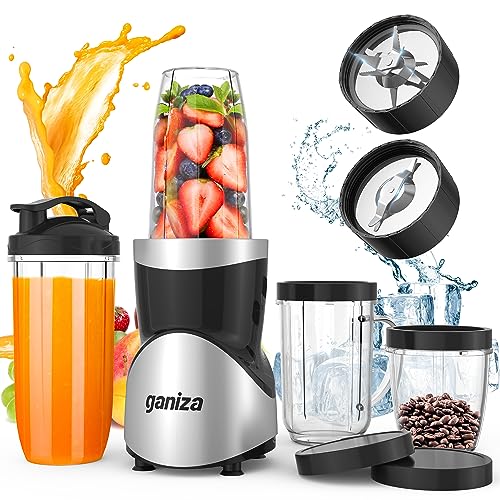
Pick this when you want a portable blender with a little more cup variety. It ships with one 24-oz cup and two 17-oz cups, plus to-go lids, and the 900W peak motor with 25,000 RPM is built for quick smoothie prep. The No-BPA cups and stainless steel blades make it a practical carry-along option for work, class, or the gym.
Power Peak 900WSpeed 25,000 RPMCapacity 1 x 24 oz cup + 2 x 17 oz cupsCleanup Cups and lids are dishwasher safeMaterial No-BPA cups
Why it made the cut
One 24-oz cup plus two 17-oz cups
Two to-go lids for grab-and-go use
900W peak power with 25,000 RPM
No-BPA cups and 304 stainless steel blades
Good to know
No pitcher for shared batches
Works best with more than half a cup of liquid
Skip it if Skip it if you usually make family-size blends or want a pitcher blender.
Best for Buyers who want a grinder cup along with their smoothie blender
Choose this if you want a personal blender that can also handle grinding jobs. The 900W peak motor, 6-blade setup, and 10-oz grinding cup give you more flexibility than a basic cup blender. It suits people who blend smoothies, sauces, or other smaller kitchen jobs and want one set that does more than one task.
Power Peak 900WBlades 6-blade stainless steel setCapacity 1 x 24 oz cup + 2 x 17 oz cups + 1 x 10 oz grinding cupCleanup Dishwasher safe except motor partMaterial BPA-free portable cups
Why it made the cut
Includes a 10-oz grinding cup
6-blade cross setup for harder ingredients
Dishwasher safe for easy cleanup
Four BPA-free portable cups
Good to know
Motor base is not dishwasher safe
Still a personal blender, not a family pitcher
Skip it if Skip it if you want the simplest single-serve blender and do not need the grinder cup.
Best for Families that make big smoothie batches and want preset programs
This is the best fit for full family batches and tougher ice blends. The 1400W motor, Total Crushing blades, and 3 Auto-iQ presets cover smoothies, frozen drinks, and ice cream with less guesswork. Its 72-oz pitcher, with 64 oz max liquid capacity marked on it, gives you room for larger pours.
Power 1400W peakCapacity 72 oz pitcherMax liquid capacity 64 ozPrograms 3 Auto-iQ presetsCleanup Top-rack dishwasher safe
Why it made the cut
Strongest motor in this group
3 Auto-iQ presets for smoothies, frozen drinks, and ice cream
72-oz pitcher for family batches
Top-rack dishwasher safe parts
Good to know
Takes more counter space than a cup blender
Not as portable as a single-serve model
Skip it if Skip it if you mainly blend one serving at a time and want a smaller footprint.
Best for Households that want one sturdy family-size pitcher blender
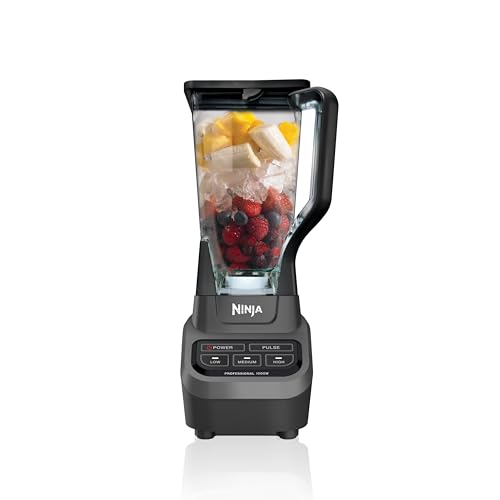
Choose this if you want a straightforward big-pitcher blender with strong ice-crushing power. The 1000W motor and Total Crushing Technology are built to crush ice and blend frozen fruit, and the 72-oz pitcher with 64 oz max liquid capacity works well for shared batches. It is the simpler pick if you do not need preset programs.
Power 1000WCapacity 72 oz pitcherMax liquid capacity 64 ozCleanup Dishwasher safeMotor type Corded electric
Why it made the cut
1000W motor with Total Crushing Technology
72-oz pitcher for large batches
Dishwasher safe pitcher
Includes a recipe guide
Good to know
No preset programs
Bigger and less portable than a personal blender
Skip it if Skip it if you want one-touch smoothie programs or a compact cup blender.
Choose the blender around your usual smoothie ingredients, not the biggest motor number on the box. Softer fruit, yogurt, and milk blend fine in lighter machines, while frozen fruit and ice need more wattage and a sturdier blade setup. For readers comparing energy-efficient blenders for smoothies, a smaller single-serve model can use less space and less power than a full-size pitcher blender.
What you make most
What to look for
Why it matters
Soft fruit smoothies
Lower wattage can be enough
Bananas, berries, and yogurt are easier to blend than ice or frozen chunks
Frozen fruit and ice
Higher wattage and stronger blades
Cold, hard ingredients stall weaker motors and leave chunks behind
One serving at a time
16 oz cups or similar single-serve cups
The cup goes straight from blending to drinking
Family batches
72 oz pitcher
A larger pitcher holds enough for several glasses without refilling
Daily use
Dishwasher-safe cups or pitcher parts
Wash-up is faster after weekday smoothies
Match the blender to the way you actually drink smoothies.
Single-serve cup blenders are usually easier to store and quicker for weekday smoothies. A compact base also clears counter space, which matters if your kitchen is already crowded with a coffee maker, toaster, and lunch containers.
Compare these specs before you buy
Wattage that matches your ingredients: softer fruit needs less power than frozen fruit and ice
Capacity that matches your routine: 16 oz cups for one person, 72 oz pitchers for larger batches
Dishwasher-safe cups or pitcher parts for easier cleanup
A footprint you can store without moving other appliances every morning
A price and feature set that fit your budget, especially if you want a powerful affordable blender for smoothies or the best budget blender for smoothies
If you want the best affordable blender for smoothies, start with the smallest model that still handles your cold ingredients without stopping mid-blend. The sweet spot is usually the least powerful blender that still gives you a smooth cup with your usual fruit, milk, and ice.
Myth
A bigger blender is always better for smoothies.
Fact
Bigger pitchers help with batches, but a personal blender can be the better buy for one-serving routines because it stores easily, blends faster, and wastes less counter space.
Worked Example
Say you make one 12 oz smoothie most mornings with frozen berries, banana, and milk, then a larger batch on weekends for two people. A personal blender with 16 oz cups handles the weekday drink, while a 72 oz pitcher makes more sense only if the weekend batch is your main routine.
Weekday servingabout 12 oz
Weekend batch2 servings
One practical tradeoff
Dishwasher-safe parts save time, but they do not replace a quick rinse right after blending. Sticky fruit and seed residue are easier to wash off before they dry.
From JuicerAdvices · our own guideChoosing or using a juicer? Page 3 compares the types; page 15 fixes the common problems.Home Juicing Starter KitMake fresh juice that tastes good, costs less and keeps safely: 40 recipes with exact amounts, a yield chart and a 4-week plan.40 juice, smoothie and shot recipesYield, storage and food-safety chartsCost, yield and shopping-list calculator (Excel)$14.99$9.99Get it for $9.99See what's inside and watch the 2-minute video →18-page printable PDF + Excel calculator · instant download · 30-day refund
Which Blender Fits Your Smoothie Habit
Pick the blender that matches your household size and your smoothie routine. Product 1 is the best fit for one-person smoothies, frozen fruit, and a small kitchen, while Product 4 suits larger batches and readers who want Auto-IQ presets. For best blender for frozen smoothies searches, the larger, higher-powered models make the most sense when ice or frozen fruit shows up most days.
Good for
Product 1: one-person smoothies, frozen fruit, and small kitchens; the 16 oz cups are easy to store and move from counter to bag
Product 4: family-size batches and preset smoothie programs; the 72 oz pitcher works when you blend for more than one person
Products 2 and 3: extra portable cups and a smaller footprint; helpful if you want to blend and go
Product 5: simpler family-size blending with power and no preset programs; a practical choice if you want a straightforward machine
Not for
Product 1: not built for large batches
Product 4: takes more counter space than a personal blender
Products 2 and 3: better for portability than for big family pitchers
Product 5: no preset smoothie programs, so you do a bit more of the work yourself
If you want the best blender for making vegetable smoothies, the larger motor options are the safer bet when spinach, kale, frozen mango, or ice are part of the mix. If you want the best smoothie blenders for home and you only make one glass at a time, a personal blender usually feels easier to use every day.
Useful here
Ninja Fit Compact Personal Blender, 700W, (2) 16oz Cups, QB3001SS
Choose Product 1 if you want a small, single-serve blender that still handles frozen fruit well and won’t take over your counter.
Readers searching for a commercial smoothie blender usually want speed and volume, but most home kitchens do better with the smallest model that covers the ingredients they use most. A heavier-duty pitcher blender only earns its place if you actually make big batches often enough to use it.
Frozen Fruit And Leafy Greens Need Power
Among these five, Product 4 and Product 5 are the strongest choices for thicker frozen batches, and they are the best blender for frozen smoothies, the best blender for making vegetable smoothies, and the closest match to a high-powered blender for smoothies here. Ice and frozen fruit can slow a weak motor and leave a gritty texture, while spinach and kale blend better when the pitcher keeps pulling ingredients back down into the blades.
Myth
A higher wattage number always means a smoother drink.
Fact
Wattage helps, but the blender also needs enough pull to keep greens and frozen chunks moving. A wider pitcher and a strong base make that swirl easier to create.
1400W
Motor power of Product 4
That level of power is why it handles thicker frozen batches better than a smaller personal blender.
Product
Best use
Why it helps
Product 4, Ninja Professional Plus Blender, Auto-IQ, 1400W, 72oz Pitcher
Tough frozen batches and vegetable smoothies
The 1400W base and 72 oz pitcher give ice, kale, and spinach room to move.
Product 5, Ninja Professional Blender, 1000W, Total Crushing Tech, 72oz pitcher
Bigger frozen smoothies for more than one person
High power and a full-size pitcher make it a strong second choice for thicker blends.
Product 1, Ninja Fit Compact Personal Blender, 700W, (2) 16oz Cups
Smaller frozen smoothies
It still works well if you keep the batch modest and stay close to single servings.
Power matters most once you add ice, frozen fruit, leafy greens, or nut butter.
Nut butter is the hardest of the group because it clings to the sides, so start with liquid and keep the load modest. For a personal blender, that small batch is often the difference between a smooth drink and one that needs repeated stopping and scraping.
Cleanup And Counter Space Matter
For the best affordable blender for smoothies, the compact personal cups are usually the easiest buy, and most smoothies are ready in about 30 to 60 seconds once the ingredients are loaded. Product 1 is the simplest place to start if you want the best inexpensive blender for smoothies without giving up much counter space.
Blender style
Cleanup
Storage
Personal cup blender like Product 1
Blend, drink, and rinse the same cup, so you wash fewer parts after one smoothie.
Takes less counter space and fits easier in a small kitchen.
Family pitcher like Product 4 or Product 5
More capacity means more parts to wash, but it can still be easy if the cup or pitcher parts are dishwasher-safe.
Needs more cabinet room, but it cuts repeat blending for households.
Dishwasher-safe parts
This is the easiest cleanup path if the listing says the cup, lid, or pitcher parts can go in the dishwasher.
Best for readers who want the least handwashing.
A blender that matches your kitchen is easier to keep using.
Rinse Right Away
Rinse the cup, lid, and blade base soon after blending so fruit and greens do not dry on, and unplug the base before you wipe it.
A blender that makes smoothies in the cup can save time on school mornings and office days, because you drink from the same container you blended in. Larger pitcher models like Product 4 and Product 5 take more storage room, but they reduce repeat blending when you are making two or more servings. If easy washing is the main goal, best blender for smoothies easy to clean has more detail on parts that rinse fast.
Before You Buy
Product 1 is the best Ninja blender for smoothies if you usually make one drink at a time, and a countertop pitcher blender is the better blender that makes soup and smoothies when you want more volume.
Shopping Checklist
Match the cup or pitcher size to how much you actually drink. A 16 oz cup fits one smoothie; a 72 oz pitcher fits a larger batch.
Check whether the cups, lids, pitcher, and blade parts are dishwasher safe if cleanup is your biggest pain point. The easier the wash, the more likely the blender stays in use.
Choose a personal blender if you want portability, a smaller footprint, or a cup you can drink from right away.
Choose a countertop blender if you want batch size, thicker frozen fruit, or a machine that can handle soup and smoothies in one pitcher.
False to the idea that a stick blender can do the same job as a countertop model. It can make a soft smoothie in a deep cup, but ice and frozen fruit usually come out less smooth.
Keep Blades And Joints Safe
Unplug the blender before cleaning or clearing a jam, and don’t bypass a lid lock or reach toward a moving blade.
Frequently Asked Questions
What is the best blender for frozen smoothies?
For frozen smoothies, choose the strongest blender you can comfortably fit on your counter, especially one with a pitcher that keeps ingredients moving. In this roundup, Product 4 and Product 5 are the best matches for thick frozen batches, because they handle ice and frozen fruit better than smaller personal cups.
What is the best blender for making vegetable smoothies?
Leafy greens blend best in a blender that can pull them down into the blades without stalling. For spinach, cucumber, and softer vegetables, many personal blenders work; for kale, celery, and other fibrous greens, the stronger pitcher models in this guide are the safer pick. A splash of liquid first helps keep the motor from bogging down.
How long does it take to make a smoothie in a blender?
Most smoothies take about 30 to 60 seconds once the ingredients are loaded. Thick frozen mixes can need a second short run, and a stall usually means you need more liquid or a quick scrape, not a longer nonstop blend.
What is the best affordable blender for smoothies?
Usually the cheapest workable option is a compact personal blender with a single-serve cup, because you are paying for less size and fewer extras. That fit makes sense if you blend one drink at a time and don’t need a large pitcher for family batches.
Can an immersion blender be used for smoothies?
Yes, but only for softer smoothies, like fruit with yogurt or milk in a tall container. Ice, frozen fruit, and dense greens are harder on a hand blender, so it works better as a backup than as your main smoothie machine. Use a deep, narrow cup so splatter stays down.
Which blender is best for family-size smoothie batches?
A 72-oz pitcher blender is the best fit for family-size batches, because you can make several servings at once without dividing the load. Product 4 matches that job in this roundup, especially if you like preset smoothie programs for thicker blends.
Before you go · a welcome giftGet the Home Juicing Starter Kit for $4.99Make fresh juice that tastes good, costs less and keeps safely: 40 recipes with exact amounts, a yield chart and a 4-week plan. Normally $14.99; your welcome price saves $10.00. We'll email your link right now.or skip the email and buy it now for $4.99 →One email with your link now. We never share your address.



 Home Juicing Starter KitMake fresh juice that tastes good, costs less and keeps safely: 40 recipes with exact amounts, a yield chart and a 4-week plan.40 juice, smoothie and shot recipesYield, storage and food-safety chartsCost, yield and shopping-list calculator (Excel)