You grab a pitcher packet from the pantry, mix it into cold water, and pour a tall glass. It tastes like tea, smells like tea, and sits on the shelf next to the family-sized black tea bags. So you assume it’s basically tea. Then you hit 9 p.m., pour another glass, and wonder if you’re going to be staring at the ceiling at midnight.
That’s the exact moment you need a straight answer. Here’s the deal: Crystal Light Iced Tea does contain caffeine, but only in certain versions. The caffeine comes from real black tea leaves used in the mix, not from an added chemical. The amount varies wildly depending on which box you bought. This article breaks down every single variant, explains how to read the label, and tells you exactly what ends up in your pitcher.
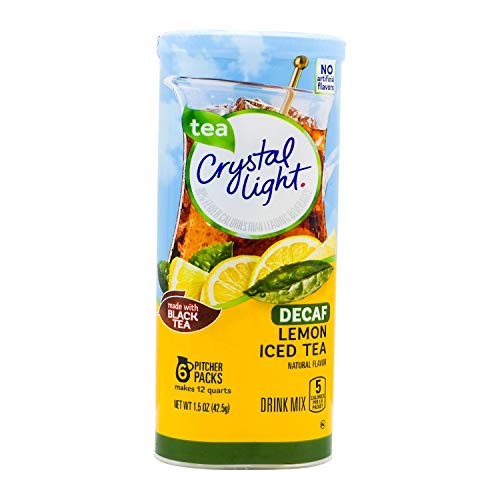
Crystal Light
Crystal Light Sugar-Free Decaffeinated Lemon Iced Tea…
- 4 pack of Crystal Light Decaf Lemon Iced Tea Powdered Drink Mix
- Each packet makes 5 servings or one 2-quart pitcher
- Powdered drink mix packet dissolves easily into water
If you want the short version right now: the Classic and Pure lines have about 11 mg per serving, the Energy line jumps to 90 mg, and the Decaffeinated version sits at essentially zero. Keep reading for the full breakdown.
One quick note before we dive in: if you’re cutting caffeine entirely but still want that brisk lemon flavor, the Crystal Light Decaf Lemon Iced Tea pitcher packets give you the same taste profile without the stimulant. It’s a solid swap for evening hydration.

The Short Answer: Yes, But It Depends on the Flavor
Crystal Light doesn’t have one single caffeine content. The brand makes three distinct Iced Tea product lines, and they’re not interchangeable. The Classic mix uses real black tea leaves. The Pure line does too, but with a shorter ingredient list. The Energy line adds green tea extract and a hefty dose of caffeine to function like a light energy drink.
So when someone says “Crystal Light Iced Tea has caffeine,” they’re right about two out of three lines. And when someone else says it’s caffeine-free, they’re probably thinking about the Decaffeinated variant or the fruit-flavored drinks that contain no tea at all.
Both people are correct, which makes this a genuinely confusing product category. Let’s sort it out flavor by flavor.
Caffeine Content by Flavor: The Exact Numbers
Every number below comes from the nutrition facts panel and the official Crystal Light FAQ. These are per serving, which means one packet dissolved into 2 quarts of water yields 5 servings of 8 ounces each.
Crystal Light Pure Iced Tea (The “Real” Tea)
Pure Iced Tea contains 11 mg of caffeine per serving. That’s the amount you get from the black tea leaves in the mix. The ingredient list is short: black tea, citric acid, natural flavor, and stevia leaf extract for sweetness. No artificial colors, no aspartame, no artificial sweeteners.
This line is the closest thing to a homemade sun tea, minus the sugar. It’s a good middle ground if you want a mild lift but don’t want to commit to a full cup of coffee.
Crystal Light Classic Iced Tea (The “Diet” Mix)
Classic Iced Tea also delivers 11 mg of caffeine per serving. The difference here is the sweetener. Classic uses aspartame and acesulfame potassium (Ace-K) to get that sugar-free sweetness. The tea base is the same black tea, so the caffeine extraction is identical.
If you’re sensitive to aspartame, this is the version to skip. The Pure line exists specifically for that reason. But if you don’t mind artificial sweeteners, Classic delivers the same caffeine boost at a lower price point.
Crystal Light Energy (The “Boosted” Mix)
Energy Iced Tea is a different animal entirely. Each serving packs 90 mg of caffeine, sourced from a combination of black tea and green tea extract. That’s roughly the same as a small cup of coffee or a standard energy drink like Red Bull.
The Energy line also contains B vitamins and ginseng, which is why it’s marketed as a functional beverage rather than just a thirst quencher. It’s not something you’d drink casually at 8 p.m. unless you enjoy insomnia.
Why “Tea-Flavored” Doesn’t Mean “Contains Tea”
Here’s a trap that catches a lot of people. Some Crystal Light products taste like tea but contain zero actual tea leaves. The Peach Tea and Raspberry Tea flavors in the Classic line, for instance, are “tea-flavored” rather than “made from tea.” They use artificial flavors to mimic the taste, and the caffeine content drops to zero.
The label tells you which one you’re holding. If the ingredients list “black tea” as the first or second item, you’re getting real tea and real caffeine. If you see “natural and artificial flavors” with no tea listed, you’re drinking flavored water that happens to taste like tea.
This distinction matters more than most people realize. I’ve seen someone swap their afternoon iced tea for Crystal Light Raspberry Tea to cut caffeine, only to discover they’d been drinking the caffeinated version for a week. The flavor names don’t tell you anything. The ingredient list does.
How to Read the Label in 30 Seconds
You don’t need a chemistry degree to figure this out. Here’s the exact process:
- Flip the box to the nutrition facts panel.
- Look at the ingredient list, not the front of the package.
- Scan for “black tea” or “green tea extract.”
- If either appears, check the “caffeine content” line below the nutrition facts. Crystal Light prints it as “Caffeine: 11 mg” or “Caffeine: 90 mg.”
- If neither appears, the drink is caffeine-free.
The front label says “Iced Tea” in big letters. The side label says “Naturally Flavored Drink Mix” in small print. That’s the clue. If it says “drink mix” rather than “tea mix,” you’re dealing with a tea-flavored beverage, not actual tea.
How Much Caffeine is Actually in Your Pitcher?
Here’s where the math gets interesting. The 11 mg per serving figure assumes you mix the packet exactly as directed: 2 quarts of water, 5 servings total. But people don’t always follow directions.
If you use less water than recommended, you get a stronger concentrate. A 1-quart pitcher made from one packet doubles the caffeine per 8-ounce glass to 22 mg. If you fill a 16-ounce tumbler instead of an 8-ounce glass, you’re getting 22 mg in that single glass. The serving size is doing a lot of heavy lifting in those nutrition numbers.
Water temperature also plays a role, though not as much as you’d think. Crystal Light mixes are designed to dissolve in cold water, so there’s no hot steeping step. The tea leaves in the mix are already extracted during manufacturing. You’re not brewing anything at home. That means you can’t control caffeine extraction by adjusting steep time like you could with loose-leaf tea.
The one variable that actually matters is dilution. Stick to the 2-quart ratio and you’re getting exactly what the label says. Stray from it and you’re guessing.
Crystal Light vs. Coffee vs. Brewed Tea: A Comparison
To put these numbers in context, here’s how Crystal Light stacks up against common beverages. This table assumes standard serving sizes: 8 ounces for Crystal Light and brewed tea, 12 ounces for coffee.
| Beverage | Caffeine per Serving | Notes |
|---|---|---|
| Crystal Light Classic Iced Tea | 11 mg | Real black tea, aspartame sweetened |
| Crystal Light Pure Iced Tea | 11 mg | Real black tea, stevia sweetened |
| Crystal Light Energy Iced Tea | 90 mg | Black tea plus green tea extract |
| Crystal Light Decaf Iced Tea | 0 mg | Decaffeinated black tea leaves |
| Brewed black tea (bag) | 47 mg | Steeped 3-5 minutes |
| Brewed green tea (bag) | 28 mg | Steeped 2-3 minutes |
| Drip coffee | 95 mg | 12-ounce serving |
| Red Bull (8.4 oz) | 80 mg | Standard energy drink |
The takeaway: Classic and Pure Crystal Light are roughly a quarter of the caffeine of brewed tea. Energy is nearly double brewed tea and comparable to coffee. If you’re using Crystal Light as a coffee replacement, the Energy line is your only real option. The others are too mild.
Is It Safe for Kids, Pregnancy, or Caffeine Sensitivities?
This is the question that gets the most conflicting advice online. Let’s break it down by group.
For kids, the 11 mg in Classic or Pure is negligible. The American Academy of Pediatrics recommends children under 12 avoid caffeine entirely, but a single serving of Crystal Light Iced Tea contains less than a third of the caffeine in a can of cola. If your child is drinking it occasionally, it’s not a major concern. The bigger issue is the artificial sweeteners, not the caffeine.
For pregnancy, the American College of Obstetricians and Gynecologists caps caffeine at 200 mg per day. A serving of Classic or Pure fits comfortably within that limit. You could drink five servings and still stay under the threshold. The Energy line is a different story. One serving gets you nearly halfway to the daily limit, so you’d need to account for it carefully alongside coffee and other sources.
For caffeine sensitivity, the 11 mg dose is low enough that most people won’t feel anything. But some people are hyper-reactive. If you get jittery from a single cup of green tea, skip the Classic and Pure lines entirely. The decaffeinated version is your safest bet. And for anyone with a heart condition or anxiety disorder, the Energy line should be off the table completely.
One honest caveat: the decaffeination process isn’t perfect. The Decaf Iced Tea contains trace amounts of caffeine, usually under 2 mg per serving. That’s not enough to affect anyone, but it’s technically not zero. If you’re strictly caffeine-free for medical reasons, keep that in mind.
The Bottom Line: Is It a Good Choice for Your Caffeine Intake?
Crystal Light Iced Tea is a decent option if you want a flavored beverage with a mild caffeine boost. The 11 mg in Classic and Pure is enough to take the edge off a mid-afternoon slump without risking the shakes. It’s not going to replace your morning coffee, and it’s not supposed to.
The Energy line fills a different niche. At 90 mg, it’s a legitimate coffee substitute, but the ginseng and B vitamins add a complexity you don’t get from a simple cup of joe. Some people love it. Others find the combination overstimulating. I’d recommend trying one serving before committing to a full pitcher.
The decaffeinated version is the clear winner for anyone who just wants the taste of iced tea without any stimulant effects. It’s also the only version I’d give to a child or someone with known caffeine sensitivity.
Here’s what you should remember:
- Classic and Pure Iced Tea contain 11 mg of caffeine per 8-ounce serving.
- Energy Iced Tea contains 90 mg per serving, roughly equal to coffee.
- Decaffeinated Iced Tea contains essentially zero caffeine.
- Tea-flavored varieties like Peach and Raspberry may have no caffeine at all — check the ingredient list.
- Dilution matters. Use the full 2 quarts of water or you’ll get more caffeine per glass.
- The front label says “Iced Tea,” but the ingredient list tells the real story.
- If you’re sensitive to aspartame, choose the Pure or Decaf lines instead of Classic.
For a deeper look at how the peach flavor compares, check out our breakdown of peach tea caffeine levels. And if you’re curious about the broader tea category, we’ve covered the green tea vs black tea comparison in detail.


