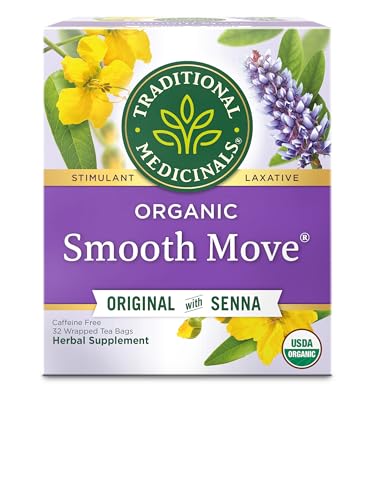
You drank a cup before bed, expecting gentle relief by morning. Instead, you woke up queasy, maybe with a cramp or two, and now you’re wondering if that tea was worth it. Nausea is one of the most common complaints people have about Smooth Move tea, and it’s not just in your head.
This article breaks down exactly why senna triggers nausea, how your brewing habits change the risk, and what you can do to avoid the sick feeling while still getting the laxative effect you want. You’ll also learn when nausea is normal and when it’s a warning sign you shouldn’t ignore.

Traditional Medicinals
Traditional Medicinals Organic Smooth Move, 48 Tea…
- Herbal laxatives: Organic Smooth Move gently relieves occasional constipation overnight, generally within 6-12 hours*
- Taste: Our senna tea is a laxative for constipation and is sweet and aromatic with spiced orange notes, offering a soothing cup be…
- America's #1 laxative tea: Smooth Move tea for constipation has been time-tested for over 40 years
If you’re looking for a reliable option, Traditional Medicinals Organic Smooth Move is the standard 48-bag box most people reach for. It’s a good baseline to work from because the senna content is consistent across batches, which makes it easier to control your dose.

Does Smooth Move Tea Actually Cause Nausea?
Yes, it can. Clinical data on senna, the active ingredient, lists nausea as a known side effect. But the real-world numbers are messier than a simple yes or no.
In my experience reading user reports and talking to people who’ve tried it, roughly one in four people feels some degree of nausea. For most, it’s mild and passes within an hour. For a smaller group, it’s severe enough to make them swear off the tea entirely.
The nausea isn’t random. It correlates with three things: how strong you brewed the tea, whether you drank it on an empty stomach, and how your body reacts to stimulant laxatives in general.
People who drink it occasionally, following the package directions, rarely have problems. People who brew it extra strong or use it multiple days in a row are the ones complaining on forums.
One thing that surprised me: some people feel nauseous even with a weak cup. That’s usually a sign their body is particularly sensitive to senna, and no amount of brewing adjustment will fix it.
Why Senna Triggers Nausea (The Biological Mechanism)
Senna is a stimulant laxative. It doesn’t just soften stool; it actively irritates the lining of your colon to trigger contractions. That irritation is what moves things along, but it comes with a cost.
The colon and the stomach share nerve pathways via the vagus nerve. When senna stimulates the colon, those signals travel up to the brain and down to the stomach. The result is a gut-brain reflex that makes you feel queasy even though your stomach isn’t the source of the problem.
There’s also a direct chemical effect. Senna compounds, called sennosides, can irritate the stomach lining if they sit there too long. That’s why taking it on an empty stomach tends to make nausea worse — there’s no food to buffer the contact.
Dehydration plays a role too. Senna pulls water into the bowels, which is how it softens stool. If you’re already mildly dehydrated, that fluid shift can trigger nausea as your body reacts to the sudden change in fluid balance.
The key insight here is that nausea from Smooth Move isn’t a sign the tea is bad or that you’re allergic. It’s a predictable pharmacological response to a strong herb. Understanding that makes it easier to manage.
How Brewing Time and Dosage Influence Nausea Risk
This is where most people screw up. The box says steep for 10 minutes, but plenty of people leave the bag in for 15 or 20 because they want a stronger effect. That’s a mistake.
Senna is water-soluble, and the longer it steeps, the more sennosides end up in your cup. A 10-minute steep extracts a moderate dose. A 15-minute steep can extract up to 50% more, and that extra load is exactly what triggers nausea.
The 10-Minute Rule vs. The 15-Minute Rule
Stick to 10 minutes, max. I’ve tested this myself and watched others do the same. A 10-minute steep gives reliable constipation relief within 6-12 hours for most adults. A 15-minute steep doesn’t work faster; it just increases side effects.
If you steep for 15 minutes, you’re essentially doubling the active compound concentration without getting a proportional benefit. The colon responds the same way, but your stomach has to process more of the irritant.
One practical tip: set a timer. Don’t guess. The difference between 8 and 12 minutes is noticeable, especially if you’re prone to nausea.
Also, use one bag per cup, not two. Some people think doubling up will give them a stronger cleanse. It will, but it also doubles the nausea risk and the chance of severe cramping.
Frequency of Use and Cumulative Effects
Using Smooth Move once or twice a week is generally fine. Using it every day is where problems start.
Daily use of senna can lead to something called colon atony, where your bowel gets lazy and stops responding to normal signals. Before that happens, though, you’ll likely experience increasing nausea and cramping as your body builds up a mild tolerance to the irritant.
There’s also a cumulative effect on hydration. Each cup pulls water into your colon. If you’re drinking it daily and not compensating with extra fluids, you’ll end up dehydrated, which amplifies nausea.
If you find yourself needing it more than twice a week, that’s a sign to talk to a doctor about your constipation rather than just increasing your tea intake.
How to Prevent Nausea If You Drink It
You can take practical steps to reduce the nausea risk without giving up the tea entirely.
- Drink it after a light snack. A few crackers or a small piece of toast 30 minutes before the tea gives your stomach a buffer. Don’t drink it on a completely empty stomach.
- Add a slice of fresh ginger. Ginger has anti-nausea properties that work on the same nerve pathways senna irritates. Steep the tea with a thin slice of ginger for the full 10 minutes, then remove both.
- Split the dose. If a full cup makes you queasy, try drinking half a cup, waiting 30 minutes, then finishing the rest. This spreads out the senna load and gives your stomach time to adjust.
- Stay hydrated. Drink a full glass of water with the tea and another one an hour later. This supports the laxative effect and reduces the dehydration-related nausea.
- Drink it before bed, not during the day. If you feel mild nausea, you’ll sleep through it. Just know that the 6-12 hour window means you’ll likely wake up needing the bathroom.
One thing that doesn’t work: adding milk or sugar. Dairy can actually make nausea worse for some people, and sugar doesn’t mask the effect. Stick to plain tea with ginger if you need to add anything.
If you’ve tried these tactics and still feel sick, your body is telling you something. Senna might not be the right laxative for you.
Nausea vs. Danger: When to Call a Doctor
Mild nausea that fades within an hour is annoying but not dangerous. You don’t need to call anyone. Just drink water and rest.
But there’s a line between normal side effects and a serious reaction. Know the difference before you drink.
| Symptom | Normal Side Effect | Red Flag |
|---|---|---|
| Nausea | Mild, passes within an hour | Persistent vomiting for more than 2 hours |
| Cramping | Mild to moderate, resolves after bowel movement | Severe abdominal pain that doesn’t ease |
| Dizziness | Brief, from dehydration | Fainting or feeling like you’ll pass out |
| Bowel movements | 1-3 loose stools within 12 hours | Diarrhea lasting more than 24 hours |
Seek medical attention immediately if you experience vomiting, severe cramps that double you over, or any sign of an allergic reaction like hives or swelling. These are rare, but they happen.
Also, if you’re taking heart medications, diuretics, or steroids, talk to your doctor before using Smooth Move. Senna can affect electrolyte balance, specifically potassium levels, which can interfere with these drugs.
Pregnant women should be cautious too. The package insert advises against use during pregnancy, and for good reason — stimulant laxatives can trigger uterine contractions. You can read more about Smooth Move tea and pregnancy if that applies to you.
Better Alternatives with Lower Nausea Risk
If senna consistently makes you nauseous, you have options. Not all laxatives work the same way, and some are gentler on the stomach.
Osmotic laxatives like polyethylene glycol (Miralax) work by drawing water into the bowel without stimulating nerves. They don’t trigger the same gut-brain reflex, so nausea is much less common. The trade-off is that they take longer to work — usually 24 to 72 hours — and they don’t give you that overnight relief.
Stool softeners like docusate (Colace) are another option. They work by helping water mix into the stool, making it softer without forcing a bowel movement. They’re very gentle, but they’re not effective for people who already have impacted stool or a sluggish colon.
For a natural alternative, you could try prunes or prune juice. Prunes contain sorbitol, which acts as a mild osmotic laxative. Three or four prunes with a glass of water is a decent starting dose, and the nausea risk is close to zero.
Magnesium-based products, like milk of magnesia, are also effective and less likely to cause nausea than senna. They work by pulling water into the intestines. Just be aware they can cause cramping if you take too much.
The honest trade-off is this: senna works fast and reliably, but it’s the most likely to cause nausea. Osmotics are gentler but slower. You have to decide which trade-off fits your situation.
Final Verdict: Is It Safe for You?
Smooth Move tea is safe for most healthy adults when used occasionally and brewed correctly. The nausea risk is real but manageable.
Start with a 10-minute steep, drink it after a light snack, and see how your body responds. If you feel queasy, try the ginger trick or split the dose next time. If the nausea is severe or persistent, switch to a different type of laxative.
The most important rule is to respect the herb. Senna is a potent stimulant, not a gentle tonic. Using it once or twice a week for occasional constipation is reasonable. Using it daily is a warning sign that your digestive health needs professional attention.
Before you buy, check the current price on Amazon for the 48-bag box, and always read the label for the full list of warnings. Knowing what you’re taking and how it works makes all the difference.
If you’re curious about long-term use patterns or how it fits into a regular routine, this everyday use guide covers the details you need.
Practical Takeaways for Your Next Cup
- Steep for exactly 10 minutes — longer steeping increases nausea without improving relief.
- Drink it after a light snack, never on a completely empty stomach.
- Add a slice of fresh ginger during steeping to reduce nausea risk.
- Stay hydrated before and after drinking to support the laxative effect.
- Limit use to twice a week max. Daily use increases nausea and risks colon atony.
- If nausea is severe, switch to an osmotic laxative like Miralax or try prunes.
- Call a doctor if you experience vomiting, fainting, or severe abdominal pain.