Why Fresh Juice Costs More at Your Local Cafe
On this page 6 sections
You’re at your favorite cafe, ready for a refreshing boost. You scan the menu and see it: a tall glass of fresh-squeezed orange juice. Then you see the price. It often rivals, or even exceeds, the cost of your latte. A silent question forms: why is fresh juice so expensive?
It’s a common moment of sticker shock. The answer isn’t simple greed or markup. It’s a complex equation involving the true cost of quality, intense labor, and the harsh realities of running a food business. Understanding these juice pricing factors changes your perspective from frustration to appreciation.

If you’ve ever considered making cafe-quality juice at home to save money, a good juicer is key. For this, many home enthusiasts recommend the Check price on Amazon, known for its efficient extraction and ease of cleaning.
The True Cost of Quality Ingredients
Let’s start with the most obvious factor: what goes into the glass. The produce cost for a cafe is fundamentally different from your grocery bill.
First, quality is non-negotiable. Cafes and juice bars typically use ripe, high-grade, often organic produce. A blemished apple might be fine for a pie, but it won’t make a visually appealing, sweet-tasting juice. This premium sourcing comes at a price.
Second, seasonality and sourcing play huge roles. Local vs. imported produce cost breakdown is a real business headache. In winter, those oranges for your fresh-squeezed OJ might be flown in from another hemisphere, skyrocketing the cost. A cafe committed to local, seasonal menus faces constant price fluctuations.
Why does this matter for juice bar prices? The menu price must absorb these peaks and valleys to keep the product available year-round.
Organic vs. Conventional: A Tangible Price Difference
Many establishments choose organic to align with a health-conscious brand. Organic certification is expensive for farmers, and that cost is passed down the chain. When you see a $9 cold-pressed green juice, a significant portion covers the organic kale, celery, and cucumber.
Labor-Intensive Preparation and Time
This is where the cost of fresh juice separates from bottled alternatives. That bottle on the shelf was processed, pasteurized, and packaged by machines on an industrial scale.
Fresh juice is handmade. Think about the process:
- Washing and sanitizing every piece of produce.
- Peeling, coring, and chopping (for many fruits and veggies).
- Operating the juicer, which requires attention and skill.
- Cleaning the equipment thoroughly after every use to prevent bacterial growth.
Every minute spent prepping is a minute of paid labor. Unlike a barista pulling an espresso shot in 30 seconds, juice extraction is slow. Methods like cold-pressed juice are even more time-intensive, using hydraulic presses that yield less juice per hour than centrifugal models.
This labor cost is baked into every glass. It’s the premium you pay for a product made to order, right before your eyes.
The Hidden Cost of Waste and Low Yield
Here’s the most surprising element for many: juice waste. When you juice something, you’re left with two things: liquid and pulp. The pulp is often discarded (though some innovative cafes compost or bake with it).
You’re not just paying for the juice you get. You’re paying for all the produce that didn’t make it into your cup.
Let’s talk about juice yield. Not all produce is created equal. Specific juice yield percentages by fruit/vegetable reveal the stark reality:
| Produce Item | Approximate Yield (Juice from 1 lb) | Notes on Waste |
|---|---|---|
| Oranges | 8-12 oz | Peels and pulp account for ~50% of weight. |
| Carrots | 10-14 oz | Higher yield, but tops and peels are waste. |
| Leafy Greens (Kale, Spinach) | 2-4 oz | Extremely low yield. Huge volume of greens needed for one serving. |
| Pineapple | 10-14 oz | Core and tough skin are significant waste. This is one reason pineapple juice often comes canned commercially. |
To serve you one 16-oz juice, a cafe may need to process 2-3 pounds of produce. You pay for the whole fruit, not just the liquid gold. This directly answers how much does it cost to make fresh juice at a cafethe raw ingredient cost is often 3-4 times the weight of the final product.
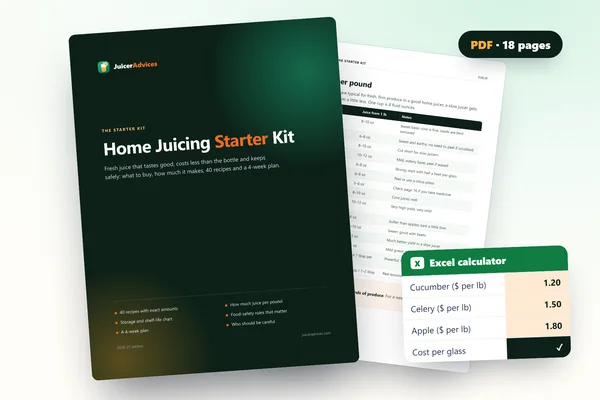 Home Juicing Starter KitMake fresh juice that tastes good, costs less and keeps safely: 40 recipes with exact amounts, a yield chart and a 4-week plan.40 juice, smoothie and shot recipesYield, storage and food-safety chartsCost, yield and shopping-list calculator (Excel)
Premium Positioning and Perceived Value
Cafes and juice bars aren’t selling mere hydration. They’re selling an experience and a perceived value tied to wellness. Fresh juice is positioned as a luxury health item, not a commodity.
This branding justifies the price. When you buy a cold-pressed juice, you’re buying into a promise: maximum nutrients, no additives, and a clean, healthy boost. The price reinforces that this is a special, premium product, different from the sugary fresh juice vs bottled alternatives in the cooler.
This psychology is powerful. It’s why why do juice bars charge so much for smoothies and juices feels different than questioning the price of a soda. You’re evaluating a health investment.
It’s worth noting that while fresh juice delivers vitamins, it concentrates sugars and removes fiber. For a detailed look at the nutritional trade-offs, you can check this external guide on the calorie and nutrient profile of juiced fruits and vegetables.
Equipment, Overhead, and Business Realities
Finally, we get to the backbone of the business: operational overhead. The shiny juicer on the counter is a major investment. A high-quality commercial cold-pressed juicer can cost thousands of dollars.
There’s also a comparison of equipment costs (centrifugal vs. masticating). Centrifugal juicers are faster but oxidize juice more. Slow masticating or cold-press juicers preserve nutrients better but have a higher upfront cost and slower output, affecting how many drinks can be sold per hour.
Beyond the machine, the cafe juice cost includes everything else:
- Rent for a high-traffic location.
- Commercial refrigeration to store vast amounts of perishable produce.
- Utilities, insurance, permits, and staff beyond just the juicer.
- Packaging for to-go orders (often eco-friendly, which costs more).
That $8 juice isn’t just paying for oranges. It’s helping to keep the lights on, the space clean, and the staff paid. The final juice markup needs to cover all these fixed costs and still leave a slim profit margin for the business to survive.
Specialized juices also face unique challenges. For instance, the rapid oxidation in some fresh juices, like why sugarcane juice turns black, requires specific handling and quick service, adding another layer to the operational complexity.
So, Is Fresh Juice Worth the Price at Coffee Shops?
That’s the ultimate question: is fresh juice worth the price at coffee shops? The answer is personal. It depends on what you value.
If you value convenience, a guaranteed taste, a nutrient-dense product made with quality ingredients, and supporting a local business, then yes, it can be worth the premium. You’re paying for the labor, the expertise, and the assurance of a fresh, unprocessed product.
If your primary concern is cost and basic vitamin intake, buying whole fruit or making juice at home will always be more economical. You control the ingredients, you deal with the waste, and you supply the labor.
Next time you see that price tag, you’ll see more than just a number. You’ll see the journey of pounds of produce, the skilled labor, the humming equipment, and the business balancing act required to get that vibrant, fresh juice into your hand. It’s not just a drink. It’s the final product of a complex, costly, and careful process.