You blended kale, pineapple, Greek yogurt, and a scoop of protein powder. It tasted like a health store in a glass. Twenty minutes later, you’re unbuttoning your jeans and wondering if something in that smoothie was secretly toxic.
It wasn’t. Smoothies are one of the most common culprits for post-meal bloating, and the reasons are surprisingly predictable. Most people blame one ingredient, but the real issue is often a combination of factors working together. This guide walks through the seven specific reasons smoothies cause gas and distension, then gives you a practical 3-day audit to identify your personal trigger.
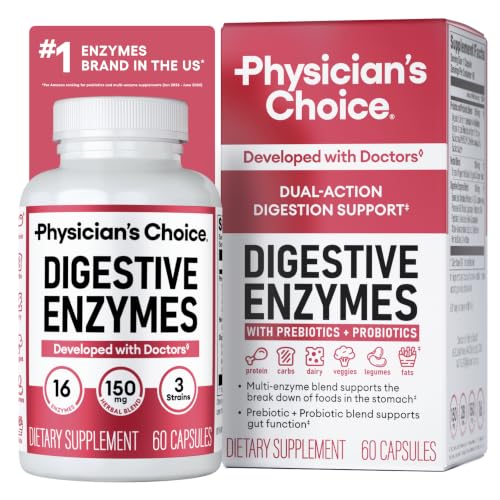
Physician's CHOICE
Physician's CHOICE Digestive Enzymes for Bloating &…
- Beat the Bloat & Say Goodbye to Meal Time Discomfort: 16 beneficial enzymes that digest proteins, carbs, fruits, veggies, beans, d…
- Dual Action Relief: Our powerful digestive enzymes aid with breaking down food while the prebiotics & probiotics promote digestive…
- Probiotics that Survive the Gut: Formulated with 3 soil-based probiotic strains - specifically selected due to their ability to su…
You’ll leave with a clear plan, not just a list of warnings.
If you want immediate relief while you figure out your triggers, a targeted digestive enzyme can help bridge the gap. Physician's CHOICE Digestive Enzymes contain 16 different enzymes plus soil-based probiotics and prebiotics. That combination tackles protein, carbs, fats, dairy, and fibrous vegetables in one capsule, which covers most smoothie-related bloating scenarios.

Why Your Smoothie is Causing Bloating (The Short Answer)
Blending changes how your gut processes food. When you chew an apple, saliva starts breaking down carbohydrates in your mouth. Your stomach empties slowly, giving your small intestine time to handle fiber and sugars. A smoothie bypasses that entire process. You swallow a liquid that hits your stomach already partially digested, then moves into your intestines in a rush.
That rush matters. Your gut bacteria ferment undigested carbohydrates, and fermentation produces gas. The more undigested carbs that reach your colon, the more gas you produce. Smoothies concentrate ingredients. A typical recipe packs two cups of fruit, a handful of greens, yogurt, and seeds into a single glass. That’s more fiber and sugar than most people would eat in a whole meal.
Add the fact that you’re drinking it in five minutes instead of chewing for twenty, and you have a recipe for distension.
The 7 Key Culprits Hiding in Your Glass
1. The Fructose Overload (Too Much Fruit)
Fruit is healthy. But smoothies turn fruit into a sugar delivery system. A large banana contains about 14 grams of fructose. Add a cup of mango (another 16 grams), a handful of grapes (12 grams), and you’re looking at 42 grams of fructose in one glass.
Your small intestine can only absorb so much fructose at once. The transport protein that moves fructose across your intestinal lining gets overwhelmed. Excess fructose travels to your colon, where bacteria ferment it. That fermentation produces hydrogen gas, which stretches your intestinal walls and causes bloating.
People with fructose malabsorption feel this even with small amounts. But even those without diagnosed issues can hit the threshold if they cram enough fruit into one drink.
Pro tip: Stick to one serving of fruit per smoothie. That’s roughly one cup of chopped fruit or one medium banana. If you want more volume, add ice or unsweetened almond milk instead of another fruit.
2. The Fiber Bomb (Insoluble vs. Soluble)
Fiber is a double-edged sword in smoothies. Soluble fiber (found in oats, bananas, and apples) dissolves in water and forms a gel. It slows digestion and feeds beneficial gut bacteria. Insoluble fiber (found in kale, spinach, and celery) adds bulk and speeds transit.
Both types ferment in the colon, but insoluble fiber ferments faster and produces more gas. A green smoothie with two cups of kale plus a stalk of celery delivers a massive insoluble fiber load in liquid form. Your gut bacteria go into overdrive, and you get bloated.
The paradox: these are healthy ingredients. But blending breaks down fiber differently than chewing. Chewing leaves some fiber intact, which slows fermentation. Blending shreds fiber into tiny particles, exposing more surface area to bacteria. That means faster fermentation and more gas.
If you’re new to high-fiber smoothies, your microbiome hasn’t adapted yet. Start with half a cup of greens and work up gradually over two weeks.
3. The Dairy Dilemma (Lactose Intolerance)
Milk, yogurt, and kefir are common smoothie bases. Lactose, the sugar in dairy, requires the enzyme lactase to break down. About 65% of the global population produces insufficient lactase after childhood.
If you’re lactose intolerant, undigested lactose sits in your colon and ferments. Symptoms appear 30 minutes to two hours after drinking: bloating, gas, and sometimes cramping. The amount matters. Some people tolerate a splash of milk but not a full cup of Greek yogurt.
Here’s the tricky part: you might not know you’re lactose intolerant if you only drink milk occasionally. Daily smoothies with yogurt can expose a mild intolerance you never noticed.
Try swapping dairy for unsweetened almond milk, oat milk, or coconut milk for three days. If bloating disappears, dairy was your trigger. If it persists, keep reading.
4. The Protein Powder Problem (Whey and Sugar Alcohols)
Protein powders are a common culprit, and it’s not just about lactose. Whey protein concentrate contains lactose, but whey protein isolate has almost none. If you’re using a concentrate and feeling bloated, switch to isolate or a plant-based protein.
Plant proteins have their own issues. Pea protein is generally well-tolerated, but soy protein can cause gas in sensitive individuals. Many vegan protein powders contain added sugar alcohols like erythritol or xylitol to improve taste. Sugar alcohols are poorly absorbed and ferment rapidly in the colon, causing significant bloating and even diarrhea in higher doses.
Check your protein powder label. If it lists erythritol, sorbitol, mannitol, or xylitol, that’s likely your problem. Look for a powder with only one protein source and no artificial sweeteners.
Also check the serving size. Many people use two scoops when one is sufficient, doubling the potential for digestive distress.
5. The “Healthy” Add-Ins (Kale, Chia, and Ginger)
Add-ins seem harmless, but they compound the problem. Chia seeds are packed with fiber — two tablespoons contain 10 grams. That’s a third of your daily fiber needs in one smoothie, and it all hits your gut at once.
Kale and other cruciferous greens contain raffinose, a complex sugar that humans can’t digest. Bacteria ferment it readily, producing gas. Ginger is a common addition for anti-inflammatory benefits, but it can relax the lower esophageal sphincter, causing acid reflux and a sensation of bloating.
Even healthy ingredients become bloat triggers in high quantities. A tablespoon of chia is fine. Two tablespoons plus a cup of kale plus a banana plus Greek yogurt is a gastrointestinal obstacle course.
My rule: no more than one “superfood” add-in per smoothie. Choose either chia seeds or kale, not both.
6. The Sugar Rush (Added Sweeteners)
Fruit provides natural sugar, but many smoothie recipes add more. Honey, agave, maple syrup, and flavored yogurts all contribute extra fructose and sucrose. Added sugars pull water into your intestines through osmosis, which causes that heavy, full feeling.
Artificial sweeteners are worse. Sucralose and aspartame don’t get absorbed well, and they alter gut bacteria composition. Some studies link artificial sweeteners to increased gas production and altered microbiome diversity.
If your smoothie tastes sweet, it probably has enough sugar. Skip the honey and rely on fruit for sweetness. If you need extra flavor, add cinnamon or vanilla extract instead.
7. The Speed Factor (Drinking and Air Swallowing)
You’re probably drinking your smoothie faster than you’d eat a meal. A 16-ounce smoothie can disappear in under two minutes. That speed causes aerophagia — literally, swallowing air.
Every gulp traps air in your stomach. That air has to go somewhere, and it usually exits as burping or travels downward, contributing to intestinal gas. Using a straw makes it worse because straws force you to suck, which pulls in extra air.
Here’s what works: sip your smoothie slowly, taking small mouthfuls and pausing between sips. Skip the straw and drink from the rim. Aim to take at least ten minutes to finish a smoothie. Your stomach will thank you.
How to Do a 3-Day Bloating Audit to Find Your Trigger
Guessing rarely solves the problem. A systematic elimination audit will pinpoint your specific trigger in three days. Here’s the protocol:
- Day 1: Remove dairy. Use water, unsweetened almond milk, or coconut milk as your base. Keep everything else the same. If bloating disappears, lactose is your issue.
- Day 2: Remove fruit. Make a savory smoothie with cucumber, celery, spinach, and a scoop of plain pea protein. If bloating disappears, fructose or overall sugar load is the problem.
- Day 3: Remove fiber-heavy add-ins. Skip chia seeds, kale, and oats. Use just one fruit (half a banana) and a simple liquid base. If bloating disappears, you’re overloading on fiber.
Keep a simple log. Note what you put in the smoothie, how fast you drank it, and how you felt 30 and 60 minutes later. Patterns emerge quickly.
One more variable to test: portion size. If you’re drinking 20 ounces, try 10 ounces. Sometimes it’s not the ingredients but the sheer volume stretching your stomach.
The Right Way to Prep a Gut-Friendly Smoothie (Step-by-Step)
Once you know your trigger, you can build a smoothie that works. Here’s my go-to formula for a bloat-free blend:
- Start with a low-FODMAP liquid base. Unsweetened almond milk or plain water. Avoid apple juice and orange juice — they’re high in fructose.
- Add one serving of low-fructose fruit. Berries, kiwi, or a half-banana. Berries are the safest choice because they’re low in fructose and high in water content.
- Include a handful of leafy greens, but not more. Spinach is gentler than kale. If kale is your preference, use a small handful and rotate it with spinach every other day.
- Choose a clean protein source. Whey protein isolate or plain pea protein, no added sweeteners. One scoop, not two.
- Add one fat source for satiety. A tablespoon of almond butter or half an avocado. Fat slows gastric emptying, which reduces the sugar rush to your colon.
- Skip the ice if you’re sensitive. Cold liquids can slow stomach contractions. Use room-temperature ingredients if you notice cold drinks make you feel worse.
- Blend for 20 seconds, not 60. Over-blending breaks fiber into finer particles, increasing fermentation speed. A slightly chunkier texture is better for digestion.
This formula works for most people. If you still experience bloating, consider a digestive enzyme supplement taken before your smoothie. Physician's CHOICE Digestive Enzymes cover the broad spectrum of carbs, proteins, fats, and dairy, so you don’t have to guess which enzyme you need. Check the current price on Amazon if you want to try it.
The “Gut Adaptation” Timeline: When Bloating is Normal
Here’s something most articles skip: some bloating is temporary and actually a sign your gut is adapting. If you recently started drinking daily green smoothies after years of low-fiber eating, your microbiome is shifting. Bacteria that digest fiber are multiplying, and that transition produces gas.
This adaptation phase typically lasts 1 to 3 weeks. During this time, you’ll notice more gas and bloating than usual. It’s uncomfortable but not harmful. The key is to manage the transition without abandoning your smoothie habit.
Strategies that help:
- Start with a half-portion of smoothie for the first week, then increase gradually.
- Add a daily probiotic to support the beneficial bacteria that handle fiber.
- Drink plenty of water throughout the day — fiber needs water to move through your system smoothly.
- Take a short walk after drinking your smoothie. Movement stimulates intestinal motility and helps gas pass.
If bloating persists beyond three weeks or is accompanied by pain, diarrhea, or blood, see a doctor. That’s not normal adaptation; that’s something else.
Frequently Asked Questions About Smoothies and Bloating
Can I drink smoothies if I have IBS?
Yes, but you need to follow a low-FODMAP approach. Choose low-FODMAP fruits like berries and kiwi, skip high-FODMAP options like apples, mangoes, and watermelon. Use lactose-free milk or a non-dairy base, and avoid sugar alcohols in protein powders. Many people with IBS tolerate a simple berry, spinach, and almond milk smoothie just fine.
Is it better to eat fruit whole instead of blending it?
For digestion, yes. Whole fruit requires chewing, which slows intake and begins carbohydrate breakdown in your mouth. The fiber structure stays more intact, which slows fermentation. Blending pre-digests food and delivers it faster. That doesn’t mean smoothies are bad — just that whole fruit is gentler on your gut.
Does drinking smoothies through a straw cause more bloating?
It can. Sucking through a straw causes you to swallow more air with each sip. That air accumulates in your stomach and intestines, causing pressure and distension. Drink from the rim of the glass instead, and take smaller sips.
How long after drinking a smoothie should I expect bloating to appear?
It depends on the cause. Dairy-related bloating from lactose typically appears within 30 to 60 minutes. Fructose-related bloating from fruit overload often shows up 45 minutes to 2 hours later. Fiber-related bloating can take 2 to 4 hours as fermentation progresses in the colon. Track your symptoms and note the timing — it’s a useful diagnostic clue.
Will digestive enzymes actually help with smoothie bloating?
For many people, yes. Enzymes like lactase (for dairy), alpha-galactosidase (for beans and vegetables), and cellulase (for fiber) break down specific components before they reach your colon. A broad-spectrum enzyme covers multiple triggers at once. They’re not a cure-all, but they’re a practical tool, especially when you’re eating out or traveling.
The Bottom Line: Sip Smart, Not Sorry
You don’t have to give up smoothies. You just need to find your specific trigger and adjust. Here’s what to remember:
- Limit fruit to one serving per smoothie — fructose overload is the most common cause of bloating.
- Swap dairy for unsweetened almond or oat milk for three days to test lactose intolerance.
- Check your protein powder for sugar alcohols and switch to a single-source isolate.
- Keep add-ins to one per smoothie. Chia seeds and kale together are a fiber bomb.
- Sip slowly from the rim, not a straw, and take at least ten minutes to finish.
- Run a 3-day elimination audit to pinpoint your exact trigger instead of guessing.
- Expect some temporary bloating for 1-3 weeks when you first increase fiber intake — it passes.
For more on this topic, read our detailed breakdown of smoothie bloating causes. If stomach pain is your main symptom, this guide on smoothie stomach pain covers additional angles. And if bananas are a staple in your blends, understanding banana dominance in smoothies will help you balance your recipes.
Smoothies can be a genuinely healthy habit. With the right adjustments, you can keep them in your routine and leave the bloating behind.


