Skip to content
JuicerAdvicesDrink safety, answered
Energy Drinks

Monster Caffeine Content: How Much Caffeine Is in a Can

On this page 5 sections
  1. Monster Caffeine Content: How Much Caffeine Is in a Can?
  2. Check the Label for Added Sugar and Other Ingredients
  3. Who Should Limit Monster Caffeine Intake and Why
  4. How Monster Compares to Other Energy Drinks
  5. Questions People Ask
Short answer
An 8.4 oz can of Monster contains about 80 mg of caffeine, roughly the same as a cup of coffee and about 20% of the recommended daily caffeine limit for most adults.

The caffeine in Monster energy drinks varies by size and flavor but knowing the exact amount helps you avoid unwanted side effects like jitters or sleep disruption.

Many people confuse caffeine per can with caffeine per ounce, which can lead to accidentally consuming more caffeine than planned.

What to remember
A standard 16 oz Monster contains 160 mg caffeine, about 40% of the 400 mg daily limit for most adults.
Drinking more than one can quickly approaches or exceeds safe caffeine levels, especially combined with coffee or other caffeinated drinks.
People sensitive to caffeine, pregnant women, and teens should limit intake to well below one can per day.
Monster contains other ingredients like taurine and B vitamins, but caffeine is the main stimulant to watch.
Check labels carefully; some Monster flavors have less caffeine, but none are caffeine-free.

Monster Caffeine Content: How Much Caffeine Is in a Can?

An 8.4 oz can of Monster contains about 80 mg of caffeine, which is roughly the same amount found in a typical cup of coffee. This amount represents around 20% of the recommended daily caffeine limit for most healthy adults, which is about 400 mg.

a clear glass containing dark brown energy drink on wooden surface
An 8.4 oz serving of energy drink contains about 80 mg of caffeine, similar to coffee.

Monster Energy Drink caffeine content varies by can size, with the most common 16 oz can containing about 160 mg of caffeine. That works out to 10 mg of caffeine per ounce. Smaller cans or different flavors may have slightly different caffeine levels, but the standard Monster Energy 16 oz can is the most widely available and referenced.

Can SizeCaffeine per Can (mg)Caffeine per Ounce (mg)
8.4 oz809.5
16 oz16010
16.9 oz (Aussie Style Lemonade)~54~3.2
Caffeine content in common Monster Energy drink cans

People often confuse caffeine per serving with caffeine per ounce. Monster labels caffeine per can (serving), not per ounce. So, an 8.4 oz can has 80 mg total, not 80 mg per ounce. This distinction matters when comparing to coffee, which usually has about 95 mg per 8 oz cup.

For perspective, drinking one 16 oz Monster can delivers about 160 mg of caffeine, which is nearly half the daily limit for most adults. If you consume other caffeine sources, such as coffee or soda, you need to add those amounts to avoid exceeding the daily recommended maximum.

DrinkCaffeine per servingServingsTotal
8.4 oz Monster can80 mg180 mg
16 oz Monster can160 mg1160 mg
8 oz brewed coffee95 mg195 mg
Total335 mg
Daily limit for most healthy adults (400 mg)84%
Typical caffeine amounts from Monster and coffee Totals are calculated from the amounts shown; labels vary by size and brand, so check the one you have.
Worked example
Imagine you drink two cups of coffee (8 oz each) and a 16 oz Monster Energy can before noon. Your total caffeine intake is about 285 mg, which is about 70% of the recommended daily limit. Adding more caffeine later in the day could push you over the safe amount.
Drinks2 cups coffee + 1 Monster 16 oz
Caffeineabout 285 mg
Check your caffeine intake
Note the can size and caffeine amount on the nutrition label
Add caffeine from all beverages consumed during the day
Limit total caffeine to about 400 mg daily unless advised otherwise
Adjust intake if you are sensitive to caffeine or have a health condition
Monster Punch + Energy Aussie Style Lemonade Energy Drink
Typical caffeine source
Monster Punch + Energy Aussie Style Lemonade Energy Drink
The 16 oz Monster can offers a clear caffeine amount, helping you measure your daily intake accurately.
View on Amazon

Check the Label for Added Sugar and Other Ingredients

Monster Energy drink ingredients include caffeine, sugar or sugar substitutes, and other stimulants like taurine and ginseng to enhance energy effects. Checking the label helps you understand what you’re consuming beyond caffeine.

close-up of a bowl filled with white granulated sugar on countertop
Check the label for added sugar and other ingredients in your energy drink.

The sugar content varies between Monster Original and sugar-free versions. A 16 oz can of Monster Original contains about 54 grams of sugar, which is over two-thirds of the recommended daily added sugar limit for women and nearly the full limit for men. Sugar-free Monster drinks replace sugar with artificial sweeteners like sucralose and acesulfame potassium.

IngredientMonster Original (16 oz)Monster Sugar-Free (16 oz)
Sugar54 g (added sugar)0 g
Caffeine160 mg (synthetic)160 mg (synthetic)
TaurineIncludedIncluded
Ginseng ExtractIncludedIncluded
B VitaminsIncludedIncluded
Key ingredients comparison in Monster Original and Sugar-Free versions

Monster’s caffeine comes from synthetic sources, the same type used in most energy drinks and sodas. Taurine and ginseng are added stimulants that may affect how you feel energized or alert, though their effects vary by person.

Myth
All energy in Monster comes from caffeine alone
Fact
Monster contains other active ingredients like taurine, ginseng, and B vitamins that contribute to its stimulating effects.
Read labels carefully
If you want to reduce added sugar, choose sugar-free Monster versions but be mindful of artificial sweeteners if you have sensitivities.
Monster Punch + Energy Aussie Style Lemonade Energy Drink
Know your drink
Monster Punch + Energy Aussie Style Lemonade Energy Drink
Checking Monster’s ingredient list on the can makes it easier to pick the version that fits your health goals.
View on Amazon
Monster Energy Drinks to Know
Caffeine content and features for your choice
Monster Punch Energy Drink Aussie Style Lemonade
High caffeine content
Monster Punch Energy Drink Aussie Style Lemonade
This 473 mL can packs 175 mg of caffeine, more than double a standard 8.4 oz Monster, making it a potent option if you want a bigger caffeine hit along with vitamin B complex and energy blend ingredients.
View on Amazon
Monster Rehab Tea + Energy Lemonade
Trusted energy boost
Monster Rehab Tea + Energy Lemonade
This 15.5 oz can offers a high caffeine content in a familiar lemonade taste, suitable for when you want an energy lift with a trusted Monster brand drink that’s easy to grab and go.
View on Amazon

Who Should Limit Monster Caffeine Intake and Why

An 8.4 oz can of Monster contains about 80 mg of caffeine, which is a moderate dose but enough to affect sensitive groups. Some people need to limit or avoid Monster to stay safe.

Pregnant women should keep caffeine intake under 200 mg daily because higher amounts may increase the risk of miscarriage or low birth weight. One can of Monster uses about 40% of that limit.

People with heart conditions, such as arrhythmias or high blood pressure, should limit caffeine to about 100 mg daily or less. Caffeine can increase heart rate and blood pressure, potentially worsening symptoms.

If you have kidney disease, your doctor might advise limiting caffeine since it can affect kidney function and hydration status, especially in more advanced stages. Similarly, those with diabetes need to watch caffeine because it can affect blood sugar control and interact with medications.

monster caffeine content: Who Should Limit Monster Caffeine Intake and Why

Teens and children should avoid or strictly limit Monster and other energy drinks. The American Academy of Pediatrics recommends no caffeine for children under 12 and very limited amounts for teens, as caffeine can interfere with sleep, development, and cause jitteriness or anxiety.

Who Should Limit or Avoid Monster Caffeine
Pregnant or breastfeeding women (limit to 200 mg caffeine daily)
People with heart conditions or high blood pressure
Those with kidney disease or diabetes
Children and teens (avoid or minimize caffeine)

Signs of having too much caffeine include rapid heartbeat, nervousness, upset stomach, insomnia, and headaches. If these happen after drinking Monster, you should reduce how much you drink or avoid it.
Watch for Caffeine Overuse
If you notice palpitations, severe anxiety, dizziness, or persistent stomach pain after energy drinks, seek medical advice promptly.
When to Call Your Doctor
Certain symptoms after caffeine intake require medical attention.
Heart palpitations or chest pain
Severe anxiety or confusion
Persistent vomiting or stomach pain
Fainting or dizziness
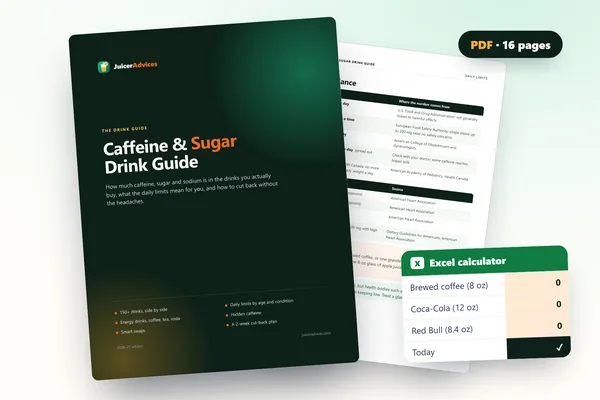
From JuicerAdvices · our own guideEnergy drinks? Page 4 lists the caffeine and sugar in every popular can, side by side.Caffeine & Sugar Drink Guide: the printable guide and its Excel calculatorCaffeine & Sugar Drink GuideKnow exactly how much caffeine, sugar and sodium is in 150+ popular drinks, and set daily limits that fit you.Caffeine and sugar in 150+ drinksDaily limits, smart swaps and a cut-back planDaily caffeine and sugar calculator (Excel)$14.99 $9.99Get it for $9.99See what's inside and watch the 2-minute video →16-page printable PDF + Excel calculator · instant download · 30-day refund

How Monster Compares to Other Energy Drinks

Monster’s 80 mg of caffeine per 8.4 oz can is similar to Red Bull’s caffeine content in the same size, both about 9.5 mg per ounce. Bang and Rockstar often have more caffeine per ounce, with Bang reaching about 14 mg per ounce in some varieties.

Sugar content varies widely. A regular Monster 16 oz can contains about 54 grams of sugar, which is over twice the American Heart Association’s recommended daily added sugar limit for women (25 g) and close to that for men (36 g). Red Bull’s 8.4 oz can has about 27 grams of sugar, while sugar-free versions exist for all these brands.

Energy DrinkCaffeine per 8 oz (mg)Sugar per 8 oz (g)
Monster (8.4 oz)8026
Red Bull (8.4 oz)8027
Bang (16 oz)3000
Rockstar (16 oz)16030
Caffeine and sugar content in common energy drinks, scaled to 8 oz servings for comparison.

Per ounce, caffeine amounts help decide what fits your needs. If you want a moderate caffeine boost without excess sugar, Red Bull or sugar-free Monster might suit you. For a strong caffeine hit with no sugar, Bang is a choice, but its high caffeine may not be safe for everyone.

Good For
Moderate caffeine in manageable servings
Options for sugar-free versions
Widely available and consistent labeling
Not For
High sugar content in regular cans
Strong caffeine doses in larger cans can risk overconsumption
Not suitable for children or caffeine-sensitive individuals

Choosing a lower caffeine or sugar drink is wise if you have heart issues, diabetes, or want to avoid sleep disruption. Always check the label for exact caffeine and sugar amounts since sizes vary.

Comparing Monster to Red Bull and others helps you pick the right energy drink for your health and lifestyle needs. Red Bull vs Monster explores this comparison in more detail.

Questions People Ask

How much caffeine is in a 16 oz can of Monster?
A 16 oz can of Monster contains about 160 mg of caffeine, doubling the amount found in the 8.4 oz can. This is close to half the daily caffeine limit for most adults, so keep track if you drink other caffeinated beverages that day.
Does Monster energy use natural or synthetic caffeine?
Monster energy primarily uses synthetic caffeine, which is chemically identical to natural caffeine but produced in a lab. This allows for consistent caffeine levels and is common in energy drinks.
What ingredients in Monster provide an energy boost besides caffeine?
Besides caffeine, Monster includes taurine and ginseng, which may support alertness and stamina. These ingredients work alongside caffeine but their effects are less well studied and usually milder.
Are there Monster drinks with less caffeine or sugar?
Yes, Monster offers versions like Monster Zero Ultra with less sugar and the same caffeine, and some smaller cans with reduced caffeine content. Check the nutrition label to compare before buying.
Is it safe to drink multiple Monsters in one day?
Drinking multiple Monsters can quickly raise your caffeine intake above recommended limits, increasing risks like jitteriness or heart palpitations. If you choose to drink more than one, spread them out and monitor how you feel.
Can pregnant women or children drink Monster energy drinks?
Pregnant women and children should avoid Monster due to caffeine and other stimulants, which can affect fetal development and cause adverse effects in younger bodies. Health authorities recommend limiting caffeine during pregnancy.
Does Monster contain electrolytes or vitamins that affect hydration?
Monster contains some B vitamins but does not provide significant electrolytes like sodium or potassium to support hydration. It’s best to drink water alongside Monster to maintain fluid balance.

Editor

Emily Jones edits JuicerAdvices: plain answers about juices, teas, coffee and everyday drinks, how much is safe, and how they fit with common health conditions, medicines and medical procedures. Every guide is checked against public health and nutrition sources and tells you when to ask your doctor or pharmacist.

More in Energy Drinks