Is Drinking Lemon Juice With Salt Bad For You?
On this page 12 sections
- What Happens When You Drink It?
- The Good Stuff: Why People Drink It
- The Bad Stuff: Risks and Side Effects
- What About the Salt Type?
- How Much Is Too Much?
- Who Should Not Drink This?
- Lemon Juice vs. Whole Lemon: What You Are Missing
- Practical Tips for Drinking It Safely
- Does It Help With Weight Loss?
- What About the Salt and Lemon on Skin?
- The Bottom Line
- Frequently Asked Questions
You’ve seen the videos. A glass of warm water, half a lemon, a pinch of salt. People swear it fixes digestion, skin, energy, everything. But you’re smart enough to ask: is drinking lemon juice with salt bad for you?
The short answer is no, not for most healthy people. The long answer involves your teeth, your blood pressure, and how much salt you actually use. Let’s break it down without the wellness-cult energy.

Seagate
Seagate Products Whole Lemon Concentrate 450 mg…
- Use as a natural digestion aid and as an antioxidant
- Only Ingredient; Whole Lemons (which includes the skin, the pulp, the seeds and the juice)
- The only practical way to consume the whole lemon and all it's nutrients

What Happens When You Drink It?
Lemon juice is acidic. Salt is sodium chloride. Mix them in water and you get a tart, salty drink that tastes like a borderline sports drink. Your body absorbs the fluids quickly because the salt helps pull water into your bloodstream.
That’s the mechanism behind the hydration claims. It is not magic. It is basic physiology.
The Good Stuff: Why People Drink It
There are real, measurable reasons this drink has fans. None of them are cure-alls, but they are not fake either.
Hydration and Electrolytes
Salt replaces sodium lost through sweat. Lemon adds potassium and vitamin C. That combination supports fluid balance better than plain water after a workout or a hot day.
You do not need a fancy electrolyte powder. This works in a pinch.
Digestion Support
The acid in lemon can stimulate saliva and stomach acid production. For some people, that helps kickstart digestion after a meal. The warm water adds a soothing effect.
It is not a treatment for acid reflux. In fact, it can make reflux worse for some people. We will get to that.
Vitamin C and Antioxidants
Lemons contain vitamin C, a water-soluble antioxidant. Your body uses it for immune function and collagen production. The skin and pulp have additional plant compounds.
But here is the honest part: a squeeze of lemon in water gives you a fraction of the vitamin C in a whole lemon. If you want the full nutrient profile, you need the whole fruit. That is where concentrated lemon options come into play for convenience.
The Bad Stuff: Risks and Side Effects
Now the part nobody puts on their aesthetic wellness page. There are genuine downsides.
Tooth Enamel Erosion
Lemon juice has a pH around 2. That is highly acidic. Your tooth enamel starts dissolving at a pH of 5.5.
Drinking straight lemon juice without water is worse. Even diluted, the acid coats your teeth. Over months and years, that wears down enamel. Once enamel is gone, it does not come back.
Use a straw. Rinse your mouth with plain water after drinking. Wait at least 30 minutes before brushing your teeth, because brushing softened enamel makes it worse.
Blood Pressure and Sodium
Salt is not neutral. A pinch of salt is about 1/8 teaspoon, which is roughly 300 mg of sodium. The American Heart Association recommends no more than 2,300 mg per day, with an ideal limit of 1,500 mg.
One glass is fine. Two or three glasses a day on top of a normal diet can push you over the limit. If you have high blood pressure, kidney disease, or heart failure, talk to your doctor before making this a habit.
Acid Reflux and Heartburn
Acidic drinks relax the lower esophageal sphincter. That is the valve that keeps stomach acid where it belongs. When it relaxes, acid splashes up into your throat.
If you already have GERD or frequent heartburn, this drink can make it worse. The salt does not cancel out the acid. It just adds flavor.
Stomach Irritation on an Empty Stomach
Drinking lemon water first thing in the morning on an empty stomach is a popular ritual. For some people, that concentrated acid hits an empty stomach lining and causes discomfort or nausea.
If that happens to you, drink it with food or skip it. Your body is telling you something.
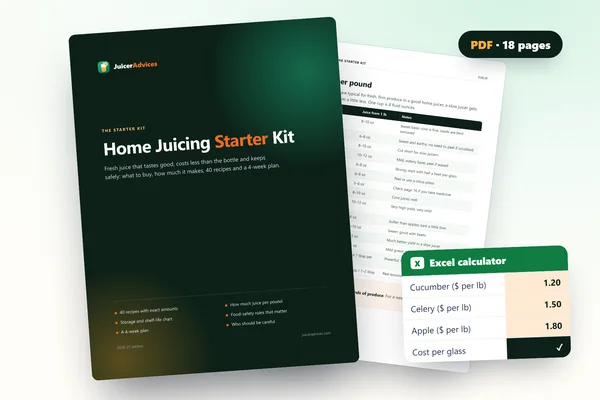 Home Juicing Starter KitMake fresh juice that tastes good, costs less and keeps safely: 40 recipes with exact amounts, a yield chart and a 4-week plan.40 juice, smoothie and shot recipesYield, storage and food-safety chartsCost, yield and shopping-list calculator (Excel)
What About the Salt Type?
Himalayan pink salt, sea salt, table salt — does it matter? Chemically, they are all mostly sodium chloride. Pink salt has trace minerals like magnesium and potassium, but the amounts are tiny.
You would need to eat grams of pink salt to get a meaningful dose of those minerals. That much salt would be dangerous. So no, the salt type does not change the health impact in any practical way.
Use what you have. Do not overthink it.
How Much Is Too Much?
One glass a day with a small pinch of salt is reasonable for a healthy person. That is roughly 200 to 300 mg of sodium, which fits into most diets.
More than two glasses a day starts to stack the sodium. If you also eat processed foods, restaurant meals, or salty snacks, you are likely already near your limit.
Track your total sodium for a few days. Then decide if this drink fits.
Who Should Not Drink This?
This is not for everyone. If you fall into any of these groups, skip it or get medical clearance first.
- People with high blood pressure or on blood pressure medication
- Anyone with kidney disease or a history of kidney stones
- People with active acid reflux or GERD
- Those with tooth sensitivity or existing enamel damage
- Anyone on a low-sodium diet for medical reasons
For everyone else, it is a flavorful way to hydrate. It is not a cure. It is not poison. It is just a drink.
Lemon Juice vs. Whole Lemon: What You Are Missing
Here is the awkward question nobody asks: are you getting the actual benefits of lemon, or just the flavor? A squeezed lemon gives you juice, but the skin, pulp, and seeds contain fiber, bioflavonoids, and concentrated nutrients.
You cannot chew on a whole lemon. That is why some people use whole lemon supplements. Seagate Products makes a whole lemon concentrate capsule that contains the skin, pulp, seeds, and juice. The lemons are grown without chemicals on their own farms in Baja California.
It is not a replacement for drinking water. But if your goal is the full nutrient profile of a lemon without the acid hitting your teeth, a capsule is a practical alternative. Check the fresh vs. frozen juice comparison to understand how processing changes what you get.
One capsule is not a whole lemon’s worth of juice. It is a concentrated extract. Read the label and adjust your expectations.
Practical Tips for Drinking It Safely
If you decide to keep drinking lemon water with salt, do it right.
- Dilute it well. Use 8 to 12 ounces of water per half lemon.
- Use a straw to minimize tooth contact.
- Rinse your mouth with plain water afterward.
- Wait 30 minutes before brushing your teeth.
- Use a small pinch of salt, not a heap.
- Drink it with food if your stomach is sensitive.
- Skip it on days you already ate high-sodium meals.
These steps are easy and they prevent the most common problems.
Does It Help With Weight Loss?
No. Lemon water with salt does not burn fat. It does not boost your metabolism in any meaningful way.
It can help you feel full, and replacing sugary drinks with it cuts calories. But that is a substitution effect, not a fat-burning effect. If you want a cold press juicer for weight loss, that is a different tool for a different purpose. This drink is not a weight loss hack.
What About the Salt and Lemon on Skin?
Some people rub lemon and salt on their skin as a scrub. That is not what we are talking about here, but since you might be wondering: do not do that.
Lemon juice on skin can cause phytophotodermatitis. That is a chemical reaction with sunlight that causes burns and blisters. Salt scrubs also tear up your skin barrier.
Drink the lemon water if you like. Keep it off your face.
The Bottom Line
Drinking lemon juice with salt is not bad for you, provided you are healthy and you keep the dose reasonable. The acid is the main risk, mostly to your teeth. The salt is the second risk, mostly to your blood pressure.
One glass a day with a small pinch of salt is fine. Two or three glasses daily is pushing it. If you have a medical condition, ask your doctor first.
It is not a miracle drink. It is flavored water with electrolytes. That is enough.
For a deeper look at how lemon and salt interact, this breakdown of lemon with salt covers the nutritional specifics. Another medical review on lemon and salt addresses the cardiovascular angles in more detail.
Frequently Asked Questions
Is it better to drink lemon water with salt in the morning or at night?
It does not matter. Your body processes it the same way at any hour. Morning is popular because it is hydrating after sleep. Night works if you want a warm drink before bed. Choose what fits your routine.
Can I use lime instead of lemon?
Yes. Limes have a similar acid profile and similar vitamin C content. The flavor is slightly different, but the health effects are nearly identical. If you are curious about the specifics, substituting lime for lemon works in most cases.
Does the salt make the lemon water alkaline?
No. Salt does not change the pH of lemon water. The drink remains acidic. The alkaline diet theory that lemon water ‘alkalizes’ your body is not supported by physiology. Your body regulates its own pH tightly.
Will this drink dehydrate me?
No. The salt helps you retain water, which supports hydration. It only dehydrates you if you drink a massive amount of salt without enough water, which is not what anyone is doing here.
Is it safe during pregnancy?
Pregnant women need more fluids, but they also need to watch sodium intake. A small pinch of salt is likely fine. But pregnancy changes blood pressure and kidney function, so ask your obstetrician before making it a daily habit.
Can I drink this while fasting?
Technically, lemon water with salt has calories (from the lemon) and sodium. It will break a strict water fast. For intermittent fasting, it may or may not break your fast depending on your rules. If you are fasting for autophagy, skip it. If you are fasting for weight loss, it likely will not hurt.
Most people overthink this. The drink is simple, the risks are manageable, and the benefits are modest. Treat it like a flavored electrolyte drink, not a health ritual, and you will be fine.
