You can thicken cranberry juice using cornstarch slurry, pectin, gelatin, or reduction. A cornstarch slurry gives you a glossy glaze in about 2 minutes; pectin creates a jam-like set; gelatin makes a silky cold sauce; and reduction concentrates flavor naturally in 15 to 25 minutes. The method you choose depends on whether you need a hot glaze, a firm topping, or a pourable syrup.
Cranberry juice is roughly 85 to 90 percent water with only a trace of natural pectin, so it runs thin even after simmering. That’s fine for drinking, but it won’t coat meat, cling to a spoon, or set into a dessert sauce without help.
This guide walks through four techniques that work: a cornstarch slurry for clear, glossy results; pectin for a spreadable, jam-like texture; gelatin for cold sauces that slice cleanly; and plain reduction when you want concentrated flavor with no additives. You’ll also see how to fix lumps, adjust thickness on the fly, and store what you make.
What to remember
Cranberry juice is about 85 to 90 percent water and needs a thickener or reduction to hold a sauce or glaze.
A cornstarch slurry (1 tablespoon cornstarch to 2 tablespoons cold water) thickens 2 cups of juice in about 1 minute of simmering.
Pectin creates a firm, spreadable texture that sets as it cools; gelatin makes a smooth, sliceable gel that melts at body temperature.
Reduction concentrates tartness and flavor; plan to simmer for 15 to 25 minutes to reduce by half for a syrup consistency.
Store thickened cranberry juice in the fridge for up to 5 days; cornstarch-thickened sauces don’t freeze well, but gelatin and pectin gels do.
How to Thicken Cranberry Juice for Recipes Like a Pro
To thicken cranberry juice for recipes like a pro, choose cornstarch for a glossy hot glaze, pectin for a spreadable topping, gelatin for a cold set, or reduction for a concentrated sauce with no added thickener. To make cranberry juice taste better, balance its tartness with a little sugar or honey, orange zest, cinnamon, vanilla, or a small pinch of salt.
Cornstarch is the most useful all-purpose choice for a sauce you’ll serve warm. Pectin suits dessert toppings that need to hold their shape, gelatin works for chilled mousses and sliceable gels, and reduction keeps the ingredient list short while intensifying cranberry flavor. Use unsweetened juice when you want control over sweetness.
Method
Texture and clarity
Best uses
Flavor impact
Cornstarch slurry
Glossy, smooth, mostly clear
Hot sauces, meat glazes, cocktail syrups
Adds little flavor
Pectin
Jam-like and spreadable
Dessert toppings, fillings, fruit spreads
Keeps cranberry flavor prominent
Gelatin
Silky when soft; firm when chilled
Cold mousses, molded desserts, sliceable gels
Adds little flavor
Reduction
Pourable to syrupy, usually translucent
Pan sauces, glazes, finishing syrup
Concentrates cranberry tartness
Pick the method based on the final temperature, texture, and how much you want the cranberry flavor concentrated.
Choose reduction when you don’t want a starch, pectin, or gelatin in the recipe. It takes longer because water evaporates, and the juice can become sharply tart as its flavor concentrates; sweeten after reducing, not before, so you can judge the final taste.
Gluten-free swaps
Cornstarch is naturally gluten-free, but check the package if cross-contact matters to you. Arrowroot can give a clear, glossy sauce, while tapioca starch can create a slightly stretchy finish; use the package’s substitution ratio because products vary.
For an easy cranberry juice recipe, use a cold-water cornstarch slurry to turn 2 cups of juice into a glossy sauce for roasted meat, pancakes, cheesecake, ice cream, or cocktails. The slurry thickens in about 1 to 2 minutes after it reaches a gentle simmer, so stay near the pan.
Ingredients
2 cups cranberry juice
2 tablespoons cornstarch
1/4 cup cold water
Optional: sugar or honey, orange zest, cinnamon, vanilla, or a pinch of salt for flavor
Cold water matters because it disperses the cornstarch before heat activates it. Stirring cornstarch directly into hot juice can form small cooked lumps that are difficult to whisk smooth.
1
Make the slurry
Whisk the cornstarch and cold water in a small bowl until the mixture looks smooth and milky. Stir again just before adding it because the starch settles quickly.
2
Simmer the juice
Pour the cranberry juice into a saucepan and bring it to a gentle simmer over medium heat. Add any sugar, citrus zest, or spices now, then taste carefully because hot juice can seem less tart than it will after cooling.
3
Whisk in the slurry
Whisk the simmering juice constantly while pouring in the slurry in a thin stream. Keep whisking for about 1 to 2 minutes as the sauce thickens.
4
Lower the heat
Once the sauce begins to bubble gently, reduce the heat. Don’t let a cornstarch-thickened sauce boil hard after the slurry goes in; vigorous boiling can weaken the starch and make the texture thin again.
5
Check the consistency
Dip a spoon into the sauce and lift it out. The sauce is ready when it coats the back of the spoon and a finger dragged through it leaves a clean line that doesn’t immediately run together.
6
Cool and adjust
Remove the pan from the heat and let the sauce cool for a few minutes. Add a splash of cranberry juice if it’s too thick, or return it to gentle heat briefly if it’s too thin.
Freezing note
Cornstarch-thickened sauces don’t freeze well: ice crystals can make the sauce watery or grainy after thawing. Refrigerate leftovers in a covered container and reheat gently, whisking in a little juice if needed.
For a smoother finish, strain the sauce before serving if you added zest or spices. Serve it warm as a glaze, or cool it until it becomes thicker for spreading on toast, spooning over dessert, or drizzling over a holiday dish.
1 tablespoon
Cornstarch needed to thicken 1 cup of cranberry juice
That ratio gives you a glaze that coats the back of a spoon and clings to meat or vegetables without sliding off.
Use Pectin for a Jam-Like Set
Use low-methoxyl pectin when cranberry juice needs to hold its shape as a dessert topping or cake filling, especially if you don’t want the set to depend on a precise amount of sugar. Pectin is a plant-based thickener found in fruit; unlike cornstarch, it forms a firmer, more gel-like texture rather than a glossy, spoonable sauce.
Low-methoxyl pectin sets with calcium, so the amount and method can vary by product. Check the package directions for the pectin-to-juice ratio and whether you need to add calcium; cranberry juice alone may not provide enough for the gel to set reliably.
1
Mix the pectin into cold juice
Measure the juice and pectin according to the package. Whisk the pectin into cold juice until evenly dispersed, before heating, to reduce clumping.
2
Bring it to a rolling boil
Heat the mixture, stirring, until it reaches a rolling boil. Follow the package directions for how long to boil and whether to add calcium or sugar.
3
Cool before filling or serving
Pour the hot mixture into a heat-safe container and let it cool. It firms as it cools; allow the time stated on the pectin package before judging the final texture.
Plan for a lasting set
Pectin makes a set that won’t reliquefy like a cornstarch sauce when reheated. Choose it for a topping or filling you want to hold its shape, and avoid it when you need a sauce that stays pourable after warming. For more cranberry dessert ideas, see sweet cranberry juice recipes you ll love.
From JuicerAdvices · our own guidePage 11 has the smoothies, with exact amounts and swaps.Home Juicing Starter KitMake fresh juice that tastes good, costs less and keeps safely: 40 recipes with exact amounts, a yield chart and a 4-week plan.40 juice, smoothie and shot recipesYield, storage and food-safety chartsCost, yield and shopping-list calculator (Excel)$14.99$9.99Get it for $9.99See what's inside and watch the 2-minute video →18-page printable PDF + Excel calculator · instant download · 30-day refund
Thicken with Gelatin for a Silky Gel
Use gelatin when you want a silky cranberry sauce, mousse, or cold dessert that sets in the refrigerator. It melts at body temperature, so it feels soft as you eat it; it isn’t the right choice for a sauce that must stay firm in a warm dish.
1
Bloom the gelatin
Sprinkle 1 teaspoon of powdered gelatin over a small amount of cold water for each cup of cranberry juice. Let it stand for 5 to 10 minutes, until the granules absorb water and swell.
2
Dissolve it in warm juice
Warm the cranberry juice to 140 to 160°F, then stir in the bloomed gelatin until no granules remain. Don’t boil the juice after adding gelatin; high heat can weaken its setting ability.
3
Chill until set
Pour the mixture into a serving dish or mold and refrigerate for 2 to 4 hours. Use 1 teaspoon of gelatin per cup of juice for a soft set, or 2 teaspoons per cup for a firmer gel.
A Plant-Based Alternative
Gelatin is animal-derived, so it isn’t vegan. Agar agar is a plant-based substitute, but it typically sets into a firmer, more brittle texture; use the package’s conversion and heating directions rather than swapping it teaspoon for teaspoon.
Reduce Cranberry Juice to a Syrup
For a thinner syrup with concentrated cranberry flavor, simmer the juice until about half remains. The method needs no starch or gelatin, but it concentrates tartness and acidity along with the flavor.
Pour the juice into a wide pan and bring it to a gentle simmer. A wide skillet usually evaporates liquid faster than a tall saucepan because more juice is exposed to the air.
1
Measure the starting amount
Note how much juice is in the pan so you can judge when it has reduced by half.
2
Simmer and check
Keep the juice at a gentle simmer for about 15 to 25 minutes, checking as it reduces. Stir occasionally so it doesn’t scorch.
3
Test the consistency
Dip in a spoon: the syrup should coat it, but it won’t hold a shape like a set sauce. Remove the pan from the heat when it reaches that point.
Choose a wide pan
A wide skillet can shorten the simmer compared with a tall saucepan. Check the volume as it cooks; the time varies with pan width and heat.
Taste the syrup after reducing. If the tartness is too sharp, stir in a pinch of sugar or a little honey at the end, then taste again. For more ideas using reduced cranberry juice in dishes, see ways to reduce cranberry juice in recipes.
Drink
Sugar per serving
Servings
Total
1 cup unsweetened cranberry juice, reduced to ¼ cup
8 g
1
8 g
1 cup sweetened cranberry cocktail, reduced to ¼ cup
30 g
1
30 g
Total
38 g
Daily added sugar limit for women (25 g)
152%
Reducing sweetened juice concentrates the sugar along with the flavor, so start with unsweetened juice if you’re watching your intake. Totals are calculated from the amounts shown; labels vary by size and brand, so check the one you have.
Fix Lumps, Thin Batches, and Over-Thickened Sauce
Most cranberry sauce texture problems can be corrected with a small adjustment. The right fix depends on the thickener and whether the sauce is still hot or has chilled.
Lumps after adding cornstarch? Dry starch can clump in hot liquid. Pour the sauce through a fine-mesh sieve, or blend it until smooth.
Still too thin? Mix a small amount of cornstarch with cold water until smooth, whisk it into the sauce, and simmer again until it thickens. Don’t add dry cornstarch directly to the hot pan.
Too thick or gummy? Whisk in warm cranberry juice or water, 1 tablespoon at a time, until the sauce loosens to the consistency you want.
Cloudy sauce? Pectin can turn cloudy if it’s stirred too much, while boiling gelatin can also affect clarity. Avoid vigorous stirring with pectin and keep gelatin mixtures from boiling.
Thinner after refrigeration? Cornstarch sauces can release liquid as they stand, while gelatin firms up in the refrigerator. Stir a cornstarch sauce before serving; allow a gelatin sauce to chill until set.
Rescue a lumpy slurry
Strain the sauce while it’s warm, then return it to the pan if it needs further thickening. For another batch, mix cornstarch with cold water before adding it.
Keep gelatin below a boil
Don’t reheat a gelatin-thickened sauce to boiling; high heat can weaken gelatin’s setting power. Warm it gently if needed.
Make small adjustments, then check the texture again before adding more thickener. A little warm liquid can loosen an over-thickened sauce without changing its thickener.
Adjust Thickness for Health Needs and Swallowing Safety
If you’re managing diabetes, acid reflux, or swallowing difficulty, you can still serve cranberry juice, but adjust the sugar, acidity, or consistency to your care plan. For a lower-sugar version, start with unsweetened cranberry juice and add your preferred sweetener a little at a time; check the label, since sweeteners and juice blends vary.
With dysphagia, use the IDDSI thickness level prescribed by your speech-language pathologist or care team—not a guess based on how thick a drink looks. Ready-to-drink options labeled Level 2 (mildly thick, nectar) or Level 3 (moderately thick, honey) provide a consistent texture in 4 oz cups.
Each 4 oz cup is pre-thickened to IDDSI Level 2, so caregivers don’t need to mix or measure a thickener. It doesn’t replace following your prescribed swallowing plan.
These 4 oz cups are pre-thickened to IDDSI Level 3, with the same labeled consistency cup to cup. Use them only if Level 3 is the consistency your care team specified.
Reflux symptoms can worsen with acidic drinks for some people. Try a smaller portion diluted with water, or have it with a neutral food such as bread or oatmeal; stop if it brings on symptoms.
Check the label and your prescribed limits
If you have kidney disease, check potassium and added sugar on the nutrition label, and follow your clinician’s guidance on portions; restrictions depend on your kidney function and care plan. Homemade juice thickened with cornstarch or pectin makes it easier to control added sugar and sodium, but it doesn’t remove the juice’s natural acidity or potassium.
Questions People Ask
Can you make cranberry juice from dried cranberries?
Yes. Simmer dried cranberries in water until they soften, then strain and sweeten the liquid to taste; the result has a deeper, less fresh flavor than juice made from fresh cranberries. Add water if the strained juice is too concentrated.
What does fermented cranberry juice taste like?
Fermented cranberry juice usually tastes tart, sour, and slightly yeasty, with possible fizz or an alcoholic note as fermentation progresses. Discard it if you notice mold, a rotten smell, or an unexpected slimy texture.
Does cranberry juice make you dehydrated?
No, cranberry juice contributes fluid rather than causing dehydration. Very sweet juice can add substantial sugar, though, so water or diluted juice may be a better everyday choice.
How do you make cranberry juice taste better?
Dilute unsweetened cranberry juice with water or sparkling water, then add a small amount of apple juice, orange juice, or sweetener if needed. Chilling it and serving it over ice can soften the sharp taste without changing the recipe.
What cake can you make with cranberry juice?
Cranberry juice works well in a pound cake, spice cake, or orange-cranberry cake. Replace part of the recipe’s liquid with juice rather than all of it, because its acidity and color can change the crumb and flavor.
What cake can you make with cranberry juice?
Use thickened cranberry juice as a glaze for pound cake, angel food cake or bundt cake. Brush it on while the cake is still warm so it soaks in slightly, or let it cool to a syrup consistency and drizzle over the top. A cornstarch-thickened glaze sets to a shiny finish; a reduced juice gives a stickier, more intense flavor.
Can you make cranberry juice from dried cranberries?
Yes. Simmer 1 cup dried cranberries in 4 cups water for about 15 minutes, then strain. The juice will be less tart than fresh cranberry juice and may need less added sugar. Thicken it the same way you would fresh juice, using cornstarch, pectin or reduction.
How do you make cranberry juice taste better?
Sweeten it with honey, maple syrup or a little sugar, and add a squeeze of orange or lemon juice to balance the tartness. A pinch of cinnamon, ginger or vanilla also mellows the sharpness. If you’re thickening it for a glaze, the sweetener goes in before you add the thickener so it dissolves evenly.
Before you go · a welcome giftGet the Home Juicing Starter Kit for $4.99Make fresh juice that tastes good, costs less and keeps safely: 40 recipes with exact amounts, a yield chart and a 4-week plan. Normally $14.99; your welcome price saves $10.00. We'll email your link right now.or skip the email and buy it now for $4.99 →One email with your link now. We never share your address.
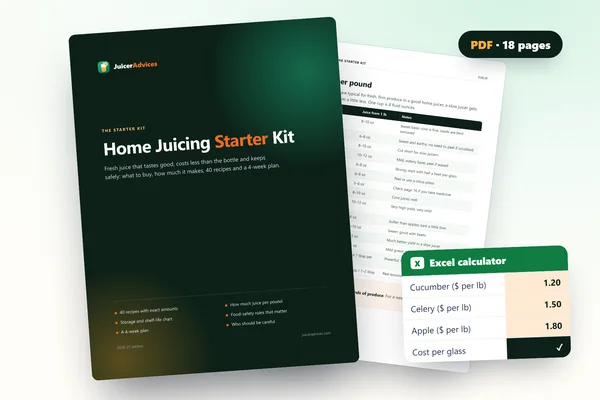 Home Juicing Starter KitMake fresh juice that tastes good, costs less and keeps safely: 40 recipes with exact amounts, a yield chart and a 4-week plan.40 juice, smoothie and shot recipesYield, storage and food-safety chartsCost, yield and shopping-list calculator (Excel)
