You can make fresh pomegranate juice at home in about 15 minutes using a few simple tools, yielding roughly 2 cups (16 oz). This method preserves flavor and nutrients without added sugar or preservatives.
Pomegranate juice is often praised for its antioxidants and vibrant flavor. While store-bought juice is convenient, homemade juice lets you control freshness and ingredients.
Many believe juicing pomegranates is complicated or messy, but it mainly requires patience and the right steps. The key is to extract the seeds carefully and avoid bitterness from the pith.
The essentials
Use ripe pomegranates for the best juice yield and flavor.
A manual or electric juicer both work; pressing seeds gently avoids bitterness.
Store fresh juice refrigerated and consume within 48 hours to keep nutrients and avoid spoilage.
For lower sugar, dilute juice with water or mix with other juices like cucumber or apple.
Avoid using pomegranate with bruised skin or mold, and rinse seeds before juicing.
How to Make Pomegranate Juice at Home
You can make fresh pomegranate juice at home in about 15 minutes, yielding roughly 2 cups (16 oz). The process involves selecting ripe pomegranates, extracting the seeds without damage, pressing or juicing them, and straining the juice for smoothness. For a different homemade beverage, see how to make kombucha with green tea.
Freshly made pomegranate juice yields about 2 cups in 15 minutes.
1
Select ripe pomegranates
Choose pomegranates that feel heavy for their size with taut, unbroken skin to ensure juiciness.
2
Prepare the fruit
Score the pomegranate skin into sections without cutting too deep. Submerge it in a bowl of water and gently break apart to release seeds. The water prevents juice splatter and helps separate white pith, which floats.
3
Extract the seeds
Remove all seeds (arils) carefully to avoid crushing them, which can add bitterness.
4
Juice the seeds
Use a manual press or a juicer like a Breville model designed for soft fruits. If you prefer, a blender can pulse seeds briefly, but strain well to remove pulp.
5
Strain the juice
Pour the pressed juice through a fine mesh strainer or cheesecloth into a clean container to remove any remaining solids for smoothness.
What You’ll Need to Make Pomegranate Juice
Basic equipment and ingredients for fresh juice
Cold pressed, no sugar
POMONA ORGANIC JUICES Pure Pomegranate Juice
This organic juice comes in 8.4 oz glass bottles, perfect if you want pure pomegranate juice without the work of juicing at home. It’s cold pressed and contains no added sugar or preservatives, preserving the natural flavor and nutrients.
Langer Farms Organic Fresh Pressed Pomegranate Juice
Langer Farms offers 32 fl oz bottles of fresh-pressed pomegranate juice made only from organic fruit grown on their family farm. It’s not from concentrate and contains no added sugar, making it a good choice for daily juice preparation at home.
Making pomegranate juice requires fresh pomegranates, a juicer or manual press, and basic kitchen tools. The quantity depends on how much juice you want, roughly two medium pomegranates yield 1 cup of juice. Learn more about using a juicer in professional cast iron juicer.
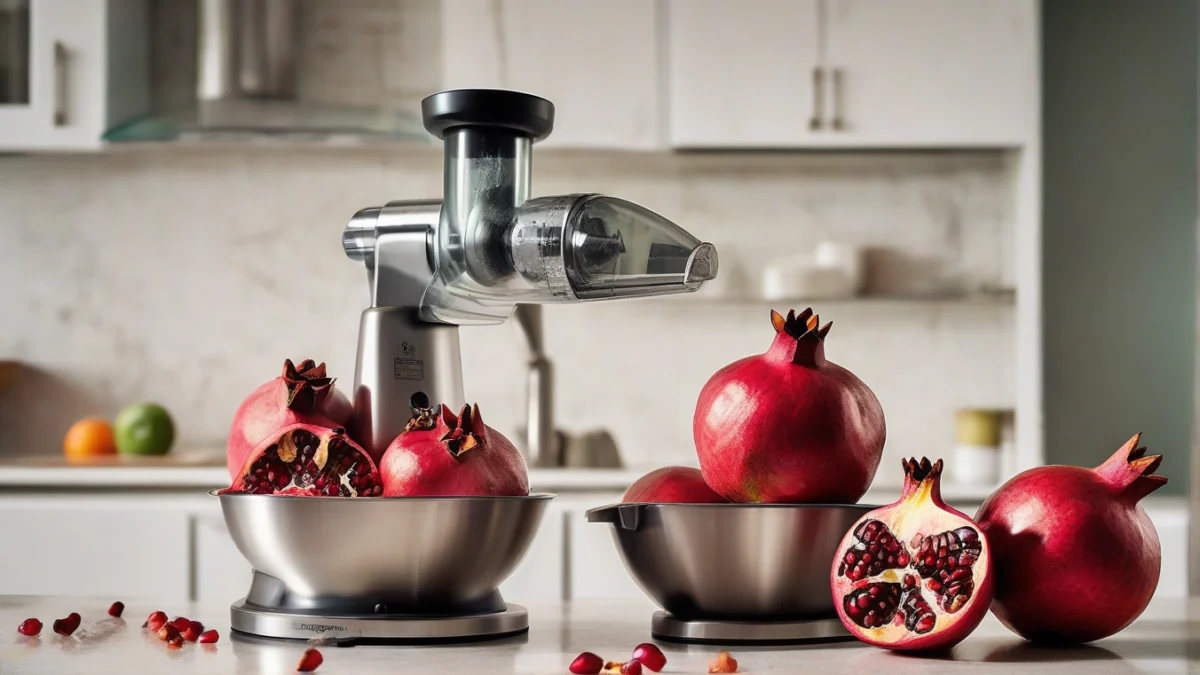
Using ripe pomegranates and a manual press helps produce quality juice.
Essential equipment and ingredients
Two ripe pomegranates, heavy and firm
A juicer – manual press, blender, or Breville juicer
Optional fine mesh strainer or cheesecloth for smooth juice
Glass container or bottle for storing juice
A Breville juicer works well for pomegranates because it handles soft seeds gently, preserving flavor and nutrients. If you use a blender, strain the juice carefully to reduce pulp. For storage, choose a glass container to avoid any chemical taste and keep the juice fresh.
Ready-to-drink option
Pomona Organic Pure Pomegranate Juice
If you want pure pomegranate juice without juicing at home, Pomona Organic Pure Pomegranate Juice offers 100% organic juice in glass bottles, with no added sugar or preservatives.
How to Store Pomegranate Juice and How Long It Lasts
Pomegranate juice needs refrigeration to stay safe and fresh. Store it in a clean, airtight container in the fridge right after juicing to slow bacterial growth and preserve flavor.
Homemade pomegranate juice lasts about 48 hours refrigerated. After that, the risk of spoilage increases, and drinking old juice can cause stomach upset or foodborne illness.
Avoid unpasteurized juice for vulnerable groups
Pregnant people, young children, and anyone with a weakened immune system should avoid fresh, unpasteurized juice because it can harbor harmful bacteria not killed by heat.
Look for signs of spoilage before drinking stored juice. If it smells sour, looks cloudy or fizzy, or tastes off, discard it immediately. These changes mean bacteria or yeast have started to grow.
Storage checklist
Keep juice refrigerated at or below 40°F (4°C)
Use a clean, tightly sealed bottle or jar
Consume within 48 hours after juicing
Do not leave juice out at room temperature for more than 2 hours
Discard if you notice any off smell, color change, or fizzing
From JuicerAdvices · our own guidePage 4 shows how much juice each pound of produce gives; the Excel sheet works out the cost per glass.Home Juicing Starter KitMake fresh juice that tastes good, costs less and keeps safely: 40 recipes with exact amounts, a yield chart and a 4-week plan.40 juice, smoothie and shot recipesYield, storage and food-safety chartsCost, yield and shopping-list calculator (Excel)$14.99$9.99Get it for $9.99See what's inside and watch the 2-minute video →18-page printable PDF + Excel calculator · instant download · 30-day refund
Variations to Suit Different Health Needs
Pomegranate juice is naturally acidic and high in sugar, so you may want to adjust it for digestion or health conditions. Diluting it with water or other juices is a simple way to reduce sugar intake.
Mixing pomegranate juice with cucumber or apple juice can make it gentler on the stomach. These juices add mild flavors and lower the overall acidity, which helps if you find pomegranate juice too tart or irritating.
If you have kidney issues or gout, limit your intake of pomegranate juice. While pomegranate juice has some benefits for uric acid levels, it contains potassium and natural acids that could affect kidney function or uric acid balance if consumed in large amounts.
Consult your healthcare provider
Before making changes to how much or how often you drink pomegranate juice, especially if you have kidney disease, gout, or acid reflux, talk with your doctor or dietitian to tailor advice to your specific needs.
Pomegranate juice’s acidity can trigger reflux symptoms in sensitive people. Diluting it or drinking it with meals can reduce this effect.
For a lower-sugar version, try mixing equal parts pomegranate juice and water or unsweetened sparkling water. This keeps flavor but cuts sugar roughly in half.
If you want to try a milder blend, combine 1 cup of pomegranate juice with 1 cup of fresh cucumber juice or unsweetened apple juice. This mix offers a pleasant balance and is easier on digestion.
If you are curious about how pomegranate juice affects your uric acid or kidney health, note that small studies suggest it may modestly lower uric acid, but individual responses vary widely.
For general health, aim to keep total fruit juice intake to about 4 to 8 oz per day, balancing with whole fruits and plenty of water.
Common Mistakes That Affect Pomegranate Juice Quality
Making pomegranate juice at home is simple, but certain common mistakes can spoil the flavor, reduce yield, or affect safety.
Using unripe or damaged pomegranates is one. Unripe fruit yields less juice and tastes sour or bland. Damaged fruit can ferment or spoil quickly, risking off flavors and food safety.
Including the white pith while extracting juice adds a bitter taste. The pith contains tannins that turn juice harsh, so separate seeds carefully before juicing.
Not rinsing the seeds after removing them from the fruit can leave behind dirt or pesticides, which affect taste and safety. A quick rinse under cool water removes residues without diluting the juice.
Skipping proper storage ruins freshness. Fresh pomegranate juice should be refrigerated in a sealed container and used within 48 hours to prevent spoilage and nutrient loss.
Using unwashed pomegranates can introduce bacteria or chemicals to the juice. Always wash the whole fruit under running water before cutting.
If you wonder how many oranges make a cup of juice, it usually takes about 3 medium oranges to yield 1 cup (8 oz) of fresh juice, but pomegranates differ because of their seed structure and juice content.
Myth
Pomegranate juice is unsafe after tooth extraction
Fact
Pomegranate juice is usually safe after tooth extraction if it’s freshly made, not too acidic, and you avoid drinking it through a straw to prevent dislodging the clot.
Safety warning
Discard juice if it smells off, tastes fermented, or if you see mold. These signs mean spoilage and risk of foodborne illness.
More Questions, Answered
Can I use a blender to make pomegranate juice at home?
Yes, you can use a blender to make pomegranate juice, but it will include more pulp and require straining to get clear juice. Blend the arils briefly, then pour through a fine sieve or cheesecloth to separate the juice from solids. This method takes a bit longer than juicing but works well without special equipment.
How many pomegranates do I need to make 1 cup of juice?
On average, about 2 medium pomegranates yield 1 cup (8 oz) of juice. The exact amount varies with size and juiciness, but plan for 2 to 3 pomegranates per cup to ensure you have enough. Freshness affects yield, so choose firm, heavy fruit.
Is homemade pomegranate juice safe after tooth extraction?
Homemade pomegranate juice is safe to drink after tooth extraction if consumed gently and without a straw to avoid dislodging the clot. Keep it at room temperature or slightly chilled, and avoid acidic or sugary drinks immediately after surgery unless your dentist advises otherwise. Rinse your mouth with water after drinking if needed.
Can I drink pomegranate juice if I take iron supplements?
You can drink pomegranate juice when taking iron supplements, but it may reduce iron absorption slightly due to its tannins and acidity. To optimize iron uptake, wait at least an hour between drinking pomegranate juice and taking your supplement. Water or vitamin C-rich drinks are better to take with iron pills.
How long does homemade pomegranate juice stay fresh in the fridge?
Homemade pomegranate juice stays fresh in the refrigerator for about 2 to 3 days when stored in a clean, airtight container. Keep it cold at or below 40°F (4°C) to slow spoilage. If it smells sour or looks cloudy, discard it to avoid foodborne illness.
Before you go · a welcome giftGet the Home Juicing Starter Kit for $4.99Make fresh juice that tastes good, costs less and keeps safely: 40 recipes with exact amounts, a yield chart and a 4-week plan. Normally $14.99; your welcome price saves $10.00. We'll email your link right now.or skip the email and buy it now for $4.99 →One email with your link now. We never share your address.



 Home Juicing Starter KitMake fresh juice that tastes good, costs less and keeps safely: 40 recipes with exact amounts, a yield chart and a 4-week plan.40 juice, smoothie and shot recipesYield, storage and food-safety chartsCost, yield and shopping-list calculator (Excel)