How Much Juice Is in One Lemon? Get the Answer
On this page 6 sections
You need to know how much juice is in one lemon. Right now. Your recipe depends on it, and guessing wrong can ruin a dish. Stop searching through endless forums. We’re giving you the exact numbers, the proven techniques, and the clear conversions you need to get it right every single time.
This isn’t just about averages. It’s about actionable data. You’ll learn how lemon size, variety, and your juicing method directly impact your juice yield. We’re cutting through the confusion with direct instructions. Let’s get the exact amount you need.

Get the Exact Lemon Juice Yield Now
Stop wondering. Here is the definitive answer. The juice yield from one standard, medium-sized lemon is approximately 2-3 tablespoons. That’s about 30-45 milliliters (ml) or 1-1.5 fluid ounces.
But you need precision. Use this table for instant clarity.
| Lemon Size | Approximate Juice Yield (Tablespoons) | Approximate Juice Yield (Milliliters) |
|---|---|---|
| Small | 1 – 1.5 tbsp | 15 – 22 ml |
| Medium Lemon | 2 – 3 tbsp | 30 – 45 ml |
| Large | 3 – 4 tbsp | 45 – 60 ml |
These numbers are your baseline. They answer the common query for how many tablespoons of juice in one lemon. Memorize the range for a medium lemon. Now, let’s control the variables to hit the high end every time.
Lemon Size Matters: Small vs Medium vs Large
Visual estimates fail. You must assess physical characteristics. A true medium lemon fits comfortably in your palm and weighs roughly 2-3 ounces (56-85 grams). It yields those crucial 2-3 tablespoons.
Size directly dictates your lemon juice yield by size. A large, heavy lemon with thin skin is a juice goldmine. A small, thick-skinned, lightweight one will disappoint. Judge by heft, not just diameter.
Lemon Varieties Change the Game
Most competitors ignore this. The common Eureka and Lisbon lemons (your standard grocery store varieties) are what the table above is based on. They’re tart and prolific.
But you must know about Meyer lemons. They’re smaller, rounder, with a thinner, deeper yellow skin. Their juice is sweeter and less acidic. Crucially, a Meyer lemon yields slightly less juicecloser to 1.5-2 tablespoons per fruit. Adjust your count accordingly.
Master These Juicing Techniques for Maximum Yield
Your technique is everything. Follow these steps for maximum extraction.
- Roll It. Before cutting, firmly roll the lemon on the counter under your palm. This breaks down the internal pulp sacs (vesicles) for easier citrus juice extraction.
- Warm It Up. Juice a cold lemon from the fridge and you leave precious liquid behind. Always bring your lemon to room temperature first. Or microwave it for 10-15 seconds.
- Cut Correctly. Slice it in half crosswise, not lengthwise. You expose more pulp-filled segments.
Choose Your Weapon: Juicing Tools Compared
The right tool isn’t a luxury; it’s a necessity for consistent yield.
- Hand Squeezing: Fast but inefficient. You get maybe 60-70% of the available juice. Your hands get tired.
- Citrus Reamer or Fork: A simple wood or metal reamer is a massive upgrade over bare hands. Twist and press firmly.
- Manual Lemon Juicer: This is the sweet spot for home use. The lever-action design, like the popular Check price on Amazon, applies incredible pressure with minimal effort. It catches seeds and pulp. For consistent, high-volume home juicing, this tool is a game-changer.
- Electric Juicer: Overkill for a few lemons, but perfect for juicing bags of citrus for large batches or cocktails.
Pro Tip: After using any lemon squeezer, take the spent half and use a fork to scrape the inside vigorously. You’ll be shocked at how much extra juice you salvage.
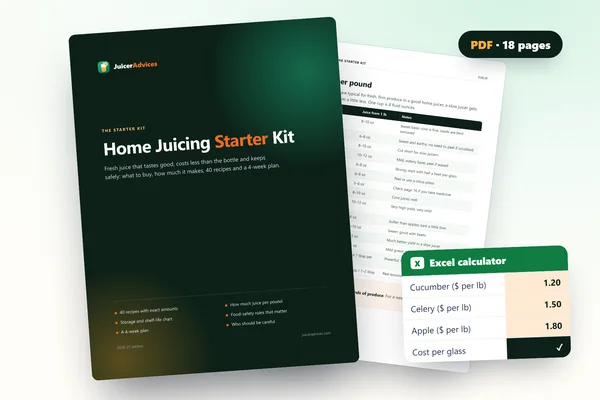 Home Juicing Starter KitMake fresh juice that tastes good, costs less and keeps safely: 40 recipes with exact amounts, a yield chart and a 4-week plan.40 juice, smoothie and shot recipesYield, storage and food-safety chartsCost, yield and shopping-list calculator (Excel)
Convert Measurements for Any Recipe
Recipes are inconsistent. Some call for “juice of 1 lemon,” others for specific tablespoons or milliliters. You need to bridge the gap instantly.
Use this lemon juice conversion cheat sheet.
- 1 Medium Lemon = 2-3 Tbsp = 30-45 ml
- 1/4 Cup Lemon Juice = Juice of 2-3 Lemons
- 1/2 Cup Lemon Juice = Juice of 4-6 Lemons
- 1 Cup Lemon Juice = Juice of 8-12 Lemons
What if you only have bottled? The burning question: can you substitute bottled lemon juice for fresh? In a pinch, yes. The standard substitution ratio is 2 tablespoons bottled for the juice of one fresh lemon. But be warnedthe flavor is flat, chemically, and lacks brightness. It works in a marinade or cleaning solution, but never in a vinaigrette, dessert, or cocktail where fresh lemon juice is the star.
Why Fresh Lemon Juice Beats Bottled Every Time
This isn’t snobbery. It’s science. Fresh-squeezed lemon juice contains volatile aromatic compounds and enzymes that begin degrading the moment they’re exposed to air. Bottled juice is pasteurized, which destroys these nuances, leaving only sharp acidity.
The nutritional content of lemon juice also suffers. Fresh juice has higher levels of vitamin C and antioxidants. For specifics on vitamin C content, see our detailed breakdown of how much vitamin C is in the juice of one lemon and the precise amounts in one tablespoon of lemon juice.
Don’t forget the lemon zest. That outer yellow skin holds powerful citrus oils. When a recipe calls for both juice and zest, always zest the lemon before you juice it. It’s infinitely easier.
If you’re tracking your intake for health or weight management, remember that while lemon juice is low in calories, it’s part of your overall nutritional picture. For a broader look at calorie counts in juicing, this external resource on calorie counts for juicing fruits and vegetables offers valuable context.
Your Action Plan for Perfect Lemon Juice
Here’s your takeaway. Start with a room temperature, medium Eureka or Lisbon lemon. Roll it firmly on the counter. Cut it crosswise. Use a manual lever-style lemon juicer for maximum pressure and yield. Expect 2-3 tablespoons. Measure it if precision is key.
For Meyer lemons, plan for slightly less. For large, heavy lemons, you might hit 4 tablespoons. Always zest first if needed. And unless absolutely necessary, avoid the bottled stuff. The flavor difference is not subtle.
You now have the data, the techniques, and the conversions. No more guesswork. Go juice with confidence.