You’ve got a beautiful piece of salmon and a lemon. You squeeze the juice, pour it over the fish, and then… you wait. How long? Ten minutes? An hour? Overnight, because that’s what you do with chicken?
Most recipes give you a vague range, and that vagueness ruins more fish than bad cooking. Leave it too long and the fish turns mushy and opaque, like it’s been boiled. Too short and you don’t get that bright, acidic kick. This guide gives you the exact numbers, the science behind them, and the visual cues to look for so you never guess again.
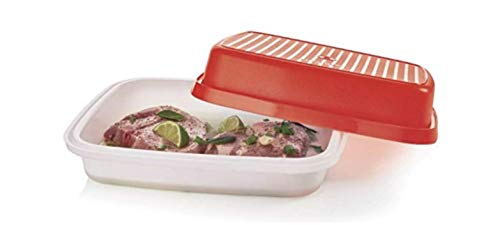
Tupperware
Tupperware Season-Serve Marinating Container
- Ideal for thoroughly marinating meat, fish, vegetables
- Seal locks onto base so container can be flipped without leaking
- Raised grids in bottoms of base and seal ensure marinade envelopes food
You’ll walk away knowing the precise soak time for flaky white fish versus firm salmon, why bottled juice behaves differently than fresh, and the three mistakes that turn a good marinade into a disaster.
Before we dive into the timing charts, a quick tool note. A lemon juice container with a tight seal makes this process less messy. The Tupperware Season-Serve Marinating Container has raised grids in the base and lid, so the fish sits above the juice while the acid still reaches every surface. You can flip the whole sealed container without leaking, which means the fish soaks evenly without you babysitting it.

The Science: Why Lemon Juice “Cooks” Fish
Lemon juice doesn’t just add flavor. The citric acid denatures the proteins in the fish, the same way heat does. The protein strands unwind and then re-bond in a different structure. That’s why the fish turns from translucent to opaque.
This is the same process behind ceviche, where raw fish is “cooked” entirely by citrus. The acid breaks down the myotomes (the muscle segments) and the connective tissue. The result is a firm, flaky texture that looks cooked even though no heat touched it.
The rate of this reaction depends on three things: acid strength, fish thickness, and fish type. Thicker cuts take longer. Firm fish like tuna resist the acid longer than delicate flounder. And bottled lemon juice has a lower pH than fresh, so it works faster.
The Golden Rule: How Long to Soak Fish in Lemon Juice
Here is the short answer: 15 to 30 minutes for flavor, up to 2 hours for a ceviche-style texture, and never more than 2 hours total. That’s the whole rule. The rest of this section explains why those numbers matter.
The Flavor Window (15–30 Minutes)
This is your target for most meals. In 15 minutes, the acid brightens the fish and adds a tangy note without changing the texture much. The fish stays moist and tender.
At 30 minutes, you’ll notice the edges start to turn opaque. The flavor is stronger, but the fish still holds its shape when you cook it. This is the sweet spot for grilling or pan-searing.
Pro tip: use this window for delicate fish like cod or tilapia. They don’t need long to absorb flavor, and they break down fast.
The Ceviche Zone (30 Minutes–2 Hours)
Past 30 minutes, the acid is doing more than flavoring. It’s cooking. The fish turns fully opaque and firms up.
If you’re making ceviche, this is what you want. A 1-inch cube of white fish like halibut will be perfectly “cooked” in about 45 minutes to 1 hour. Thinner slices, like the kind you see in Peruvian ceviche, take just 20 to 30 minutes.
But here’s the catch: the fish keeps cooking the whole time it sits in the juice. There is no off switch. You have to drain the lemon juice or eat the ceviche at the right moment, or the texture will degrade.
The Danger Zone (Over 2 Hours)
After 2 hours, the acid has broken down the proteins too far. The fish becomes mushy, then dry and chalky. It loses its structure entirely.
The flavor also turns bitter. The lemon juice starts to extract compounds from the fish that taste unpleasant, and the citrus oils oxidize. This is the point of no return. No amount of rinsing or cooking will fix it.
So if you’re tempted to marinate fish overnight like you do with beef, stop. It won’t work. The fish will be ruined.
How Fish Type Changes the Timing
Not all fish respond the same way to acid. You need to adjust the soak time based on what’s in your fridge.
Flaky White Fish vs. Firm Fish (Salmon/Tuna)
Flaky white fish—cod, haddock, tilapia, sole—has thin muscle fibers and little connective tissue. The acid penetrates fast, and the fish starts to break down quickly. Stick to 15 minutes max for these. Even 30 minutes can make them mushy.
Firm fish—salmon, tuna, swordfish, mahi-mahi—have denser flesh and more connective tissue. They handle acid better. A 30-minute soak works great for salmon, and you can push it to 45 minutes for a thicker steak.
Shellfish like shrimp and scallops fall in between. They’re firm but small, so they soak up acid quickly. 15 to 20 minutes is plenty.
Here’s a practical rule: the thicker the piece, the longer it can soak. A 2-inch tuna steak can take 45 minutes. A thin slice of flounder should come out after 10.
Visual Cues: When Your Fish is Perfectly “Cooked”
Timers help, but your eyes are the real tool. Here’s what to look for.
The edges turn opaque first. The center stays translucent. When the fish is ready, the entire piece should be opaque with a slight sheen. If it’s fully white and dull, it’s overdone.
Use a fork to gently press the thickest part. It should flake apart easily but still hold its shape. If it crumbles into mush, you left it too long.
For ceviche, the fish should look like it was poached. The flesh is firm, white, and separates into distinct flakes. Taste a piece. It should be tender, not rubbery.
Food Safety: The Non-Negotiable Rules
Acid does not kill bacteria the way heat does. This is the most common misconception about ceviche and lemon-soaked fish.
Citric acid can inhibit some bacterial growth, but it doesn’t eliminate pathogens like salmonella or listeria. The FDA recommends cooking fish to an internal temperature of 145°F. Ceviche does not reach that temperature.
So follow these rules:
- Use sushi-grade fish for ceviche. It’s been frozen to kill parasites.
- Keep the fish refrigerated at all times. Never let it sit on the counter.
- Soak for no more than 2 hours, then serve immediately.
- Discard any leftover ceviche after 2 hours at room temperature.
If you’re soaking fish to cook later, the lemon juice doesn’t preserve it. The fish still needs to be cooked and eaten within the same day.
Lemon vs. Lime vs. Milk: What to Use for What
People ask about lime juice constantly. Here’s the honest answer: lime juice works almost identically to lemon. It has a similar pH (around 2.0 for both). The main difference is flavor. Lime is slightly more bitter and floral. Use it interchangeably in any recipe.
Bottled lemon juice is a different story. It has a lower pH than fresh—usually around 2.3 versus 2.8 for fresh. That means it’s more acidic and cooks fish faster. If you use bottled juice, cut the soak time by a third. A 30-minute fresh lemon soak becomes a 20-minute bottled lemon soak.
Now for the milk soak. It’s not a marinade; it’s a deodorizer. Milk contains casein, a protein that binds to the compounds that cause fishy odors. Soaking fish in milk for 20 minutes removes that smell without adding acidity.
So use lemon for flavor and texture. Use milk only when you need to neutralize odor before cooking. They’re not substitutes for each other.
If you’re curious about how long fresh lemon juice keeps its potency, check this fresh lemon juice shelf life guide. Stale juice loses acidity, which changes your soak times.
Common Mistakes to Avoid (Over-Marinating, Room Temp)
Three mistakes ruin more lemon fish than anything else.
Mistake #1: Over-marinating. You read the chart, you set a timer, but then you get distracted. An hour later, the fish is mush. Set a loud timer on your phone. There is no rescue for over-soaked fish.
Mistake #2: Leaving fish at room temperature. The acid slows bacterial growth, but it doesn’t stop it. Fish should sit in the fridge, not on the counter. If you’re doing a 30-minute soak, the fish will still be cold when it goes in the pan, which is fine.
Mistake #3: Using a metal bowl. The acid reacts with aluminum and copper, giving the fish a metallic taste. Use glass, ceramic, or plastic. The Tupperware container mentioned earlier works well because the plastic is non-reactive.
The Ultimate Lemon Fish Recipe (Quick Marinade)
Here’s a foolproof method for a weeknight dinner.
- Pat your fish dry. This helps the marinade stick.
- In a glass dish, combine 1/4 cup fresh lemon juice, 2 tablespoons olive oil, 2 minced garlic cloves, and a pinch of salt.
- Add the fish. Turn it to coat. Cover and refrigerate.
- Soak for 15 minutes for flaky fish, 30 minutes for firm fish.
- Remove the fish from the marinade. Pat it dry again. Discard the leftover marinade.
- Sear in a hot pan for 2-3 minutes per side, or grill until it flakes.
The olive oil helps the acid penetrate more slowly, giving you a wider margin of error. It also adds moisture and prevents the fish from drying out during cooking.
For a more thorough look at how different citrus types interact, read this lime versus lemon substitution guide for the details.
So, What’s the Real Answer?
Here are the numbers you’ll actually remember:
- 15 minutes for delicate white fish (cod, tilapia, sole).
- 30 minutes for firm fish (salmon, tuna, swordfish).
- 45 minutes to 1 hour for ceviche-style chunks.
- 2 hours is the absolute maximum, ever.
- Bottled lemon juice works about 30% faster than fresh.
- Watch the edges: when they turn opaque, the acid is working.
- Keep it cold, use non-reactive bowls, and always discard the used marinade.
That’s the complete picture. No more guessing, no more ruined fish. The science is simple, the times are consistent, and the visual cues are easy to spot. Get the fish in the fridge, set that timer, and you’ll have perfect lemon-soaked fish every single time.


