How Long Does Fresh Lemon Juice Last in the Fridge?
On this page 4 sections
You’ve just squeezed a bowl of lemons. The bright, tart juice is ready for your recipes. But now you’re staring at the pitcher, wondering how long you have before it turns. It’s a common kitchen dilemma.
Knowing the shelf life of fresh lemon juice isn’t just about avoiding waste. It’s a key part of food safety. With the right knowledge, you can maximize that vibrant flavor and keep your kitchen creations safe and delicious.

How Long Fresh Lemon Juice Lasts in the Fridge
So, what’s the straightforward answer? Properly stored fresh lemon juice will maintain good quality in your refrigerator for 2 to 4 days. After that, the risk of spoilage increases significantly.
This timeline isn’t arbitrary. It’s based on the juice’s natural defenses against microbial growth. The high acidity, primarily from citric acid, creates a hostile environment for many bacteria. But it’s not invincible. Oxidation and yeast can still win over time.
For consistent, pulp-free juice that stores well, a good citrus juicer makes all the difference. Many home cooks find the Check price on Amazon reamer effective for getting every last drop while minimizing bitter oils from the peel.
Factors That Affect Lemon Juice Shelf Life
Why does one batch last four days while another sours in two? Several variables are at play. Understanding them gives you control over your juice’s longevity.
- Temperature Consistency: Every time you take the juice out of the fridge, condensation forms and temperature fluctuates. This accelerates spoilage. Keep it cold and put it back quickly.
- Pulp Content: This is a key factor often overlooked. Pulp provides more organic material for microbes to feed on. Straining your juice through a fine-mesh sieve can actually extend its fridge life.
- Container & Air Exposure: An open bowl is a recipe for quick spoilage. You need an airtight container. Glass jars with tight-sealing lids or dedicated juice containers are ideal. The less air contact, the slower the oxidation.
- Initial Lemon Freshness: Juice is only as good as the fruit it came from. Lemons that are already soft or have thick, pitted skin may yield juice that spoils faster.
- pH Level: This is the science behind the safety. Lemon juice has a very low pH (highly acidic), typically between 2.0 and 2.6. This acidity acts as a natural preservative by inhibiting pathogenic bacteria. However, it doesn’t stop all spoilage organisms.
How to Properly Store Fresh Lemon Juice
Proper storage is your best tool for preserving flavor and safety. It’s a simple process, but the details matter.
- Strain It: Pour the freshly squeezed juice through a fine-mesh strainer into a clean bowl or measuring cup. This removes seeds and excess pulp.
- Choose the Right Container: Opt for a glass jar or bottle with an airtight lid. Glass doesn’t absorb odors and is non-reactive. Fill it nearly to the top to minimize air space.
- Label and Date: This is the step everyone skipsand regrets. Use a piece of masking tape and a marker. Write the date you squeezed it. No more guessing games.
- Refrigerate Immediately: Don’t let it sit on the counter. Get it into the cold environment of your refrigerator right away. The back of the fridge tends to have the most consistent temperature.
How does this compare to bottled lemon juice? The shelf life is vastly different. Commercial bottled juice is pasteurized and often contains preservatives, allowing it to last for months in the pantry and weeks in the fridge after opening. Fresh juice offers superior flavor and more vitamin C, but it demands more careful preservation.
Signs Your Lemon Juice Has Spoiled
Knowing how to tell if lemon juice has gone bad is critical. Your senses are the best tools here. If you notice any of the following, it’s time to toss it.
- Off Smell: Fresh lemon juice smells bright, tart, and clean. Spoiled juice may develop a fermented, yeasty, or just “off” odor. Trust your noseit’s usually the first warning.
- Visual Changes: Look for cloudiness that wasn’t there before, sediment settling at the bottom, or any visible mold (often fuzzy spots on the surface). A darker, duller color is also a red flag.
- Flavor Test (Use Caution): If it passes the smell and sight test, you can dip a clean spoon in for a tiny taste. Spoiled juice will taste unpleasantly sour, bitter, or flatlacking that characteristic zing. Never taste if you see mold.
- Bubbles or Fizz: This is a sign of active fermentation. If you see tiny bubbles rising or hear a faint fizz when you open the container, fermentation has begun. It’s no longer just lemon juice.
When in doubt, throw it out. The risk isn’t worth it. This principle applies to all fresh juices. For instance, the signs of spoilage for fresh lime juice in the fridge are very similar, given its comparable acidity and composition.
Tips for Extending Lemon Juice Freshness
Want to push past that 4-day mark? You have options. These methods go beyond basic refrigerator storage.
Freezing: The Long-Term Solution
Freezing is the most effective way to halt the clock on spoilage. It’s perfect when you have a lemon windfall. Heres the best way to store fresh lemon juice in the freezer.
- Strain the juice as described above.
- Pour it into ice cube trays. Standard trays hold about 1-2 tablespoons per cubeperfect for recipes.
- Once frozen solid, pop the cubes out and transfer them to a labeled, airtight freezer bag. This prevents freezer burn.
- Frozen lemon juice retains good quality for 3-4 months. Thaw cubes in the fridge overnight or add them directly to cooked dishes.
Yes, you can freeze fresh lemon juice. The texture may be slightly less vibrant after thawing, but the flavor for cooking and baking remains excellent. It’s a game-changer for always having lemon juice on hand.
Maximizing Fridge Life
If freezing isn’t your goal, these small habits can help you get the most out of those 2-4 fridge days.
- Use Clean Utensils: Never dip a used spoon or measuring cup back into the storage container. Always pour out what you need. This prevents introducing bacteria.
- Consider Smaller Containers: If you have a large batch, divide it into several small jars. Use one jar at a time, keeping the others sealed. This limits air exposure for the entire batch.
- Keep It Cold: Store your juice at the back of the fridge, not in the door. The door is the warmest part due to frequent opening.
The principles of citrus storage are broadly applicable. For example, proper technique also greatly affects the longevity of other fresh juices, like knowing how long carrot juice lasts in the fridge, though the timelines differ due to lower acidity.
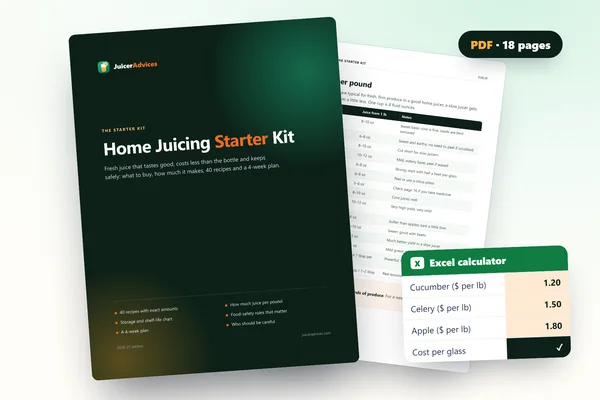 Home Juicing Starter KitMake fresh juice that tastes good, costs less and keeps safely: 40 recipes with exact amounts, a yield chart and a 4-week plan.40 juice, smoothie and shot recipesYield, storage and food-safety chartsCost, yield and shopping-list calculator (Excel)
Putting It Into Practice
So, does lemon juice expire in the fridge? Not with a printed date, but it certainly degrades and spoils. You’re now equipped with a clear timeline and the reasons behind it. You understand the role of pH and pulp. You can identify spoilage with confidence.
The key takeaway is that fresh lemon juice is a perishable product. Treat it with the same respect you give to milk or raw meat. Proper handlingstraining, airtight proper storage, immediate refrigeration, and labelingtransforms it from a short-lived ingredient into a versatile staple you can reliably use for days.
Plan your juicing around your weekly cooking. Freeze the excess. You’ll minimize waste and always have that essential spark of citrus flavor ready to elevate your meals. Your fridge just became a more efficient partner in your kitchen.