High-Capacity Blenders for Food Processing: What You Need to Know
On this page 7 sections
- High-Capacity Blenders for Food Processing
- How High-Performance Blenders Work in Kitchens
- Comparing High-Capacity Blender Models for Food Processing
- What High-Capacity Blenders Mean for Your Food Preparation
- What to Do Next: Choosing and Using a High-Capacity Blender
- High-Capacity Blenders for Food Processing
- Frequently Asked Questions
A high-capacity blender is designed with a large jar and a powerful motor to process food in bigger quantities than standard blenders. These blenders can crush ice, puree vegetables, mix dough, and handle tougher ingredients with ease.
They differ from regular blenders by offering higher wattage motors and bigger containers, making them suited for families, entertainers, or anyone needing to process food quickly and in volume.
High-Capacity Blenders for Food Processing
High-capacity blenders for food processing are powerful kitchen appliances with large jars designed to handle big batches and tough ingredients efficiently. They typically feature motors of 1500 watts or more and jars sized between 64 and 72 ounces, making them ideal for blending, chopping, crushing ice, and even mixing dough.

A high powered blender delivers speed and volume that regular blenders can’t match, allowing you to prepare meals faster and with less effort. This makes them particularly useful for families, meal preppers, and food service professionals who need consistent results at scale.
Most high-capacity commercial food blenders combine robust motor power with durable blades and large containers to cover multiple kitchen tasks. They blend smoothies and soups, chop vegetables evenly, crush ice to snow, and handle dough mixing, all in one machine.
Compared to regular blenders, these models excel in efficiency by processing larger quantities in one go and breaking down ingredients more thoroughly. This reduces prep time and ensures smoother textures, which is a key advantage for anyone managing busy kitchens or batch cooking.
| Feature | Typical Specification |
|---|---|
| Motor Power | 1500W to 1800W+ |
| Jar Capacity | 64 to 72 oz (about 2 to 2.1 liters) |
| Common Uses | Blending, chopping, ice crushing, dough mixing |
| Ideal Users | Families, meal preppers, food service |
How High-Performance Blenders Work in Kitchens
High-performance blenders for kitchens rely on powerful motors and sharp, strategically designed blades to blend ingredients quickly and evenly. Motors usually range from 1500 to 1800 watts, providing the torque needed to process dense or frozen foods efficiently.
These blenders often include preset programs and multiple speed settings, giving you precise control over texture and consistency. Presets can automate common tasks like smoothies, ice crushing, or purees, while manual speeds let you fine-tune blending for recipes.
At high speeds, the blades generate friction heat that can warm the contents slightly during blending. This is common in high-speed blenders like Vitamix models, which can even prepare hot soups from raw ingredients by blending alone.
Cleaning is usually user-friendly, with many models featuring one-touch self-cleaning modes. Just add water and detergent, then run the blender for 30 seconds to rinse thoroughly, saving time on manual cleanup.
Energy use is moderate for the power delivered, but noise can be significant due to high motor speeds and blade activity. Choosing a blender with noise-reduction features or using it on sound-absorbing surfaces can help.

Comparing High-Capacity Blender Models for Food Processing
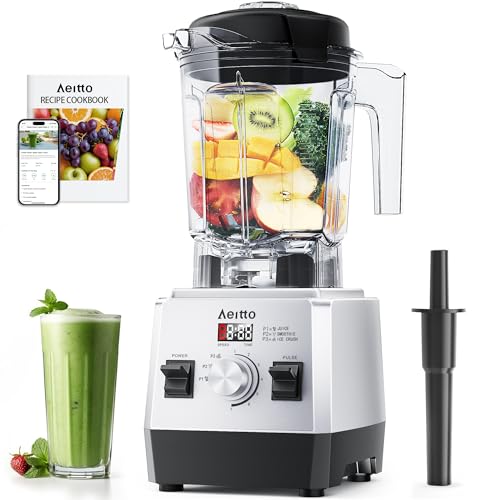
The best high power blender combines strong motor wattage with a large jar capacity and versatile features to meet your food processing needs. Models designed for commercial or heavy home use typically offer motors from 1500 to 1800 watts, enough to handle tough ingredients and large batches efficiently.
| Feature | Aeitto Blender | Ninja Kitchen System Pro |
|---|---|---|
| Motor Wattage | 1800W | 1500W |
| Jar Capacity | 68 oz BPA-free jar | 72 oz pitcher + 8-cup food processor bowl |
| Material | BPA-free plastic jar | Plastic pitcher and food processor bowl |
| Preset Functions | 3 programs + 7 speeds | 4 functions: Blend, Mix, Crush, Single-Serve |
| Food Processing Attachments | None | Includes food processor bowl with chopping and dough blades |
| Cleaning | Auto-clean mode, dishwasher-safe parts | Dishwasher-safe parts |
| Portability | Countertop use, larger footprint | Includes 2 portable 16 oz cups, moderate footprint |
Commercial food blenders often prioritize motor power and durability while offering fewer preset programs. The Ninja Kitchen System Pro stands out for its combined blender and food processor functions, useful if you want one appliance for multiple tasks. The Aeitto model offers higher wattage and larger jar capacity, making it ideal for batch blending and smoothies.
Preset functions and speed settings let you customize blending texture and consistency. The Aeitto’s 3 preset programs plus 7 speed options provide precise control, while Ninja’s 4 function buttons simplify switching between blending and food processing.
When cleaning ease matters, look for dishwasher-safe parts and self-cleaning modes. The Aeitto features a one-touch auto-clean that rinses the jar quickly, saving effort. Ninja’s detachable parts are dishwasher-safe, but it lacks a dedicated self-clean program.
Portability and storage footprint vary widely. The Ninja system includes two 16-oz Nutri Ninja cups with lids for on-the-go use, which suits busy lifestyles. The Aeitto’s larger 68 oz jar fits family meals but requires counter space and is less portable.
What High-Capacity Blenders Mean for Your Food Preparation
A high powered blender for smoothies can save you significant time when making large batches, especially if you regularly prepare meals for family or gatherings. Larger jar capacities mean fewer cycles and less cleanup.

Blending breaks down food cells, enabling quick nutrient release, but the process can also generate heat that slightly reduces heat-sensitive vitamins like vitamin C. Using shorter blend times and pulse settings helps preserve nutrients better.
These blenders are well suited for making nutrient-dense smoothies, hearty soups, and creamy nut butters. Their power and capacity handle fibrous vegetables, frozen fruit, and nuts without straining the motor.
People sensitive to noise or with limited kitchen space should note that high-capacity blenders tend to be louder and consume more power than smaller models. Consider usage frequency and kitchen layout before investing.
For those managing cough and cold symptoms, blended foods like warm vegetable soups or smoothies can be soothing and easy to consume, though they should avoid overly acidic or spicy ingredients to prevent throat irritation.
Compared to smaller blenders, high-capacity models reduce the need for repeated batches, improving efficiency and helping you stick to nutritious homemade recipes rather than relying on processed convenience foods.
If smoothies are a daily habit, choosing a blender with variable speed controls and preset programs can help you customize texture and nutrient retention. Smooth blending at lower speeds can preserve more vitamins and enzymes.
Batch cooking with these blenders means you can prepare nutrient-rich meals ahead, which supports consistent healthy eating even on busy days.
A high-capacity blender can be a valuable kitchen tool for anyone looking to streamline food preparation while keeping nutrition and texture in focus.
What to Do Next: Choosing and Using a High-Capacity Blender
Selecting a high-capacity blender starts with matching the motor power to your usual kitchen tasks. For heavy-duty work like crushing ice or processing nuts, look for motors rated at least 1,200 watts. A high-efficiency blender balances power and energy use to handle large batches without overheating.
Assess your volume needs and available kitchen space before buying. Large jars, often 64 oz or more, suit batch cooking but require enough counter or storage room. Consider how often you’ll blend big quantities versus smaller portions to pick the right size.
Try preset programs if your blender has them before switching to manual speed control. Presets optimize blade speed and blending time for common tasks, reducing user error and improving results, especially with thick or tough ingredients.
Cleaning is crucial to keep your blender running smoothly. Follow the manufacturer’s instructions to avoid water damage to the motor and to prevent buildup that can dull blades. Regular maintenance extends the life of your investment.
Storing your blender with the jar and lid assembled helps keep dust out. Keep blades detached or covered safely if you remove them during cleaning. Avoid stacking heavy items on top of your blender to prevent damage.
For a detailed model comparison and buying tips, check out our guide on the Top 5 High Power Blenders That Will Transform Your Kitchen Experience. It highlights options that excel in power, capacity, and usability for food processing.
High-Capacity Blenders for Food Processing
High-capacity blenders for food processing are designed specifically to handle large quantities and tough ingredients efficiently. They feature powerful motors and large jars that make them suitable for chopping, blending, and pureeing big batches quickly. This capacity helps save time and effort when preparing food for families or events.
These blenders often come with variable speed settings and durable blades that can process dense or fibrous foods without strain. Their design bridges the gap between traditional blenders and food processors, offering versatility in food preparation tasks.
