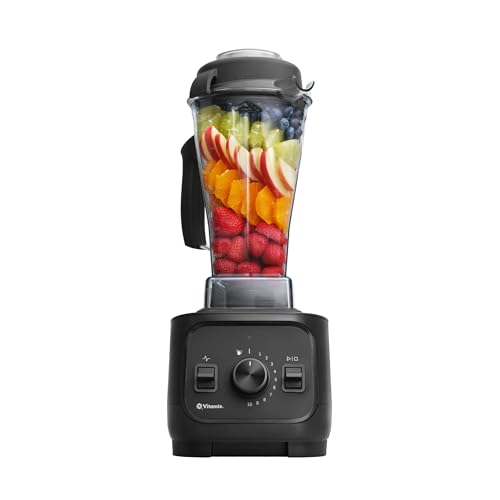
Does a Vitamix Blender Destroy Fiber in Your Food?
You’ve probably heard the claim. You’re making a morning smoothie, and a nagging thought creeps in: does my Vitamix destroy fiber? It’s a common concern in health-conscious circles. The idea that high-speed blades might pulverize this essential nutrient into oblivion can make you second-guess your blender choice. Let’s clear the air right away.
The short answer is no, blending does not destroy or eliminate fiber. It changes its physical form, which is a crucial distinction with significant implications for your health. For individuals struggling to meet their daily fiber intake through whole foods alone, a quality supplement can be a helpful tool. Many nutritionists suggest exploring options like NOW Foods Supplements to fill dietary gaps, but whole food sources are always the gold standard. Understanding what really happens inside your blender is key to optimizing your nutrition.
How Blending Affects Fiber: The Science Explained
To grasp fiber retention in blending, you need to know what fiber is. Dietary fiber is the indigestible part of plant foods. It comes in two main types: insoluble fiber, which adds bulk and aids digestion, and soluble fiber, which dissolves in water to form a gel. Both types are housed within the plant’s cell wall structure.
Blending applies mechanical shear forces. The blades physically tear, cut, and break down plant tissues. This process ruptures cell walls, releasing the contents. The fiber itselfthe cellulose, pectins, and ligninsremains chemically intact. It’s not being “destroyed” in a chemical sense. Instead, it’s being broken into smaller particles. Think of it like chopping an apple with a knife versus a blender. The fiber is still there, just in a different physical state.
This mechanical breakdown has two primary effects:
- Increased Surface Area: Smaller fiber particles have a much larger total surface area.
- Altered Texture: The gritty, fibrous texture of whole foods becomes a smooth, homogenous liquid.
This is where the myth of “blending destroys nutrients” often gets conflated with fiber. While some heat-sensitive vitamins can degrade from prolonged blending, fiber is remarkably resilient. The real conversation should be about nutrient bioavailability and how blending makes nutrients more accessible for absorption.
The Missing Piece: Particle Size and Glycemic Impact
Most competitor articles miss a critical nuance: particle size studies. Research indicates that reducing fiber particle size can influence how quickly sugars are released into the bloodstream. A finely blended smoothie may cause a slightly faster blood sugar rise compared to chewing the same whole fruits and vegetables, because the mechanical work of digestion is partially done for you. However, the fiber is still present and actively moderating this process, making it vastly different from juicing.
Vitamix Blade Technology & Speed Analysis
So, does a Vitamix, with its powerful motor and sharp blades, cause more fiber breakdown? Let’s analyze the mechanics. High-performance blenders like Vitamix, Blendtec, and high-end NutriBullet models are designed for complete liquefaction. Their blade speed and blunt, hammer-style blades create a vortex that pulls ingredients down repeatedly.
This results in a very fine particle size. From a high speed blender nutrition perspective, this isn’t inherently bad. It means the smoothie fiber content is fully integrated. You’re consuming all the fiber from the skins, seeds, and pulpsomething a juicer discards. The debate around blender vs juicer fiber is settled here: blending wins for fiber preservation every time.
Comparing a Vitamix vs regular blender fiber retention reveals a practical difference. A less powerful blender might leave larger, detectable chunks of fiber. Your Vitamix creates a silky-smooth consistency where the fiber is imperceptible but wholly present. The total fiber grams in your cup are identical; only the sensory experience changes. For a deep dive on specific models, you can compare the popular Vitamix 510 against other professional options.
Fiber Retention: Blending vs. Juicing vs. Chewing
This is the ultimate comparison for fiber preservation. Let’s break it down.
| Method | Fiber Status | Key Nutritional Impact |
|---|---|---|
| Chewing (Eating Whole) | Full, intact fiber. Slowest release. | Maximum digestive work required. Promotes satiety. |
| Blending (Smoothies) | All fiber retained, but particle size reduced. | Faster nutrient access. Fiber still buffers sugar absorption. |
| Juicing (Extracting) | Most insoluble fiber removed (in pulp). | Rapid sugar spike. Misses key phytonutrients bound to fiber. |
The table highlights why blending is a superb middle ground. It offers the convenience and rapid nutrient access of a liquid while maintaining the crucial fiber matrix. The mechanical breakdown in a blender is simply a more extreme version of chewing. The goal of nutrient retention blending is high, especially for fiber.
Addressing Oxidation Concerns
Another term often raised is oxidation. High-speed blending can introduce more air, potentially oxidizing some sensitive vitamins like vitamin C shortly after blending. This is a separate issue from fiber stability. To minimize this, blend for the shortest time necessary and consume your smoothie promptly. Fiber is not susceptible to this type of degradation.
Optimizing Your Vitamix for Maximum Nutrition
So, how do you ensure you’re getting the best high speed blender nutrition? It’s about technique, not just the machine. If you’re wondering how much fiber is lost in a high speed blender, the answer is virtually none if you use it correctly.
- Blend Duration: Don’t over-blend. For most smoothies, 30-60 seconds is sufficient. Prolonged blending increases heat and oxidation without benefiting fiber preservation.
- Ingredient Order: Add liquids and soft foods first, followed by hard ingredients and ice. This creates a vortex that protects the blade and ensures even blending.
- Pulse Feature: Use the pulse function to initially chop bulky greens or frozen fruit before a sustained blend. This improves consistency.
- Temperature Control: For green smoothies, avoid a hot result. If the container feels warm, you’ve blended too long. Consider the powerful Vitamix Vita-Prep for its superior cooling capabilities in high-volume settings.
Expert Tips for Fiber-Rich Smoothies & Blends
Want to maximize the blended vegetables fiber and overall nutritional punch? It’s easier than you think. Heres how to build a better smoothie.
Boost Insoluble Fiber
Add texture and bulk-promoting fiber with these ingredients:
- Chia seeds or flax seeds (whole or ground)
- A handful of spinach or kale (stems included)
- Frozen cauliflower or zucchini (they’re virtually tasteless)
- Apple or pear with the skin on
Boost Soluble Fiber
For that gut-friendly gel that supports heart health:
- Oats or oat bran
- Avocado (also adds creaminess)
- Berries like blueberries and strawberries
- Psyllium husk (start with a small amount)
If you’re searching for the best blender to preserve fiber in smoothies, any high-performance blender from the major brands will do the job. The difference lies in consistency, durability, and features, not in the fundamental ability to retain fiber. For a comprehensive look at fiber’s role in diet, the Harvard T.H. Chan School of Public Health offers an excellent authority guide.
Ultimately, your Vitamix is a powerful ally for increasing fiber intake. It doesn’t destroy it; it delivers it in a convenient, bioavailable form. The key is to use it as part of a varied diet. Enjoy your smoothies, chew your salads, and relish your whole fruits. Your gut will thank you for the diverse sources and forms of this essential nutrient. Now, go blend without fear.