Do Carbonated Drinks Cause Gas? What the Evidence and Experience Show
On this page 12 sections
- Do carbonated drinks cause gas?
- How the gas forms
- Why standard advice has changed
- What was wrong, and what was situational?
- What has not changed
- Which drinks cause the most trouble?
- How to test your own tolerance
- Ways to reduce drink-related gas
- Can Gas-X help after a fizzy drink?
- Carbonated drinks and stomach pain
- What the answer means for you
- Frequently asked questions

Do carbonated drinks cause gas?
Yes, carbonated drinks can cause gas for some people. The bubbles contain carbon dioxide, which leaves the drink inside your digestive system.
Most gas exits as a burp. Some can move into the intestines and create pressure, bloating, or flatulence. The effect varies with the drink, the amount, and your gut.
A plain sparkling water may cause brief belching. A fizzy soda can cause more trouble because it may also contain sugar, fructose, or sugar alcohols.
See this carbonated drink guide for related information about fizzy beverages.
How the gas forms
Carbonation adds dissolved carbon dioxide to a liquid. Pressure releases the gas when you open the container.
Your stomach releases more gas after you swallow the drink. Fast sipping, gulping, and drinking through a straw can increase swallowed air.
The stomach usually sends extra gas upward. Burping often provides quick relief. Gas can still pass into the small intestine and colon.
Gut bacteria can also ferment certain drink ingredients. This process produces gas after the drink reaches the lower digestive tract.
Why standard advice has changed
The older blanket warning
Older advice often said people with gas should avoid all carbonated drinks. That rule was easy to give, but it treated every fizzy drink as the same.
It also confused a common trigger with a universal cause. Many people tolerate sparkling water without lasting symptoms.
That blanket advice is now too broad. Carbonation can trigger symptoms, but it does not affect everyone in the same way.
What caused the shift
Clinical advice now separates carbonation from the rest of a drink. Doctors and dietitians pay more attention to sugar, sweeteners, serving size, and drinking speed.
People also track symptoms more carefully. A short food and symptom diary can show whether bubbles, ingredients, or another meal caused the problem.
This approach reflects a simple fact. The same drink may cause burping in one person and no symptoms in another.
Advice that remains sound
Reducing fizzy drinks still makes sense when they reliably cause discomfort. Smaller servings can help some people test their tolerance.
Slow sipping remains sensible. It limits swallowed air and gives your stomach more time to handle the liquid.
Check the ingredient list when symptoms seem strong. High-fructose drinks and sugar-free drinks with sorbitol or other sugar alcohols may cause extra gas.
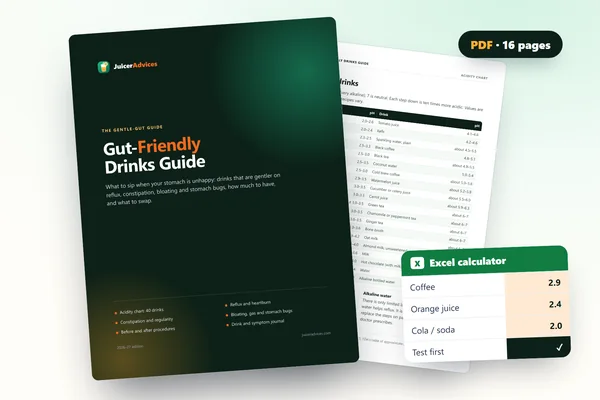 Gut-Friendly Drinks GuideDrinks that are gentler on reflux, constipation and a sensitive stomach: what to sip, how much, and what to swap.Acidity chart for 40 common drinksDrinks for reflux, constipation, bloating and stomach bugsDrink and symptom tracker (Excel)
What was wrong, and what was situational?
| Older advice | Current view | What to do |
|---|---|---|
| Avoid every carbonated drink | Too broad for most people | Limit drinks that clearly trigger symptoms |
| All gas comes from carbonation | Other ingredients can contribute | Check sweeteners, fructose, and serving size |
| Drink quickly to finish it | Fast drinking can increase swallowed air | Sip slowly and skip straws if they worsen symptoms |
| Carbonation always harms digestion | Usually a tolerance issue | Watch your own pattern instead of following a blanket rule |
| Stop sparkling water automatically | Plain sparkling water may be tolerated | Test a small serving when symptoms settle |
What has not changed
Carbon dioxide still creates gas in the stomach. No change in advice alters that basic mechanism.
Large servings can still cause more pressure than small ones. Drinking quickly can still add swallowed air.
People with sensitive digestion may still feel worse after fizzy drinks. Personal symptoms matter more than a general permission or ban.
Carbonated drinks also do not treat every cause of bloating. Constipation, food intolerance, reflux, and digestive disorders need different approaches.
Which drinks cause the most trouble?
Sugary soda
Soda combines carbonation with a high sugar load. Some people notice bloating or loose stools after larger servings.
Cola and fruit-flavored drinks may also contain fructose. Fructose can ferment when the body absorbs it poorly.
Diet soda
Diet drinks remove much of the sugar, but some use sugar alcohols. Sorbitol, mannitol, and xylitol can cause gas in sensitive people.
Read the label rather than assuming a sugar-free drink will feel lighter.
Sparkling water
Plain sparkling water usually has fewer ingredients. It can still cause belching and temporary bloating.
Some flavored waters contain sweeteners or acids. Those ingredients may explain symptoms better than the bubbles.
Beer and sparkling wine
Beer and sparkling wine contain carbonation and alcohol. Alcohol can irritate the stomach and affect digestion.
These drinks may also encourage faster consumption. That combination can make gas and bloating more noticeable.

How to test your own tolerance
- Choose plain sparkling water first.
- Drink a small serving with a meal.
- Sip it slowly over several minutes.
- Avoid straws, gum, and rapid gulping during the test.
- Record burping, bloating, cramps, and bowel changes.
- Repeat once on another day if the result seems unclear.
A food diary works best when you record the drink and the rest of the meal. Beans, onions, dairy, and large portions can confuse the result.
Stop the test if you develop severe pain, vomiting, or repeated diarrhea. A brief trial is useful, but it is not perfect.
Ways to reduce drink-related gas
- Choose a smaller serving.
- Drink slowly.
- Skip straws if they make you swallow air.
- Limit gum and hard candy around the same time.
- Try still water when symptoms are active.
- Compare plain sparkling water with sweetened soda.
- Check sugar-free drinks for sugar alcohols.
- Walk gently after a meal if movement feels comfortable.
These steps target common triggers. They cannot prevent gas from every digestive condition.
Can Gas-X help after a fizzy drink?
Gas-X Extra Strength Chewable Tablets contain simethicone 125 mg per tablet. The cherry-flavored tablets are designed for gas and bloating relief.
Simethicone helps combine smaller gas bubbles in the stomach and intestines. This can make trapped gas easier to pass.
The product comes as one 72-count package. The chewable format may suit people who do not want to swallow a pill.
Gas-X treats gas symptoms after they occur. It does not remove carbonation from a drink or prevent every future episode.
Follow the package directions. Ask a pharmacist if you take other medicines or have ongoing digestive symptoms. Check the current price on Amazon before buying.
Carbonated drinks and stomach pain
Gas pressure can feel uncomfortable, but severe or persistent pain needs more care. Carbonation may worsen symptoms from reflux or an already irritated stomach.
Visit the stomach aches guide for a related discussion.
Seek prompt medical help for severe pain, a swollen hard abdomen, repeated vomiting, bloody stool, black stool, fever, or unexplained weight loss.
Arrange a medical review when bloating lasts for weeks or keeps returning. A clinician can check for constipation, food intolerance, reflux, or other causes.
What the answer means for you
Carbonated drinks can cause gas, but the bubbles are only part of the story. Drink type, ingredients, serving size, and speed all matter.
People do not need to avoid carbonation automatically. A short, careful trial can show whether your symptoms follow the drink or another ingredient.
Plain sparkling water may suit you. Sweetened or sugar-free fizzy drinks may not.
Frequently asked questions
Does sparkling water cause more gas than still water?
It can cause more burping and temporary bloating. Still water does not contain dissolved carbon dioxide.
Plain sparkling water usually has fewer gas-related ingredients than soda. Your own response still decides which option works better.
Can carbonated drinks cause flatulence?
Yes. Swallowed air and released carbon dioxide can move through the digestive tract.
Sweeteners and fermentable carbohydrates can add more gas after gut bacteria process them.
Do carbonated drinks cause gas immediately?
Burping can start within minutes. Lower intestinal gas often takes longer.
The timing depends on the drink, your meal, and how quickly you consumed it.
Should I stop drinking soda if I feel bloated?
Pause soda while symptoms settle. Then compare a small serving of plain sparkling water with your usual drink.
If soda repeatedly causes symptoms, limiting it is reasonable. You do not need to avoid every carbonated drink without testing your tolerance.
Do straws make gas worse?
They can. Some people swallow more air through a straw, especially when they drink quickly.
Try drinking from a glass if you notice extra burping or pressure.
Can Gas-X prevent gas from carbonated drinks?
Gas-X Extra Strength Chewable Tablets provide simethicone for gas and bloating relief. They do not stop carbonation or replace habits that trigger swallowed air.
Use the product according to its package directions. Seek medical advice for persistent or severe symptoms.
Is carbonated water bad for digestion?
Not for everyone. It may cause temporary burping or bloating, but many people tolerate plain sparkling water.
Avoid it when it clearly worsens your symptoms. Persistent digestive problems deserve a medical assessment.
Can children take simethicone?
Age directions vary by product. Read the package label and ask a pediatrician or pharmacist before giving it to a child.
Can gas from fizzy drinks mean I have an intolerance?
It can, but gas alone does not prove an intolerance. A drink may contain lactose, fructose, or sugar alcohols that trigger symptoms.
A clinician can help assess repeated symptoms, especially when diarrhea, weight loss, or pain also occurs.
For more beverage-related questions, the JuicerAdvices drinks section offers broader reading.