Can You Put Cucumbers in Pickle Juice? Yes, With Tips for Crunchy Pickles
On this page 6 sections
- Using Cucumbers in Pickle Juice to Make New Pickles
- How to Prepare Cucumbers and Brine for Crunchy Second-Batch Pickles
- How Long Should Cucumbers Stay in Pickle Juice? Quick vs Long Pickling
- Mistakes That Ruin Pickles in Leftover Brine
- Pickle Juice Variations and Health-Friendly Swaps
- Questions People Ask
Leftover pickle juice from store-bought or homemade pickles holds flavor but loses acidity and salt after the first batch. Simply adding cucumbers to this brine often yields soft or bland results. This guide shows you how to refresh and use pickle juice properly to make crisp, flavorful second-batch pickles at home.
You’ll learn the exact cucumber-to-brine ratio, how to adjust acidity and salt, and how long to soak cucumbers for best texture and safety. This method fits well into busy autumn routines when quick, tasty snacks and holiday prep overlap.
Using Cucumbers in Pickle Juice to Make New Pickles
You can put cucumbers in pickle juice to make more pickles. The leftover brine from store-bought pickles already contains vinegar, salt, and spices, which work as a quick pickling solution for fresh cucumbers. Use about 1 part cucumber to 2 parts pickle juice by volume to keep the flavor balanced without watering down the brine.
Use about 1 part cucumber to 2 parts brine by volume for good coverage. Keep the jar refrigerated and let the cucumbers soak for 24 to 72 hours, depending on how crunchy you want them.
How to Prepare Cucumbers and Brine for Crunchy Second-Batch Pickles
Select dense cucumbers like Kirby or English cucumbers for pickling. These varieties have firm flesh and thin skins that maintain crunch. Avoid waxed cucumbers, as the coating blocks brine absorption and can cause slimy pickles.

Start by washing cucumbers well and slicing or cutting them to your preferred shape. Then, pack the cucumbers tightly in a clean jar and pour the leftover pickle juice over them until they are completely covered. Make sure to leave some headspace at the top to allow for expansion.
How Long Should Cucumbers Stay in Pickle Juice? Quick vs Long Pickling
Cucumbers left in pickle juice for 24 to 48 hours develop a good balance of flavor and crunch. For a stronger tang, you can leave them up to 5 days, but longer times may soften them.
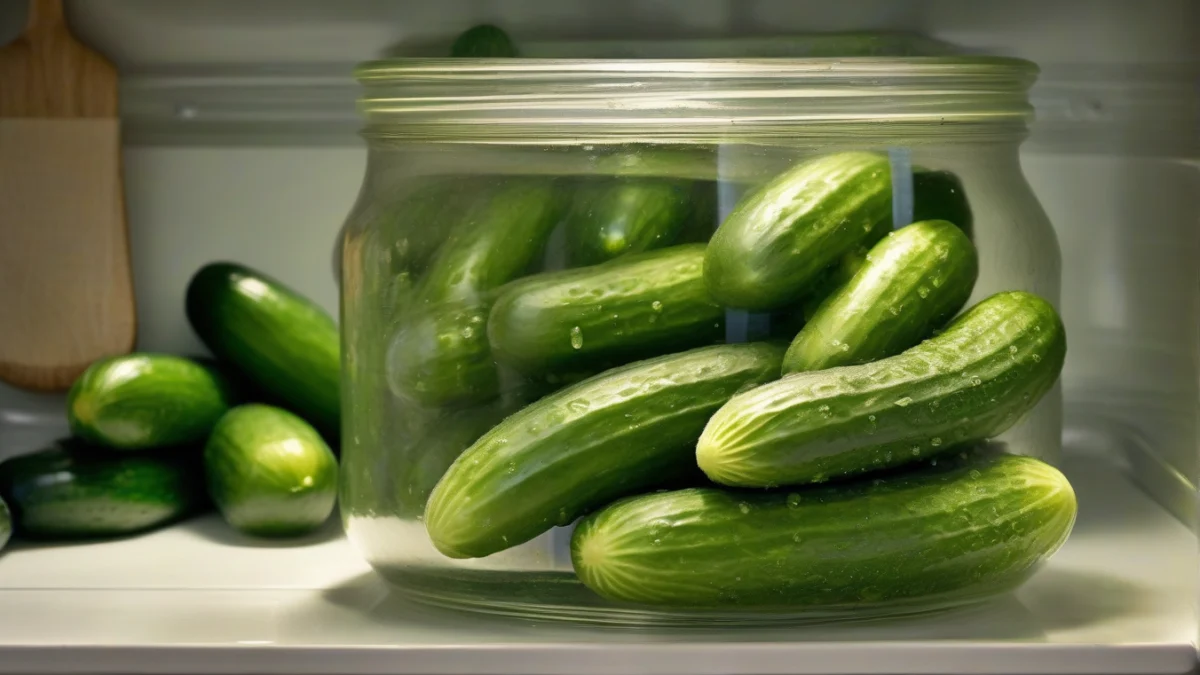
For quick pickling, cucumbers can stay in the brine for about 12 to 24 hours in the refrigerator to develop flavor and crunch. If you prefer a stronger taste, leave them for 2 to 3 days, but longer pickling may soften the cucumbers. Always keep them refrigerated during this time to prevent spoilage.
Using hot or boiled pickle juice speeds flavor absorption but softens cucumbers faster. Cold soaking keeps them crisper but takes longer.
Always refrigerate cucumbers in pickle juice. Leaving them at room temperature for more than a few hours increases spoilage risk and can make pickles unsafe.
| Pickling Time | Outcome | Notes |
|---|---|---|
| 24 hours | Crunchy with mild flavor | Best for quick snacking |
| 48-72 hours | Stronger flavor, softer texture | Closer to traditional pickles |
| Any time with boiled brine | Faster flavor, softer texture | Use when short on time but want less crunch |
 Home Juicing Starter KitMake fresh juice that tastes good, costs less and keeps safely: 40 recipes with exact amounts, a yield chart and a 4-week plan.40 juice, smoothie and shot recipesYield, storage and food-safety chartsCost, yield and shopping-list calculator (Excel)
Mistakes That Ruin Pickles in Leftover Brine
A common mistake is overfilling the jar with cucumbers, which dilutes the brine and weakens the flavor. Also, reusing brine that has been left unrefrigerated for several days can lead to spoilage. Avoid using brine that smells off or has visible mold. For best results, always refrigerate the jar and use fresh, firm cucumbers.
Leftover brine loses acid and salt strength over time. If you don’t adjust by adding vinegar and salt, your second batch will turn out soft or bland.
Waxed cucumbers resist brine penetration. Always choose unwaxed, fresh cucumbers for pickling to ensure the brine soaks in properly.
Leaving the blossom end on your cucumbers causes softening. Trim it off before soaking to keep pickles crisp.
Ignoring refrigeration after adding cucumbers to pickle juice increases spoilage risk and can produce unsafe pickles.
Pickle Juice Variations and Health-Friendly Swaps
If you want to make your pickles healthier, consider diluting the leftover brine with water to lower the sodium content. You can also add fresh herbs like dill or spices such as garlic to enhance flavor without extra calories or additives. For a milder taste, mix the leftover brine with a vinegar-water solution before adding cucumbers.
Simply cutting cucumbers and putting them in leftover pickle juice can make quick pickles, but they won’t be sweet unless sugar or a sweetener is present. Sweet pickles need added sugar or a sweet brine to develop their characteristic taste.
Boiling pickle juice before pouring it over cucumbers softens the cucumbers by breaking down cell walls, so avoid boiling the brine if you want crisp pickles. Using cold or room-temperature brine keeps cucumbers firm and crunchy.
If you reuse pickle brine multiple times, adding calcium chloride (like Pickle Crisp) helps maintain firmness. This additive strengthens the cell walls in cucumbers, preventing limp or soggy pickles during longer or repeated fermentations.
