Cranberry juice makes smoothies brighter and more complex by adding tartness that cuts through banana, dates and nut butter. The key is the 1:3 ratio—1 part cranberry juice to 3 parts sweet base—which keeps the drink creamy, not puckery, in about 2 minutes with a 16-ounce yield.
Most smoothies rely on orange or apple juice for liquid, which adds sweetness but little personality. Cranberry juice does the opposite: it sharpens the flavor, lifts heavy ingredients, and keeps the drink from tasting flat or cloying.
The trick is balancing the tartness so you taste brightness, not acid. This recipe gives you the formula, the blender order that prevents lumps, and variations for different needs.
Key takeaways
Use 1 part cranberry juice to 3 parts sweet base (banana, mango or berries) to balance the tartness without adding sugar.
Blend liquids and leafy greens first, then add frozen fruit last to avoid lumps and get a smooth, cold result.
100% cranberry juice is unsweetened and concentrated; cranberry juice cocktail contains added sugar, often 20 to 30 g per 8 oz.
For reflux, swap out citrus and use low-acid juice like pear or apple; for diabetes, watch the total carbs from all fruit and juice combined.
Frozen fruit thickens the smoothie and chills it without ice, which can water down the flavor.
Why Cranberry Juice Is Good for Smoothies
Cranberry juice is good in smoothies because its tart acidity keeps sweet fruit from tasting flat. About 4 fl oz gives a bright edge that makes banana, mango, and dates taste more distinct instead of simply adding more sweetness.
Cranberry juice has a pH around 2.5, so it wakes up your palate much like lemon does in a savory dish. That acidity also helps vanilla protein powder and Greek yogurt taste cleaner by masking some chalkiness. The result is a smoothie with clearer fruit flavor and less heavy sweetness.
Use cranberry juice to add contrast, not extra sweetness. It works especially well with ripe banana, mango, dates, vanilla protein powder, and Greek yogurt.
The Base Recipe: Tart-Sweet Cranberry Smoothie
For one 16 oz smoothie, blend the liquids first, then the soft ingredients, frozen fruit, and powder so the blade moves freely and the powder doesn’t cake on the jar.
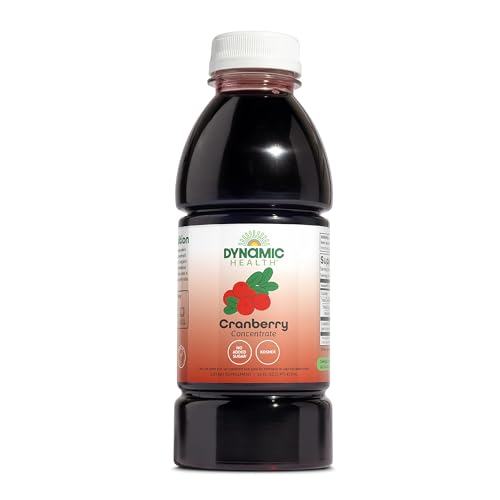
If you’re using cranberry concentrate instead of ready-to-drink juice, read its dilution directions before measuring because concentrate is more intense.
If you have concentrate
DYNAMIC HEALTH 100% Cranberry Juice Concentrate, 16 fl oz | Urinary T…
Product 1 is unsweetened and has no added sugar, so it can provide cranberry flavor without sweetener from the product itself. It doesn’t remove the need to follow the bottle’s dilution directions or adjust the smoothie to taste.
Pour 4 fl oz cranberry juice into the blender first, followed by the Greek yogurt. The liquid reaches the blades and helps prevent a dry start.
2
Add soft ingredients
Add the banana and almond butter. Soft ingredients break down quickly and help form a smooth layer around the blades.
3
Add frozen fruit
Add the frozen mango last among the solid ingredients. Its weight pushes the softer food downward, reducing chunks while keeping the drink cold without extra ice.
4
Add the powder
Sprinkle the vanilla protein powder on top, close the lid, and blend until smooth, usually 45 to 60 seconds. Keeping powder last helps it mix into the moving liquid instead of sticking to the bottom or sides.
5
Check and pour
Stop the blender, check the texture, and pour into a 16 oz glass. From measuring to blending, the smoothie takes about 2 minutes.
Before and after blending
Wash produce under running water before cutting it, including fruit with a peel you won’t eat. Keep hands, spoons, and the spatula away from moving blades; unplug the blender before cleaning or clearing a jam. Drink the smoothie promptly, or refrigerate it soon after blending rather than leaving it at room temperature.
100% Juice vs Cocktail: What the Label Tells You
Choose 100% cranberry juice when you want less added sugar and a sharper berry flavor. Cranberry juice cocktail is usually only 25–30% real juice; the rest is water and sweeteners, with about 28 g of sugar in an 8 oz serving.
A 100% cranberry juice product has about 12 g of natural sugar per cup (8 oz) and no added water or sweeteners. Its tart flavor is stronger, so it works well in the 1:3 formula rather than as the main liquid.
Label term
What it means
How to use it
100% cranberry juice
Pure cranberry juice with about 12 g natural sugar per 8 oz
Measure it as the tart portion
Cranberry juice cocktail
About 25–30% juice, plus water and sweeteners; about 28 g sugar per 8 oz
Use less sweet fruit elsewhere
Cranberry concentrate
100% juice with water removed
Use by the tablespoon, then add liquid
Check the front label and the nutrition panel before blending.
Read the ingredient list as carefully as the large words on the carton. For pure cranberry juice, it should show only cranberries; a cocktail will list sweeteners and often water. On the nutrition panel, grams of sugar should match total carbohydrate when the product has no added sugar.
Drink
Sugar per serving
Servings
Total
Cranberry juice cocktail
28 g
1
28 g
100% cranberry juice
12 g
1
12 g
Total
40 g
Each row represents one 8 oz serving; the cocktail contributes about 16 g more sugar. Totals are calculated from the amounts shown; labels vary by size and brand, so check the one you have.
Concentrate Check
A tablespoon of concentrate is much more concentrated than an 8 oz glass of juice. Follow the recipe amount, and don’t substitute it cup for cup.
From JuicerAdvices · our own guidePage 11 has the smoothies, with exact amounts and swaps.Home Juicing Starter KitMake fresh juice that tastes good, costs less and keeps safely: 40 recipes with exact amounts, a yield chart and a 4-week plan.40 juice, smoothie and shot recipesYield, storage and food-safety chartsCost, yield and shopping-list calculator (Excel)$14.99$9.99Get it for $9.99See what's inside and watch the 2-minute video →18-page printable PDF + Excel calculator · instant download · 30-day refund
The 1:3 Ratio That Prevents the Pucker
Use 1 part cranberry juice to 3 parts sweet base for a balanced smoothie. The sweet base can be apple juice, oat milk or banana; the cranberry supplies acidity, while the other three parts soften its sharp edge.
For example, combine 1/4 cup of 100% cranberry juice with 3/4 cup of sweet base before adding frozen fruit or other ingredients. With cranberry concentrate, use 1 tablespoon per 1 cup of sweet base instead.
The ratio also helps with texture when dairy is involved. Cranberry juice has a pH around 2.5, while dairy can curdle below pH 4.6; diluting the cranberry portion helps keep the finished mixture above that curdling point. Plant milk is the better choice if you want more cranberry flavor without dairy curdling.
Worked Example
Say you’re making one smoothie with oat milk, banana and frozen berries. Measure the cranberry first, then keep the sweet base at three times that amount.
Tart portion1/4 cup 100% cranberry juice
Sweet base3/4 cup oat milk
Ratio1:3 cranberry to sweet base
AdjustmentAdd banana or frozen fruit for more swee
Taste Before Adding More
Blend the measured liquids and soft ingredients first, then taste. If the smoothie is too puckery, add banana or another small amount of sweet base instead of pouring in extra juice.
Variations for Reflux, Diabetes and Kidney Care
If reflux is your concern, make the smoothie gentler by replacing citrus or yogurt with unsweetened almond milk, adding ripe banana for creaminess, and leaving out ginger. Cranberry is acidic, so even this version may bother you; try a small serving and stop if it brings on symptoms.
With diabetes, choose 100% cranberry juice rather than cocktail and count the 12 g of natural sugar in the recipe’s juice serving toward your meal plan. Protein powder or Greek yogurt adds protein, which can slow how quickly the smoothie’s carbohydrates are absorbed; check the label for added sugar and follow your own glucose guidance.
If you follow a low-oxalate plan for kidney care, keep cranberry juice to 1/4 cup per day. Skip banana if you need to limit potassium, and use blueberries or apple instead; kidney-related restrictions vary, so follow your clinician’s limits for potassium, fluid and other nutrients.
During pregnancy, use only pasteurized cranberry juice. Avoid fresh-squeezed juice unless you can confirm it has been pasteurized, because unpasteurized juice can carry harmful bacteria.
Cranberry Juice And UTIs
Cranberry products may help lower the chance of recurrent urinary tract infections for some people, but they don’t treat an active UTI. Contact your care team for burning urination, fever, back pain or blood in your urine; don’t use a smoothie instead of prescribed treatment.
Common Mistakes That Ruin the Result
For a smooth, balanced drink, add liquid and soft ingredients before frozen fruit, measure the juice, and use ripe fruit. Small order and ingredient changes make a difference.
Don’t put frozen fruit in first: the blade can spin in an air pocket instead of pulling fruit down, leaving stubborn chunks. Start with the liquid, then add soft ingredients and frozen fruit.
Avoid a full cup of 100% cranberry juice. It can make the smoothie too tart and may cause dairy to curdle; measure the recipe’s smaller amount instead.
Skip honey if you want the cranberry flavor to come through. Its taste can get lost; use a little maple syrup or a date if the smoothie needs sweetness.
Don’t use a green banana. It tastes chalky and is less sweet than a ripe banana.
Don’t keep a blended smoothie in the fridge for more than 24 hours. Separation and oxidation can dull its color and flavor.
Before You Blend
Add liquid to the blender jar first, followed by soft ingredients and frozen fruit.
Measure cranberry juice instead of pouring by eye.
Check that the banana is ripe; adjust sweetness with maple syrup or a date.
Plan to drink the smoothie fresh, or refrigerate it for no more than 24 hours.
Can you use cranberry juice cocktail instead of 100% juice in smoothies?
Yes. Cranberry juice cocktail works, but it’s usually sweetened, so reduce or skip added honey, dates, or other sweeteners and taste before adding more.
Does cranberry juice curdle protein powder?
Cranberry juice doesn’t automatically curdle protein powder, but its acidity can make some powders look grainy or clump. Blend the powder with a little milk or other less-acidic liquid first, then add the cranberry juice.
How much cranberry juice is safe to drink daily?
For most adults, an 8 oz serving can fit into a varied diet, but there’s no single daily limit that applies to everyone. Check the label for added sugar, and ask your care team about regular cranberry products if you take warfarin or have a history of kidney stones.
Can you freeze cranberry juice smoothies for meal prep?
Yes. Freeze the smoothie in a sealed, freezer-safe container, leaving a little space at the top for expansion, and thaw it in the refrigerator before drinking. Separation after thawing is normal; shake or blend it again.
What fruits pair best with cranberry in a smoothie?
Banana, pear, mango, and strawberries soften cranberry’s sharp flavor; ripe banana also makes the texture creamier. Start with a small amount of cranberry juice and adjust after blending, especially when using tart berries or citrus.
Is cranberry juice good for UTI prevention in smoothies?
Cranberry products may modestly reduce the risk of recurrent urinary tract infections for some people, but they don’t treat an active infection. A smoothie isn’t a substitute for medical care; contact your clinician if you have urinary symptoms, especially fever, back pain, or worsening symptoms.
Before you go · a welcome giftGet the Home Juicing Starter Kit for $4.99Make fresh juice that tastes good, costs less and keeps safely: 40 recipes with exact amounts, a yield chart and a 4-week plan. Normally $14.99; your welcome price saves $10.00. We'll email your link right now.or skip the email and buy it now for $4.99 →One email with your link now. We never share your address.
 Home Juicing Starter KitMake fresh juice that tastes good, costs less and keeps safely: 40 recipes with exact amounts, a yield chart and a 4-week plan.40 juice, smoothie and shot recipesYield, storage and food-safety chartsCost, yield and shopping-list calculator (Excel)