The Breville Juice Fountain Plus (model JE98XL) is a popular centrifugal juicer known for its fast operation and large feed chute that reduces prep time. It uses two speed settings to handle different types of produce but does not have a reverse function. This article covers its features, performance, and practical tips to help you decide if it suits your juicing routine.
Breville Juice Fountain Plus: What It Is and How It Works
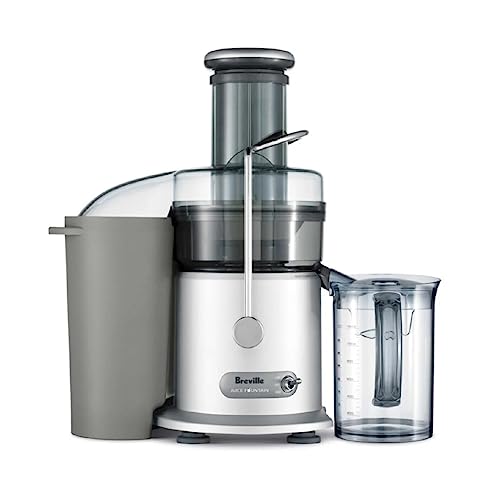
The Breville Juice Fountain Plus is a centrifugal juicer designed to quickly extract juice by spinning produce at high speeds. It features two speed settings that allow you to adjust for soft or hard fruits and vegetables. A large feed chute reduces prep time by fitting bigger pieces, while most parts are dishwasher safe for convenient cleaning.

Its extra-wide 3-inch chute lets you juice whole fruits and vegetables with minimal prep, cutting down your time chopping. That means you can fit larger pieces of apples, carrots, or cucumbers right in without pre-cutting, which is especially helpful when you’re short on time or making multiple servings.
The juicer offers two speed controls: low for soft fruits and leafy greens, and high for harder produce like beets and carrots. This lets you adjust the speed to get the best juice yield depending on what you’re juicing. However, it does not have a reverse function, so if pulp clogs the chute, you’ll need to stop and clear it manually.
Cleaning is straightforward because most parts, including the juice jug, pulp container, and filter basket, are dishwasher safe. This helps keep the cleanup hassle to a minimum after juicing. The juicer’s titanium-reinforced disc and stainless steel micro-mesh filter are designed for effective juice and nutrient extraction, balancing juice quality with quick operation.
How the Breville Juice Fountain Plus Performs With Different Produce
This juicer excels with hard produce like sweet potatoes and beets, delivering a high juice yield and good flavor. However, it struggles with leafy greens, scoring low on efficiency for those ingredients. Its two speed options help optimize performance depending on the type of produce you use.

Measured juice yield for hard produce such as sweet potatoes and beets ranks well above average, making the juicer efficient for these dense items. Its dual-speed settings help optimize extraction—higher speed for hard produce, lower for softer fruits—improving overall performance.
Reviews of the Breville Juice Fountain Plus highlight a performance score of 3.7 out of 10 for leafy greens. The juicer struggles with fibrous, stringy greens; it often clogs and produces lower yields compared to masticating juicers designed to slowly crush and press leaves.
Compared to masticating juicers, the Breville’s centrifugal method exposes juice to more oxygen and heat. This increases oxidation, which can reduce some sensitive vitamins and enzymes shortly after juicing and result in more froth on the juice surface. The juice quality score is still solid at 8.3 out of 10, reflecting good taste and separation of pulp, but nutrient retention is generally better with slower juicers.
Wheatgrass juicing is not recommended with this model. Its fast-spinning blade and lack of a reverse function make it prone to clogging with tough wheatgrass fibers, and it cannot extract juice efficiently from such dense green material.
Soft fruits like oranges and berries juice easily but can produce more foam and require slower speeds to minimize froth. The large 3-inch chute reduces prep time since you can feed bigger pieces, but softer produce still benefits from the lower speed to preserve nutrients and reduce oxidation.
Juice oxidation and froth affect flavor and the ideal time to drink your juice. With the Breville Juice Fountain Plus, consume fresh juice within 15 to 20 minutes to enjoy the best taste and nutrient content before separation and nutrient loss occur.
The Breville Juice Fountain Plus works well for those who want fast juicing and easy cleanup, especially with hard fruits and vegetables. If your focus is on juicing leafy greens or wheatgrass efficiently, a masticating juicer might be a better fit.
If you want to explore juicers better suited to leafy greens, check our guide on whole fruit juicers with large feed chutes.
Noise, Durability, and Maintenance Over Time
The juicer operates at a moderate noise level typical for centrifugal models, which may be noticeable but not disruptive. Its motor is built to last under regular home use, though warranty coverage is limited to one year. Maintenance is straightforward, with most parts dishwasher safe and easy to disassemble for cleaning.
Powered by an 850-watt motor, this juicer is built for regular home use with good durability. The motor’s lifespan generally extends over several years if the appliance is used according to the manufacturer’s guidelines, avoiding prolonged continuous runs beyond recommended times.
Cleaning the Breville Juice Fountain Plus is straightforward, with most parts designed to be dishwasher safe, including the pulp container, juice jug, and filter basket. However, thorough rinsing immediately after juicing helps prevent pulp buildup and reduces dishwasher residue. The juicer does not have a reverse function, so manual clearing of clogs may be necessary.
Clogging occurs occasionally, especially when juicing fibrous or stringy produce like celery or wheatgrass. Users can expect to pause and clear the feed chute or pulp container during heavy leafy green juicing sessions. Regular cleaning after each use minimizes residue buildup that contributes to clogging.
The Breville Juice Fountain Plus comes with a one-year limited warranty covering defects in materials and workmanship. Replacement parts such as filters and juice containers are available from Breville and third-party suppliers, making maintenance manageable and extending the appliance’s useful life.
How to Use the Breville Juice Fountain Plus for Best Results
- Place the juicer on a stable surface and ensure all parts are clean and dry before assembly.
- Attach the pulp container and juice jug securely to the base unit.
- Fit the filter basket and cutting disc carefully inside the juicer bowl.
- Secure the lid and lock the safety arm in place to prevent operation if not properly engaged.
- Plug in the juicer and select the speed: use low speed for soft fruits and leafy greens, high speed for hard produce like carrots or apples.
- Feed produce into the chute slowly, using the pusher to gently press items down without forcing.
- Pause if the juicer slows or clogs, then clear the chute or pulp container as needed.
To reduce clogging from fibrous foods and leafy greens, alternate between soft and hard produce during juicing. Chopping very large or stringy items into smaller pieces before juicing can also help maintain smooth operation.
Clean the juicer immediately after use by disassembling all removable parts and rinsing off pulp. Most parts can go in the dishwasher, but hand washing with a soft brush around the filter ensures better removal of fine pulp particles. Avoid abrasive cleaners that could damage components.
Store the juicer with all parts dry, preferably assembled but unplugged, to keep seals and gaskets in good condition. Avoid placing heavy items on top to prevent warping or damage to plastic parts.
Comparing the Breville Juice Fountain Plus With Other Juicers
Compared to masticating juicers, the Juice Fountain Plus processes produce faster but may yield slightly less juice and more foam. It’s less effective with leafy greens and wheatgrass, which masticating models handle better. Its compact size suits kitchens with limited space, though it is somewhat heavier than some competitors.
Cold press juicers, including models like the Breville Juice Fountain Cold, use slow, grinding extraction that yields more juice and preserves more vitamins and enzymes by minimizing heat and oxidation. This method is better if you want higher juice quality and plan to juice leafy greens or wheatgrass regularly.
Compared to the Breville Juice Fountain Plus, a cold press juicer produces quieter operation and requires more cleaning time due to additional parts. The Fountain Plus’s larger 3-inch chute saves prep time with bigger produce pieces, while cold press juicers typically need smaller cuts.
If you mostly juice hard fruits and vegetables and prioritize speed and easier maintenance, the Breville Juice Fountain Plus is a solid and budget-friendly choice. It’s less suited for frequent leafy green or wheatgrass juicing, where masticating or cold press juicers excel.
The Cuisinart Juice Extractor, also a centrifugal juicer, resembles the Breville Juice Fountain Plus in speed but often has a smaller chute and fewer speed options. It may require more prep time and can be louder, although it performs similarly in juice yield for hard produce.
Below is a table summarizing key differences between these juicer types to help you choose based on what matters most in your juicing routine.
| Feature | Breville Juice Fountain Plus (Centrifugal) | Breville Juice Fountain Cold (Cold Press) | Cuisinart Juice Extractor (Centrifugal) |
|---|---|---|---|
| Juice Yield | Good for hard produce, lower for leafy greens | Higher across most produce, especially leafy greens | Similar to Breville Fountain Plus, smaller chute |
| Nutrient Retention | Moderate, some heat and oxidation | High, slow pressing reduces oxidation | Moderate, similar to other centrifugal juicers |
| Noise Level | Noticeable noise | Much quieter operation | Usually louder than Breville Fountain Plus |
| Cleaning Effort | Relatively easy, most parts dishwasher safe | More parts, longer cleaning time | Similar or more involved than Breville Fountain Plus |
| Prep Time | Short, large chute fits bigger pieces | Longer, smaller feed chute | Longer, smaller chute |
| Best For | Quick juicing of hard produce, easy cleanup | Daily juicing of leafy greens and wheatgrass, high-quality juice | Budget centrifugal juicing with some prep time |
Choosing between these depends on your priorities. Quick juice with minimal prep and cleanup fits the Breville Juice Fountain Plus. If juice quality and leafy green performance matter more, a cold press juicer like the Breville Fountain Cold is better despite slower speed and longer cleaning. The Cuisinart suits those who want a centrifugal juicer at a lower price but accept extra prep and noise.