The best juicer with no pulp for most readers is the Ninja NeverClog Cold Press Juicer because it gives you two pulp settings, a reverse function to reduce jams, and a compact build that fits smaller kitchens. If you want the smoothest juice with the least fuss, start there and only go bigger if you need hands-free loading or a wider chute.
The essentials
Choose a masticating juicer if you want finer juice and less foam.
Look for an adjustable pulp filter if you want less texture without straining by hand.
A wider chute cuts prep time, but it doesn’t guarantee less pulp.
Fewer parts and dishwasher-safe pieces matter if you’ll use the juicer every day.
If leafy greens are your main ingredients, pick a model built for higher extraction from fibrous produce.
Most shoppers who search for a low-pulp juicer want one thing: a smoother glass without extra straining at the sink. The real difference is how well the machine separates juice from fiber and how much cleanup it adds back into your morning.
The common mistake is buying for yield alone and ignoring pulp control. That usually leaves you with a juicer that makes plenty of juice but still gives you more texture than you wanted, or a machine that’s a pain to wash before work.
Top Low-Pulp Juicer Picks
#1Best overall
Ninja NeverClog Cold Press Juicer
Best for most readers who want smoother juice in a small kitchen
This one gives you Less Pulp or Lots of Pulp, so you can dial in texture instead of guessing. The 150W high-torque auger handles apples, carrots, celery, and leafy greens, and the reverse function helps clear jams before they turn into a mess. The compact body also fits under cabinets, which matters if your counter space is tight.
Brand NinjaMotor 150WPrograms Start/Stop and ReversePulp control Less Pulp or Lots of PulpDishwasher safe Yes
Why it made the cut
Two pulp filters for more control
Reverse mode can help reduce clogging
Dishwasher-safe parts are easier to live with
Good to know
The 24 oz jug is smaller than the hands-free models
You still feed produce in by hand
Skip it if Skip it if you want to load a full recipe at once and walk away.
Best for small kitchens that still want low-pulp juice
This is the same juicer as the top pick, with the same two pulp settings and reverse function, so you get the same texture control in a charcoal finish. The compact design is the draw here if you need a juicer that tucks away easily and still handles fibrous produce. It suits people who want a low-fuss machine without giving up on smoother juice.
Brand NinjaMotor 150WPrograms Start/Stop and ReversePulp control Less Pulp or Lots of PulpColor Charcoal
Why it made the cut
Compact build for smaller counters
Two pulp filters let you choose the texture
Anti-drip lever helps keep the counter cleaner
Good to know
Not a hands-free hopper design
The capacity is still modest for larger batches
Skip it if Skip it if you want a wide chute and the least prep work.
Best for people who want to load produce once and do other kitchen tasks
The self-feeding hopper lets you add your whole recipe at once, which is the main reason to choose this model. Its 200W motor and 50 RPM slow press are built for quiet juicing, and the design is meant to handle leafy greens with less waste. That makes it a strong fit if you care more about convenience and batch making than about a tiny footprint.
Best for buyers who want fewer cuts and strong output
The 6-inch wide chute fits whole apples, oranges, and cucumbers, so you spend less time chopping before you juice. A 300W motor and 58 RPM slow press are aimed at higher yield with less foam, and the quick-release design makes cleanup less of a project. The 10-year warranty also stands out if you want a machine you plan to keep around.
Best for people who want juice plus nut milk or sorbet
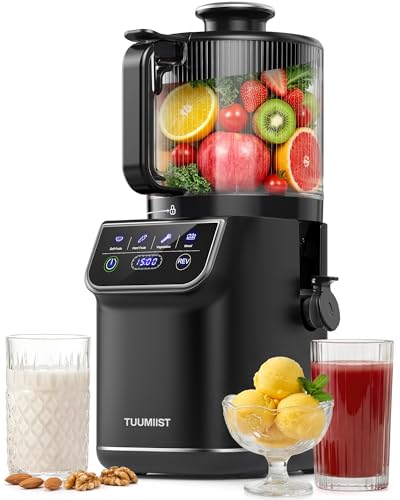
The 6.5-inch self-feeding chute accepts whole fruit, which cuts down on prep, and the smart touch control keeps operation simple. It also does more than juice, with modes for nut milk and sorbet, so it makes sense if one machine needs to do several jobs. Cleanup is a selling point too, since the design is meant to rinse in about 3 minutes with a 3-part assembly.
Low-pulp juicers separate juice by crushing produce and pushing it through a filter, then sending the fibrous pulp to a separate outlet or bin. If you want the smoothest pour, the filter matters more than the marketing line on the box. Many juicers leave pulp in a chamber or eject it into a side container, so yes, there are machines where juice comes out one side and pulp the other.
Spec
What it changes
Masticating or cold-press design
Usually smoother juice because the auger crushes produce at lower speed before it hits the screen
Fine screen or interchangeable pulp filter
Controls texture better than words like “smooth” or “high yield”
Feed chute size
Cuts chopping time, but it does not decide how much pulp stays in the glass
Lower RPM
Often means less foam and a cleaner pour with less froth
Dishwasher-safe parts
Cuts cleanup time after each use
Noise level
Matters if you juice early, live with roommates, or share a wall
The specs that change pulp, texture, and daily use are not always the flashiest ones.
To remove pulp from a juicer, clear the pulp outlet or bin after each batch, rinse the screen before it dries, and use the included brush if the mesh starts to clog. A reverse function can help loosen packed fibers, but it does not replace cleaning the filter.
Look At The Screen First
If two juicers both promise “smooth” juice, pick the one with a finer screen or more than one pulp setting. That feature usually does more for texture than a wider chute does.
What A Bigger Chute Really Does
A larger feed chute mainly saves prep time because you chop less apple, celery, or carrot before juicing. It won’t make the juice itself smoother if the filter is coarse.
Higher-speed machines can whip more air into the juice, which adds foam and can make the glass look cloudier. Lower-speed cold-press models usually give a cleaner pour, though they may take a little longer to process a batch.
Cleanup is the daily tradeoff people feel first. If a juicer has several dishwasher-safe parts and a screen that rinses clean fast, you’re more likely to use it on a weekday morning; if it takes a long scrub and makes a lot of noise, it tends to stay in the cabinet.
From JuicerAdvices · our own guidePage 15 covers cleaning and the common juicer problems: foam, pulp, clogs and leaks.Home Juicing Starter KitMake fresh juice that tastes good, costs less and keeps safely: 40 recipes with exact amounts, a yield chart and a 4-week plan.40 juice, smoothie and shot recipesYield, storage and food-safety chartsCost, yield and shopping-list calculator (Excel)$14.99$9.99Get it for $9.99See what's inside and watch the 2-minute video →18-page printable PDF + Excel calculator · instant download · 30-day refund
Which Juicer Fits Your Kitchen
In short
The best juicer with no pulp for most kitchens is the one that fits your counter, your cleanup tolerance, and how much chopping you want to do. Small spaces usually do better with a compact model, while busy cooks tend to prefer a larger hopper or hands-free loading.
Good for small kitchens
The Ninja NeverClog keeps a smaller footprint, so it stores more easily and suits tight counters.
Its adjustable pulp settings help if you want finer juice without jumping to a bigger machine.
The reverse function is useful when fibrous produce starts to pack up the feed area.
Not for everyone
The feed chute is not as hands-off as a top-loader, so you may still chop more produce.
If you want very fast batch juicing, a larger hopper may feel easier day to day.
The Nama J2 fits readers who want hands-free loading and don’t mind giving up more counter space. Its larger hopper helps when you juice several apples, oranges, or carrots at once, and that matters more than a fancy label if your main goal is less prep.
Godspeeds works well for people who want a wide chute, very low prep time, and a longer warranty. The TUUMIIST and other wide-chute models can take whole fruit or bigger pieces, but they still need a good filter if you want juice that stays smooth instead of pulpy.
Compact models are easier to store in a cabinet or on a narrow counter. Larger hoppers are easier to use every day because you spend less time feeding the machine, which is why some readers accept the extra footprint.
Worked example
Say you juice oranges three mornings a week in a small apartment. A compact juicer with adjustable pulp settings may make more sense than a bigger hands-free unit, because you care more about storage and cleanup than about loading fruit in large batches.
Kitchen sizesmall countertop
Routine3 mornings a week
Best fitcompact juicer with a fine filter
For an orange juicer with a pulp remover, look for a fine screen, an easy-to-empty pulp bin, and a chute that matches the amount you usually juice. For a ninja juicer making the pulp finer, the pulp setting and screen matter more than the name on the front.
If you’re choosing between size and ease, decide which one you use every single day. A small machine that gets used beats a bigger one that looks impressive and stays in the pantry.
Leafy Greens Need A Different Machine
For celery, kale, parsley, and other fibrous greens, the best juicer with no pulp is a high-yield cold press model that keeps squeezing after softer fruit gives up, because leafy greens need stronger extraction and a juicer built to handle them without clogging. A 5.3-inch chute like the SUSTEAS cold press juicer helps with apples and celery prep, but it won’t remove every soft seed or every trace of pulp. The Nama J2’s 50 RPM and self-feeding design fit leafy greens well, and Ninja models are also built for fibrous fruits and vegetables.
Wide chutes save chopping time, but leafy greens still depend on auger design and pulp control. If you want very dry pulp from greens, look for a model described as a high-yield cold press juicer; for a broader comparison, best juicer for leafy greens dry pulp covers the machines that squeeze kale and celery hardest.
50 RPM
Nama J2 speed
Slow augers give kale and parsley more time under pressure, which usually means drier pulp.
Myth
A wider chute automatically means less pulp from greens.
Fact
Chute width mainly changes prep speed; the auger and filter do the real work on celery strings and leafy fibers.
Pick By Fibers
Choose the machine that says high-yield or fibrous-produce handling if greens are your main use; those cues matter more than a wide feed tube when you want dry pulp.
Cleanup, Noise, And Warranty Matter
Dishwasher-safe parts, quick-release assemblies, and simple part counts are the best clues for fast cleanup, while quiet low-RPM machines are easier to use before work or during nap time. Strain the pulp when you want a smoother drink with less fibrous grit, and blend a scoop of that pulp into a fruit smoothie, then add liquid until the texture smooths out; leftover pulp can also go into muffin batter, soup, or veggie patties.
A longer warranty matters most if you juice every day, because small wear issues show up faster in a daily appliance. If two models feel similar on texture and noise, the longer warranty is the safer tie-breaker.
Worked Example
One buyer wants the smoothest celery juice and doesn’t mind a longer wash, so the easier-to-clean model with three removable parts wins. Another buyer wants a fast morning routine, so the machine with two main parts and a wider chute wins even if the juice carries a little more foam.
Smooth-juice buyer3 removable parts
Cleanup timeabout 8 minutes
Speed-first buyer2 main parts
Cleanup timeabout 4 minutes
Rinse Right Away
Rinse the screen, auger, and pulp bin as soon as you’re done, because dried pulp clings harder and takes longer to scrub off.
Why Noise Matters
Low-RPM juicers are quieter than high-speed models, which makes early mornings and nap time easier to live with.
What To Buy Next
In short
Need the best juicer with no pulp? Start with pulp control, then check chute size and how much cleanup you’ll tolerate. To remove pulp from a juicer fast, pick a model with a separate pulp bin, a quick-release screen, and reverse or anti-jam controls so you can empty and rinse without scrubbing.
Order Of Decisions
Choose the Ninja NeverClog if you want a compact juicer with adjustable pulp settings.
Choose the Nama J2 if hands-free juicing and strong leafy-green extraction matter more than a smaller footprint.
Pick a wide-chute model if less chopping before breakfast is your main goal.
Check the listing for dishwasher-safe parts and the warranty before you buy.
More Questions, Answered
What is the best juicer with no pulp?
The best all-around choice is a low-pulp cold press juicer with adjustable pulp control, and the right pick for most people is the one that matches how much prep and cleanup you want to do. No machine removes every speck, so if you want the clearest glass, choose a model with a fine filter and strain once more through a mesh sieve. That extra pass matters more than a bigger feed chute.
How does a juicer separate juice from pulp?
A juicer crushes or spins produce, then forces liquid through holes, mesh, or a screen while the fibrous solids stay behind. Masticating and cold press machines do that at lower speed, so they often leave less foam and sediment than high-speed centrifugal models. The filter design matters as much as the motor.
Is a masticating juicer better for less pulp?
Usually, yes. Slow masticating juicers are built to squeeze produce through a screen, which often gives a smoother pour than a fast centrifugal unit. They are especially helpful for celery, greens, and softer fruit; chunky, overripe produce can still leave sediment if the filter is coarse.
Can I use juicer pulp in a smoothie?
Yes, if the pulp is fresh and the ingredients are safe for you to eat. A spoonful or two can add fiber and body to a smoothie, but citrus peel, pineapple core, and tough celery strings can make the texture gritty, so start small and taste as you go. Refrigerate or freeze the pulp promptly if you will not use it right away.
Does a wider feed chute make juice smoother?
No, a wider chute mainly saves chopping time. Smoothness comes from the screen size, auger design, and whether the machine has a fine pulp setting, so a big chute can still make a cloudy glass if the filter is open. If less pulp is the goal, check the filtration, not just the chute diameter.
How do I remove pulp from juice without buying a new machine?
Pour the juice through a fine mesh strainer, nut milk bag, or a doubled layer of cheesecloth. Strain it once for a cleaner glass or twice if you want it very clear, and do it soon after juicing so the pulp does not settle into a thicker layer. Keep the juice cold while you work.
Before you go · a welcome giftGet the Home Juicing Starter Kit for $4.99Make fresh juice that tastes good, costs less and keeps safely: 40 recipes with exact amounts, a yield chart and a 4-week plan. Normally $14.99; your welcome price saves $10.00. We'll email your link right now.or skip the email and buy it now for $4.99 →One email with your link now. We never share your address.


 Home Juicing Starter KitMake fresh juice that tastes good, costs less and keeps safely: 40 recipes with exact amounts, a yield chart and a 4-week plan.40 juice, smoothie and shot recipesYield, storage and food-safety chartsCost, yield and shopping-list calculator (Excel)