The Hamilton Beach Power Elite is the best blender to puree food for most kitchens. Its 700-watt motor and Wave Action system turn cooked vegetables, soft fruits, and even ice into smooth purees, and the 40 oz glass jar is dishwasher safe.
Key takeaways
For most pureeing tasks, a 700-watt countertop blender with a glass jar is the sweet spot of power, capacity, and easy cleanup.
Immersion blenders puree directly in the pot, so they’re best for hot soups and small batches.
If you’re making baby food, a dedicated baby food maker steams and purees in one step, but it limits batch size.
Look for a blender with a ‘puree’ function or variable speed, not just high and low, to control texture.
Dishwasher-safe parts save more time than any extra blending function.
A blender that purees well does more than crush ice. It pulls food down into the blades and keeps it moving until the texture is completely smooth, with no graininess or lumps. That matters whether you’re making baby food, silky soups, or a smoothie you actually want to drink.
One number tells you a lot: 700 watts. That’s the minimum power most countertop blenders need to puree dense foods like cooked carrots or frozen bananas without stalling. Below that, you’ll get a choppy mix instead of a true puree.
The Best Blenders to Puree Food, Compared
#1Best All-Around
Hamilton Beach Power Elite Blender
Best for Most kitchens that need a reliable countertop blender for smooth purees and everyday use
The 700-watt motor and Wave Action system pull ingredients down into the blades, so cooked vegetables and soft fruits turn smooth instead of spinning in place. A 40 oz glass jar handles family-size batches, and the puree function is one of 12 settings. The jar, lid, and blades are dishwasher safe, which matters when you puree often.
Power 700 wattsJar 40 oz glassFunctions 12, including puree and crush iceDishwasher safe Jar, lid, blades
Why it made the cut
Wave Action system forces food into the blades for even purees
12 functions include a dedicated puree setting
Dishwasher-safe glass jar, lid, and blades
Pour spout reduces drips when serving
Good to know
Glass jar is heavier than plastic
700 watts is enough for cooked food but less powerful than some higher-wattage models
Skip it if Skip it if you want a blender that also steams food for baby purees in one step.
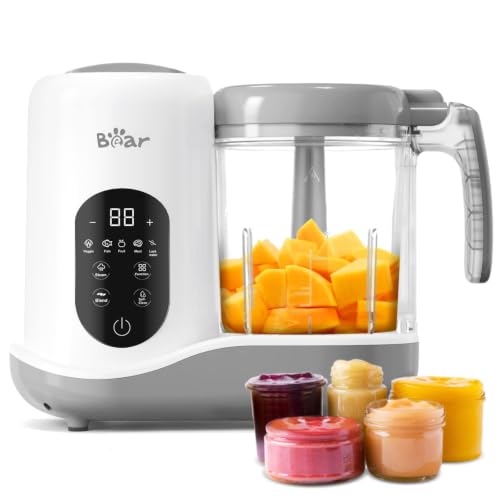
Best for Parents who want to steam and puree single batches of baby food with one appliance
This all-in-one machine steams and then blends fruits, vegetables, fish, or meat, so you don’t transfer hot food between a pot and a blender. The touchscreen has a built-in menu, and a self-cleaning function runs water through the system after you’re done. A safety lock and BPA-free Tritan build address the top concerns for baby feeding.
Best for Pureeing soups directly in the pot and handling tough ingredients with a handheld blender
The 1100-watt motor is strong for a stick blender, and the variable speed trigger lets you ramp up gradually to avoid splashing hot soup. A nylon blade guard keeps the metal off your cookware, so you can puree in a nonstick pot without scratching it. The set includes a food processor, whisk, and frother for more than just purees.
Best for Simple, everyday pureeing jobs at a lower price, like sauces, dips, and baby food
A 300-watt motor and two speeds handle soft ingredients and light pureeing without the bulk of a countertop blender. The stainless steel shaft detaches for rinsing or the dishwasher, and the slim design fits into most mixing bowls and pots. It’s a straightforward tool when you don’t need extra attachments.
Power 300 wattsSpeeds 2 (low, high)Shaft material Stainless steelDishwasher safe Detachable shaft
Why it made the cut
Lightweight and easy to maneuver
Detachable shaft is dishwasher safe
Two speeds for simple control
Fits in most pots and bowls
Good to know
300 watts is less powerful for fibrous or frozen ingredients
No included food processor or whisk
Skip it if Skip it if you plan to puree tough root vegetables or frozen fruit often.
Best for Single servings of puree, smoothies, or baby food with easy cleanup and to-go cups
The 900-watt motor spins at up to 25,000 RPM, so it can puree small portions quickly, and the asymmetric blades pull food toward the center. Three BPA-free cups (24 oz, 17 oz, 10 oz) let you blend and serve from the same container, with to-go lids included. A self-cleaning cycle—just soap and water—saves time between uses.
Power 900 watts peakSpeed Up to 25,000 RPMCups 24 oz, 17 oz, 10 ozDishwasher safe Cups, lids, blade assembly
Why it made the cut
900-watt motor with 25,000 RPM
Three cup sizes with to-go lids
Self-cleaning with soap and water
Dishwasher-safe cups, lids, and blade assembly
Good to know
Smaller capacity than a full-size jar blender
Not ideal for large batches of soup
Skip it if Skip it if you regularly puree more than 24 oz at a time.
The best blender to puree food is a countertop model with at least 700 watts of power, a puree or variable speed setting, and a jar you can clean without fuss. The Hamilton Beach Power Elite fits that description for most kitchens: its 700-watt motor and Wave Action system turn cooked vegetables and soft fruits into smooth purees, and its 40 oz glass jar goes straight into the dishwasher.
Power matters more than price. A 700-watt motor handles steamed carrots, cooked beans, and even ice without stalling, while a 300-watt budget model may leave lumps in thicker mixtures. If you puree large batches for the week, choose a blender all in one with a jar of at least 40 oz; smaller personal blenders work for single servings but need more scraping and stirring.
Look for a puree button or a variable speed dial. Preset puree programs pulse and blend at lower speeds to break down food without whipping in air, which keeps the texture smooth and dense. A variable speed trigger gives you the same control by hand: start slow, then increase only as needed.
Feature
Why it matters for pureeing
700+ watt motor
Handles thick mixtures and tough ingredients without stalling
Puree or variable speed
Lets you control texture and avoid over-blending into liquid
Glass jar
Resists stains and odors from carrots, berries, and tomato sauce
Plastic jar
Lighter and less likely to break, but can scratch and hold smells
Dishwasher-safe parts
Cuts cleanup time after messy pureeing jobs
What to check before you buy a blender for pureeing
Baby food?
A dedicated baby food maker with a steaming basket, like the BEAR 2024, purees small batches and steams in one step. Just know its jar is small: most hold 1 to 2 cups, so you’ll make food more often than with a full-size blender.
For hot soups and small jobs, an immersion blender purees right in the pot and skips the transfer step. A 300-watt stick blender handles soft cooked vegetables; a 1100-watt model like the Turelar can take on thicker mixtures and even ice. If you make soup weekly, that may be all you need.
If you also want to make smoothies, sauces, or nut butters, a power blender with a wide jar and a tamper gives you the most flexibility. For more options, see our guide to the best blender for making smoothies.
From JuicerAdvices · our own guideChoosing or using a juicer? Page 3 compares the types; page 15 fixes the common problems.Home Juicing Starter KitMake fresh juice that tastes good, costs less and keeps safely: 40 recipes with exact amounts, a yield chart and a 4-week plan.40 juice, smoothie and shot recipesYield, storage and food-safety chartsCost, yield and shopping-list calculator (Excel)$14.99$9.99Get it for $9.99See what's inside and watch the 2-minute video →18-page printable PDF + Excel calculator · instant download · 30-day refund
Countertop vs. Immersion Blender for Purees
A countertop blender makes the smoothest purees, while an immersion blender wins for hot soups and fast cleanup. If you puree baby food, smoothies, or large batches, choose a countertop model; if you puree soup in the pot once a week, a hand blender may be all you need.
Countertop blender
Smoothest, most even purees for baby food and smoothies
Handles large batches and tough ingredients like frozen fruit and ice
Glass or plastic jars are easy to measure and pour from
Immersion blender
Heavier and takes up counter or cabinet space
You must transfer hot soup to the jar and back, which risks spills and burns
More parts to clean after each use
An immersion blender purees directly in the pot, so there’s no hot liquid transfer and less cleanup. The OVENTE 300W hand blender works for soft cooked foods like cauliflower or butternut squash; the Turelar 1100W handles tougher ingredients and larger pots without straining.
Worked example
Say you make a big pot of lentil soup every Sunday. With a countertop blender, you’d ladle hot soup into the jar in batches, blend, and pour it back, washing the jar and lid each time. With a 300W immersion blender, you puree the soup right in the pot in about a minute, then rinse the blending shaft under warm water.
Batch size6 cups of soup
Countertop time3 batches, about 5 minutes
Immersion time1 pass, about 1 minute
If you want one appliance for soups, sauces, and smoothies, a blender combination like a countertop model with a food processor attachment gives you more flexibility. For pureeing meat or making baby food from scratch, a countertop blender with a strong motor is the safer bet.
A dedicated baby food maker is the easiest way to puree for a baby, because it steams and blends in one jar. You add chopped vegetables or fruit, press one button, and get warm, smooth food in about 15 to 20 minutes. Steaming before pureeing keeps more vitamins than boiling, and it means one less pot to wash.
For a blender for baby food, look for BPA-free plastic or glass and a safety lock that stops the blades from spinning until the lid is locked. A self-cleaning function saves real time when you make food daily: add warm water and a drop of soap, run the cycle, and rinse.
Baby food maker checklist
Steams and purees in the same jar
BPA-free materials and a lid safety lock
Self-cleaning or easy-rinse cycle
Makes 1 to 2 cups per batch, enough for a day or two
Batch size is the main limit
Most baby food makers puree only 1 to 2 cups at a time. That is fine for a baby eating a few tablespoons per meal, but if you want to freeze a week’s worth, you will run several batches. A regular blender with a small jar can also puree cooked food smoothly; you just cook the vegetables or meat separately first.
Pureeing for Special Diets: Dysphagia and Soft Food
If you need a blender for foods after a cough, cold, or surgery, a countertop blender with at least 700 watts handles cooked meats, grains, and vegetables best. Blending small amounts of warm food with enough liquid, such as broth or milk, gives a smooth, spoonable texture.
A meat blender sounds like a special machine, but it is really any high-powered blender that can break down chicken, turkey, or soft beef into a fine puree. Use a 700W+ countertop model rather than an immersion blender for meats; a handheld blender may leave small lumps that are unsafe for someone with dysphagia.
Strain after blending
Always follow your healthcare provider’s texture guidelines. Many people with dysphagia need purees strained through a fine-mesh sieve after blending to remove any remaining bits. A puree that looks smooth can still hide a small piece of meat or vegetable skin.
Myth
An immersion blender is enough for all soft food diets
Fact
An immersion blender works well for single servings of soup or cooked vegetables, but it often cannot puree meat completely smooth. For dysphagia, a 700W+ countertop blender is the safer bet.
For single servings, an immersion blender is convenient and easy to clean, but reserve it for soft foods like cooked carrots or squash. When the meal includes meat, use the countertop blender, then strain and check the texture against your care plan.
Cleaning and Maintenance: Keep Your Blender Pureeing Smoothly
A blender that’s easy to clean gets used daily; one that isn’t becomes a countertop ornament. If you puree for baby food or a soft diet, you’ll run it several times a week, so look for jars and blades marked dishwasher safe. The Hamilton Beach Power Elite’s 40 oz glass jar goes straight into the dishwasher, and its blade assembly rinses clean under the tap.
1
Rinse right after blending
Fill the jar one-third full with warm water and add a drop of dish soap. Run the blender on low for 20 to 30 seconds, then rinse thoroughly. This loosens food before it dries.
2
Wash by hand or in the dishwasher
Place the jar, lid, and blade assembly on the top rack if they’re dishwasher safe. Hand-wash the blade with a bottle brush, keeping fingers away from the edges.
3
Dry before reassembling
Let all parts air dry completely before you put the blender back together. Trapped moisture can dull blades and encourage mold around the gasket.
Immersion blenders are even simpler. Detach the shaft from the motor body and rinse it under running water, or put it in the dishwasher if the manual allows. The OVENTE hand blender’s shaft and beaker are both dishwasher safe, which matters when you puree soup right in the pot.
Check the blade every few months
Run a finger along the blade (with the blender unplugged). If it feels dull or nicked, purees will turn grainy. Replacement blade assemblies cost far less than a new blender.
Never submerge the motor base
Wipe the base with a damp cloth only. Water inside the motor can cause a short, and no amount of drying makes it safe again.
For a blender you’ll run daily, durability shows in the blade assembly and jar material. Glass jars resist scratching and staining, while plastic jars can cloud over time. The BEAR baby food maker’s self-cleaning function adds water and runs a short cycle, which helps when you’re blending three meals a day.
Before You Buy: A Puree-Ready Checklist
Run through these six points
Countertop blender has at least 700 watts; immersion blender has at least 300 watts.
Jar or cup holds your typical batch: 40 oz for family meals, 20 oz or less for single servings.
All food-contact parts are labeled BPA-free.
Jar, lid, and blade assembly are dishwasher safe (or you’re willing to hand-wash).
It has a dedicated puree function or variable speed control, not just on/off.
You’ve decided between a countertop model and an immersion blender based on what you’ll puree most.
Most people searching for the best blender to puree food want one machine that handles cooked vegetables, soft fruits, and the occasional frozen ingredient. The Consciot 11-piece blender covers that range with two jar sizes and multiple speed settings, which works well if you puree for both baby food and adult meals.
If you’re weighing an all-in-one blender against a simple one-touch model, think about your counter space and how many parts you’ll wash each day. A blender with a heating function can steam and puree in one jar, but it adds cost and bulk. For most kitchens, a 700-watt countertop blender with a glass jar and a puree button is the practical choice.
Frequently Asked Questions
What is the best blender to puree food?
The Hamilton Beach Power Elite is the best blender to puree food for most kitchens. Its 700-watt motor and Wave Action system handle cooked vegetables, soft fruits, and even ice, and the 40 oz glass jar is dishwasher safe.
Can I puree meat in a regular blender?
Yes, a countertop blender with at least 700 watts can puree cooked meat if you add enough liquid, such as broth or gravy. Cut the meat into small pieces and blend in short pulses, scraping down the sides between bursts.
How do I puree food without a blender?
You can push soft cooked foods through a fine-mesh sieve with the back of a spoon, or use a food mill, potato ricer, or fork. These methods work best for vegetables and fruits; they won’t create a silky texture from fibrous or tough ingredients.
Is an immersion blender good for pureeing?
An immersion blender is good for pureeing soups directly in the pot and for small batches of soft foods. It won’t get a puree as smooth as a countertop blender, and it struggles with fibrous vegetables, cooked meats, or large quantities.
What blender do hospitals use for pureed diets?
Hospitals and care facilities often use high-powered commercial blenders like Vitamix or Blendtec, which can handle tough ingredients and large volumes. For home use, a 700-watt countertop blender is usually enough for a dysphagia or soft food diet.
Can I puree hot soup in a blender?
Yes, but only if the blender has a vented lid or you remove the center cap and cover the opening with a towel. Fill the jar no more than halfway, start on low speed, and never seal hot liquid completely, as steam pressure can blow the lid off.
Before you go · a welcome giftGet the Home Juicing Starter Kit for $4.99Make fresh juice that tastes good, costs less and keeps safely: 40 recipes with exact amounts, a yield chart and a 4-week plan. Normally $14.99; your welcome price saves $10.00. We'll email your link right now.or skip the email and buy it now for $4.99 →One email with your link now. We never share your address.



 Home Juicing Starter KitMake fresh juice that tastes good, costs less and keeps safely: 40 recipes with exact amounts, a yield chart and a 4-week plan.40 juice, smoothie and shot recipesYield, storage and food-safety chartsCost, yield and shopping-list calculator (Excel)