Best Blender for Hot Liquids: 3 Safe Picks for Soup
On this page 9 sections
- Hot-Liquid Blender Comparison
- Top Blenders for Hot Liquids, Compared
- Why Hot Liquids Need a Different Blender
- Immersion vs. Countertop: Which Is Safer for Soup
- What to Look For in a Hot-Liquid Blender
- How to Blend Hot Soup Without Getting Burned
- Cleaning a Blender After Hot, Oily Soups
- Hot-Liquid Blenders and Your Health Goals
- More Questions, Answered
Hot-Liquid Blender Comparison
| Rank | Model | Best for | Type | Power | Capacity | Price |
|---|---|---|---|---|---|---|
| 1 | Turelar 1100W Immersion BlenderSafest for hot soup | Blending soup directly in the pot with no steam buildup or transferring. | Immersion blender | 700W | — | Check price |
| 2 | Magic Bullet Combo BlenderBest vented lid | Hot blends in a full-size pitcher with a removable cap that vents steam. | Countertop blender | 1100W | 1100W motor, nylon blade guard | Check price |
| 3 | Ninja UltraCrush Professional BlenderBest large batches | Making big batches of hot soup or sauce in a 72 oz pitcher. | Countertop blender | 600W | 48 oz pitcher, 16 oz cup | Check price |
| 4 | Hamilton Beach Power Elite BlenderBest glass jar | Hot liquids in a 40 oz glass jar with a pour spout and dishwasher-safe parts. | Countertop blender | 1000W | 72 oz pitcher (64 oz max liquid) | Check price |
| 5 | Ninja Kitchen System TB401Most versatile | A blender plus food processor for hot soups, sauces, and more. | Blender + food processor | 1800 peak watts | 72 oz pitcher, 8-cup bowl | Check price |
Blending hot soup in a sealed pitcher can send the lid flying and spray scalding liquid. Steam builds pressure in seconds, and the burn risk is real.
The right blender either keeps the steam safely vented or lets you blend directly in the pot. The picks below do one of those two things well, and the advice that follows will help you choose between them.
Top Blenders for Hot Liquids, Compared

Turelar 1100W Immersion Blender

Magic Bullet Combo Blender

Ninja UltraCrush Professional Blender

Hamilton Beach Power Elite Blender
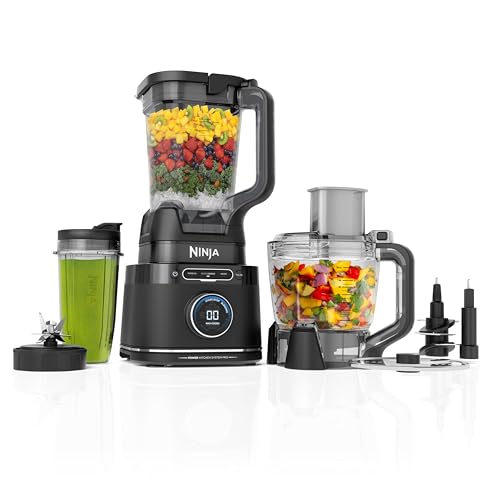
Ninja Kitchen System TB401
Why Hot Liquids Need a Different Blender
The best blender for hot liquids is one that lets steam escape, because a sealed blender can turn hot soup into a dangerous steam explosion. Steam expands to about 1,700 times the volume of the water it came from, so pressure builds fast when hot liquid is blended with the lid locked down.
A vented lid or a removable filler cap gives that steam a way out while the blades spin. The Hamilton Beach Power Elite and the Ninja UltraCrush both have vented lids designed for hot blending, though you still need to start on low speed and hold a towel over the lid as a shield.
An immersion blender avoids the pressure problem entirely. You blend in the open pot, so steam never gets trapped. The Turelar 1100W immersion blender is a safe choice for hot soups because the motor stays above the liquid and the bell guard keeps splatter down.
Glass pitchers tolerate heat better than most plastics, but glass still traps steam if you seal it. The magic bullet Combo comes with a vented pitcher that lets you blend hot sauces in small batches, but the same rule applies: leave the vent open and never fill past the halfway mark.
Start on the lowest speed and pulse if you can, then increase gradually. That gives steam a moment to escape instead of pushing it all at once. If you blend a lot of hot soups, a best blender for hot and cold with a dedicated vented lid is worth having.
 Home Juicing Starter KitMake fresh juice that tastes good, costs less and keeps safely: 40 recipes with exact amounts, a yield chart and a 4-week plan.40 juice, smoothie and shot recipesYield, storage and food-safety chartsCost, yield and shopping-list calculator (Excel)
Immersion vs. Countertop: Which Is Safer for Soup
An immersion blender is the safer choice for hot soup because you blend directly in the pot, so no steam gets trapped under a lid. A countertop blender can also be safe if it has a vented lid and you fill it carefully, but the immersion blender removes the biggest risk.
For creamy soups, a high-power immersion blender with variable speed works well, but it may leave a slightly chunkier texture than a countertop blender. If you want a perfectly smooth butternut squash soup, the Ninja UltraCrush or the Hamilton Beach Power Elite will get you closer, as long as you follow the venting rules.
| Feature | Immersion blender | Countertop blender |
|---|---|---|
| Steam risk | Low; open pot | Low if vented lid used |
| Texture | Slightly chunky | Very smooth |
| Batch size | Any pot size | Limited to pitcher |
| Cleanup | Blend shaft only | Pitcher, lid, blade |
| Storage | Compact | Takes counter space |
If you make soup once a week and want fewer dishes, an immersion blender like the Turelar is the practical pick. If you batch-cook and freeze smooth purées, a countertop blender with a vented lid will serve you better.
For most home cooks, the safer route is the immersion blender. It is also the easier one to use when you are recovering from an illness or just want a quick blended soup without a complicated setup.
What to Look For in a Hot-Liquid Blender
A vented lid is the first thing to check, because the hole or removable cap lets steam escape while the blades spin. Without it, hot soup can pressurize the jar and blow the lid off. The Hamilton Beach Power Elite has a fill cap you can open, and the magic bullet Combo pitcher lid includes a vented pour spout. Look for a lid with a clear cap you can lift with one hand.
Power matters less than venting, but 700 watts is enough for most pureed soups and sauces. If you blend fibrous vegetables like celery, carrots, or kale into a hot base, or you want to crush ice for a cold drink later, 1000 watts or more will do it faster. The Ninja UltraCrush runs at 1000W, and the Ninja Kitchen System at 1800W, so both handle tough ingredients. The Turelar immersion blender is 1100W and blends right in the pot.
| Spec | What’s enough | Why it matters |
|---|---|---|
| Vented lid | Removable cap or openable spout | Lets steam escape so pressure can’t build |
| Power | 700W for most soups | 1000W+ handles fibrous veggies and ice |
| Capacity | 40 oz for two servings | 64 oz+ for family batches |
| Jar material | Glass or BPA-free plastic | Glass resists stains and heat; plastic is lighter |
| Cleanup | Dishwasher-safe parts | Saves time after hot, oily soups |
Capacity depends on how much you cook at once. A 40-ounce jar makes two generous bowls of soup, which suits most weeknight meals. Family batches and holiday cooking are easier in a 64-ounce or 72-ounce pitcher like the ones on the two Ninja models. Remember that you should fill a hot-liquid blender only halfway, so a larger jar gives you more usable room.
Jar material is a trade-off. Glass resists staining from tomato soup and turmeric and won’t absorb odors, but it’s heavy and can shatter if dropped. BPA-free plastic is lighter and less likely to break, though it may cloud over time. The Hamilton Beach Power Elite uses a glass jar; the magic bullet Combo and Ninja pitchers are plastic.
Cleanup is the step people skip after a hot, oily soup, so dishwasher-safe parts make a real difference. Starchy soups like potato or butternut squash leave a film that’s easier to wash when the blade assembly comes apart. If you want one appliance for hot and cold, see the best blender for hot and cold guide before you decide.
How to Blend Hot Soup Without Getting Burned
Let the soup cool for five minutes before you blend, because steam is hottest right after boiling. A brief rest lowers the temperature and the pressure inside the jar. You don’t need it cold; just cool enough that you can hold your hand a few inches above the surface without flinching.
For an immersion blender like the Turelar, keep the blade fully submerged and tilt the shaft slightly so air can escape around it. Blend in short bursts, moving the blender slowly through the pot. Lifting the blade above the surface sprays hot soup, so turn it off before you pull it out.
If soup splashes onto your skin, run cool water over the area for at least 10 minutes. Most blender burns from hot liquids are minor scalds, but a burn that blisters, covers a large area, or is on the face or hands needs medical attention the same day.
Cleaning a Blender After Hot, Oily Soups
Rinse the blender jar with warm water as soon as you pour out the soup. Starch from potatoes, beans or lentils dries into a film that’s harder to scrub off once it cools, and oil clings to that film. A 30-second rinse while the jar is still warm does most of the work.
For a glass jar with tomato stains, make a paste of baking soda and water, rub it on the stained area, and let it sit for 10 minutes before rinsing. Baking soda is mildly abrasive and lifts the red-orange tint without scratching.
| Part | Dishwasher safe? | Better by hand |
|---|---|---|
| Hamilton Beach Power Elite jar | Yes | Hand wash the blade assembly to keep the seal tight |
| magic bullet Combo cups | Yes | Rinse cups right after use to prevent clouding |
| Ninja UltraCrush pitcher | Yes | Wash the lid by hand so the vent stays clear |
Immersion blender shafts should be washed right after use. Detach the shaft from the motor, wash it with warm soapy water, and rinse well. Never submerge the motor body, and unplug it first.
Dishwasher-safe parts make cleanup easier, but hand washing extends blade life. The high heat and detergent in a dishwasher can dull the blade edge and dry out the gasket over time. A quick hand wash right after blending is kinder to the machine.
Hot-Liquid Blenders and Your Health Goals
A blender for pureed soup dysphagia can make meals safer and easier to swallow. Smooth, lump-free soups let someone with swallowing trouble take in vegetables, beans and lean protein without the risk of choking. For very smooth purees, a high-power countertop blender or an immersion blender with a fine blade works best.
A low sodium soup blender gives you control over salt, which matters for blood pressure and kidney health. Canned soups often pack 600 to 900 mg of sodium per cup. Blend at home and you can keep a whole bowl under 300 mg by using herbs, garlic, roasted vegetables and a splash of lemon instead of salt.
Soups made with beans and vegetables add fiber and plant protein. A cup of lentil soup can give around 8 grams of fiber and 9 grams of protein, which supports steady blood sugar and keeps you full longer. Blending doesn’t remove the fiber; it just breaks it into smaller pieces.
Skip the cream and extra salt. Use roasted vegetables, herbs, and a little olive oil for richness. A high-power blender like the Ninja UltraCrush turns roasted carrots, onion and white beans into a velvety soup without any dairy.
If you’re buying a blender partly for softer meals after dental work or during cancer treatment, the best blender for making smoothies can double as a soup maker. Choose one with a vented lid or use an immersion blender in the pot.