Built-in coffee machines make sense for households with frequent coffee habits, enough cabinet space, and a long kitchen ownership plan.
They rarely make financial sense for one occasional coffee drinker. A countertop machine costs less to replace and usually needs less installation work.

The short answer
A built-in coffee machine can be worth the investment when two or more people use it most days. The case grows stronger when the kitchen already has suitable cabinetry and electrical planning.
The purchase becomes harder to justify below about five drinks per week. In that range, a countertop brewer usually offers enough convenience without permanent cabinet space.
Your break-even point depends on three figures: purchase cost, installation cost, and annual use. Prices change, so check the current price on Amazon before doing the calculation.
When the investment makes sense
- Daily use: Two drinks per day, five days per week, equals about 520 drinks yearly.
- Multiple users: Three or more regular users spread the fixed cost across more cups.
- Long ownership: A kitchen plan of seven years or more gives the appliance more time to earn its place.
- Planned cabinetry: A remodel can absorb appliance placement more cleanly than a finished kitchen.
- Counter space limits: Built-in placement removes one countertop appliance from the work area.
These thresholds are practical estimates, not guarantees. Repair costs, installation requirements, and personal drink habits can move the tipping point.
When a built-in machine is a poor fit
- Low usage: Fewer than five drinks per week weakens the value case.
- Short tenancy: Renters may not recover cabinet alterations or installation effort.
- Frequent moves: Built-in appliances suit fixed kitchens, not portable setups.
- Limited service access: A difficult-to-reach location can complicate cleaning and repairs.
- Changing drink habits: People who switch between coffee styles may prefer replaceable countertop equipment.
A built-in unit also creates a replacement decision later. The next machine must fit the opening unless you accept cabinet work.
Built-in versus countertop coffee makers
| Factor | Built-in machine | Countertop machine |
|---|---|---|
| Installation | Usually needs cabinet planning and fixed placement. | Usually needs only a suitable surface and outlet. |
| Counter space | Uses wall or cabinet space instead of the worktop. | Consumes worktop space during daily use. |
| Portability | Low. Moving it involves removal work. | High. Most units can move with the owner. |
| Replacement flexibility | Opening size can limit future choices. | New models usually need no cabinet changes. |
| Best usage threshold | About 10 or more drinks weekly, especially across several users. | About one to seven drinks weekly, or uncertain future use. |
| Ownership planning | Works best with a seven-year or longer kitchen plan. | Works better for temporary homes and changing routines. |
The usage thresholds are approximate. They assume convenience and space have real value, not just the cost of each drink.
What the Bosch BCM8450UC offers
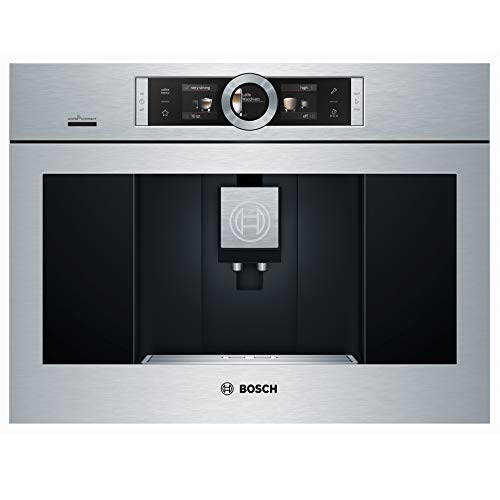
The Bosch BCM8450UC is a 24-inch-wide built-in automatic coffee machine. It includes Home Connect and a stainless steel finish.
Its 24-inch width makes cabinet planning a central issue. Measure the intended opening and confirm installation requirements before ordering.
Home Connect may appeal to households that want connected appliance control. Confirm the current app features and network requirements before purchase.
The stainless steel finish can suit a matching kitchen suite. It may also show fingerprints more readily than darker finishes, so cleaning frequency matters.
Availability can be scarce. Check the current Amazon listing for stock status, seller details, included documentation, and the latest specifications.
Installation changes the value calculation
Installation adds more than labor. Cabinet modifications, electrical access, ventilation needs, and service clearance can affect the total project.
Ask the installer for a written scope before purchase. The scope should cover opening dimensions, power access, trim requirements, and removal of any old appliance.
Never assume a standard countertop outlet or cabinet opening will work. The product manual and local installer should settle those questions.
A remodel lowers the installation penalty. A finished kitchen can make the same appliance much less attractive.
Maintenance and daily ownership
Automatic machines reduce preparation steps, but they don’t remove maintenance. Owners still need to follow the manual for cleaning, rinsing, descaling, and consumable replacement.
High use increases the cleaning workload. A household making 15 drinks each week should expect more routine attention than a household making three.
Service access deserves a test before installation. Can someone reach the controls, water area, grounds area, and removable parts without moving cabinets?
Built-in placement looks tidy, but it can hide small problems. A countertop machine makes leaks, residue, and access issues easier to spot.
How drink preferences affect the decision
Automatic machines suit people who want repeatable preparation with limited manual work. They may not satisfy users who enjoy controlling every brewing variable.
Check the Bosch manual for the drinks, adjustments, and cleaning steps you actually need. The product title alone doesn’t establish every available function.
Freshly ground coffee matters to some buyers. If grinding is central to your routine, compare this category with a built-in grinder guide.
Ground coffee users should check compatibility before buying. This ground coffee guide can help frame that comparison.
A simple ownership test
- Count drinks made at home during a normal week.
- Multiply the weekly total by 52 for annual use.
- Estimate the machine, installation, supplies, and service costs.
- Divide total ownership cost by expected years of use.
- Compare the result with a countertop alternative and its replacement risk.
Use a seven-year estimate only as a planning frame. Actual service life varies with maintenance, use, water quality, and repairs.
For example, 1,040 drinks per year creates a far stronger use case than 156 drinks. The machine earns more convenience at the higher volume.
Money isn’t the only measure. A buyer may accept a weaker financial return for a clear countertop and a coordinated kitchen design.
Questions to ask before ordering
- Does the available cabinet opening match the 24-inch-wide product requirement?
- Can an installer confirm power, clearance, and service access?
- Will at least two people use the machine each week?
- Will the kitchen remain in place for seven years or more?
- Does the machine support the drinks and coffee format you use?
- Can you follow its cleaning routine at the expected weekly volume?
- What happens if the unit needs service or replacement?
These questions expose the main risks before an expensive cabinet decision becomes permanent.
FAQ
Are built-in coffee machines cheaper than countertop machines?
Usually, the total project costs more once installation and cabinet work enter the calculation. Check the current machine price and request a separate installation quote.
How often should a built-in coffee machine be cleaned?
Follow the model manual. Usage, water quality, and drink type affect the schedule, so one fixed interval would be unreliable.
Does a built-in coffee machine save counter space?
Yes, it moves the appliance off the worktop. It still uses cabinet space and may require a dedicated opening.
Is the Bosch BCM8450UC suitable for every kitchen?
No. Its 24-inch width, built-in format, and installation needs require careful planning. Confirm the opening and service access first.
Does Home Connect justify the purchase?
Only if connected control matters in your routine. Confirm current Home Connect features and network requirements before treating them as a deciding benefit.
What is the clearest sign a built-in machine isn’t worth it?
Low weekly use is the clearest warning. Fewer than five drinks weekly usually makes the fixed installation harder to justify.
Who should buy one?
A built-in coffee machine suits a household with at least 10 weekly drinks, a seven-year kitchen plan, and cabinet space for permanent placement.
The Bosch BCM8450UC deserves consideration when its 24-inch format fits the design and Home Connect matches your routine. Verify the current listing details before ordering.
Choose a countertop machine when usage stays below five weekly drinks, the home is temporary, or cabinet work would be extensive. That choice keeps future replacement simpler.